
Everyone knows that rabbits are considered the most fertile animals in the world. Therefore, it can be assumed that the breeding of rabbits is an extremely simple activity. But in practice, not everything is as simple as it might seem. Newbie rabbit breeders should prepare and learn some nuances and subtleties of the process before mating rabbits. In the article, we will analyze when it is possible to connect rabbits, how to choose a pair for mating, what to do with a rabbit, and how to respond to problems.
At what age are rabbits mated?
With good growth and development, rabbits reproduce from 3 months.
The recommended mating age for males is 7-8 months, and for females – 5-6 months. The timing of the first mating is influenced by the breed of the animal (for example, giants) and the molting phase has arrived. In such cases, it is recommended to add another month and steam a little later.
Peculiarities of choosing partners
Properly selected rabbits for breeding depend on what the offspring will be and, accordingly, the profit from the animals. The process of selecting manufacturers should be approached with particular care.
There are some selection criteria:
- live weight of the rabbit;
- the amount of increase;
- immunity to diseases;
- fertility;
- milkiness;
- maternal instinct.
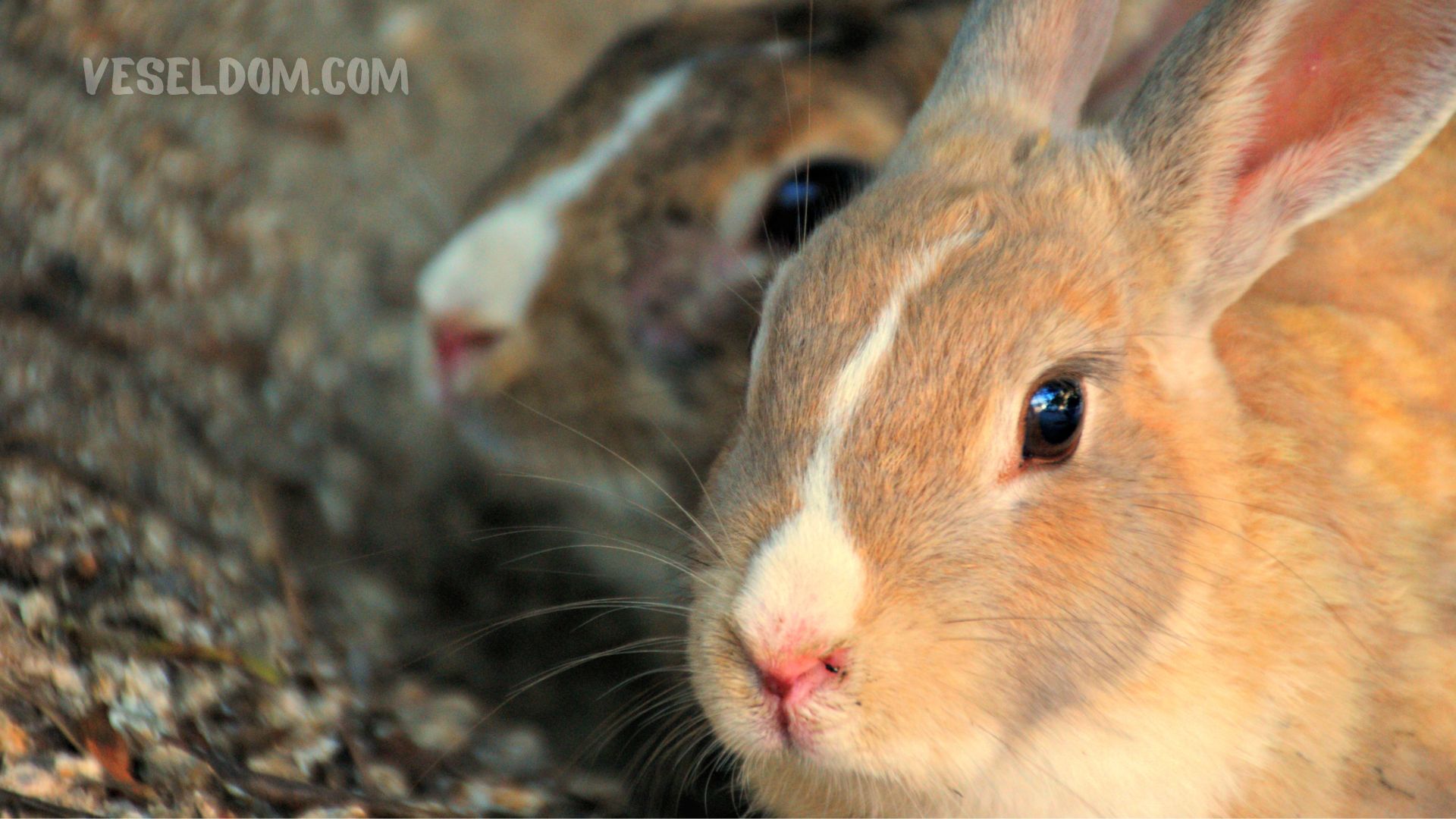
Selection of breeding rabbits
- The first round of selection. Rabbits are sorted at 2-3 months (at the time of weaning from the mother). All developmental defects and genetic abnormalities in the family line are taken into account.
- The second round of selection. They divide into good and bad from the party chosen in the first round. They take into account the quality of fur, general activity, rate of growth and appearance.
- The third round of selection. It is carried out already after the first round. Milk yield, the number of individuals in the litter, maternal qualities are taken into account. Rabbits are evaluated during 3-4 pregnancies in a row, and the quality of males becomes clear between the first and second litters.
The main characteristics by which rabbits are selected for breeding:
- muscular rump of rounded shape;
- milkiness of the rabbit;
- litter survival;
- the number of live and dead newborns in the litter;
- the number of young that survived to weaning from the mother;
- total live weight of offspring at the age of three weeks;
- the total live weight of the babies at the time of removal from the mother.
How to distinguish a rabbit from a rabbit
It is necessary to determine the sex of rabbits at the age of at least one month. It is not entirely realistic to determine sexual characteristics earlier and you can easily make a mistake, and you should not wean babies from feeding.
Before “gender control” it is necessary to remember that animals can fight back with their strong hind legs. In addition, they can easily scratch a person. Therefore, the whole process must be carried out correctly.
- The animal is planted on a flat surface.
- With the palm of the left hand, take it firmly by the skin between the head and the back.
- The rabbit is slightly lifted and placed on its hind legs.
- Then I very sharply sit down with my ears on my tail.
- Next, the tail is clamped at the beginning with the fingers of the right hand.
The skin in front of the animal’s genitals is gently pulled back with the thumb.
The result is determined visually:
- An adult male – the penis is bent down (in a young male – an opening with a tubercle).
- Females have an oblong slit that noticeably narrows towards the tail.
It is recommended to use a magnifying glass to take a good look at the barely visible genital organs of rabbits.
It must be remembered that it is incorrect to determine the sex simply from the behavior of animals and their appearance.
How to choose rabbits
When selecting rabbits for breeding, experienced rabbit breeders focus on the excellent qualities of the animals:
- Lively temperament
- Deep and wide chest
- Resistance to heat and cold, strong immunity
- Quick adaptation to new conditions
- Elastic and dense skin
- Thick, shiny wool without bald spots and excessive “puffiness”
- Regularly and stably high number of individuals in offspring
- Uniform and normal duration of breaks between laps
- Multifertility, milkiness
What is rejection?
The rejection of rabbits is carried out by excluding from the herd individuals that are partially or completely unsuitable for breeding. Rejection is carried out after several matings.
Males are culled if more than 30% of matings are unsuccessful or if they refuse to cover the rabbit for no reason.
Females are missing if:
- after 2-3 matings, pregnancy did not occur;
- less than 4 babies were born in two litters;
- ate their newborns;
- miscarriages happened twice in a row.
Rejections are subject to rejection, regardless of sex, if they have physiological deficiencies:
- the chest is excessively narrow;
- weak muscles;
- characteristic features of the breed, approved in accordance with standard requirements, are not particularly distinguished;
- back very concave or arched;
- croup droops, narrowed across;
- the skin sags;
- the stomach is lethargic, sagging;
- very large chest (inadmissible for males);
- underdeveloped or poorly developed skeleton;
- front paws are X- or O-shaped;
- the hind limbs are very narrow or stand incorrectly;
- females have a rough type of head, and males have a feminine, graceful shape;
- the color and type of wool cover is atypical for this breed;
- wool with bald spots, rare, heterogeneous;
- ears droop too much (with the exception of pointed-eared rabbits) or unacceptably thin.
When to pair rabbits
When the animals reach puberty, the best individuals are selected and rabbits are bred. Only completely healthy animals occur.
Mating is carried out when the female becomes sexually active. During these days, she ovulates, and therefore has the highest percentage of the probability of fertilization. To achieve a positive result, mating can be carried out within 3-7 days.
How to determine eagerness in a rabbit
Sexual desire in rabbits is the period of time when she becomes physiologically ready to accept fertilization, admits the male and responds to his courtship. In this period, the structure of the reproductive system changes, the appearance of the external genitalia changes (they swell and turn red).
Sexual desire lasts for 1-3 days with a certain cycle: in spring and summer – every 5-8 days, and in autumn and winter – about once a month.
How the desire to mate manifests itself in rabbits:
- runs around the cage, clings to the walls, rubs his body everywhere:
- anxiety and aggressiveness increases;
- lifts the pelvis when touching the back;
- urinates often
The sexual activity of females is affected by the season, food, living conditions, weather, proximity of males, lighting. In the winter time, for example, the eared may not show any signs of “partying”. But then you just have to match her to a male. If the “eared lady” is ready to mate, she turns her back to the “groom”.
How to make a rabbit want to mate
Although rabbits are considered the most loving animals, it happens that females themselves refuse to mate for a number of reasons. Then breeders try to stimulate the desire of rabbits at home using the following methods:
- add celery to food;
- remove the young from the rabbit;
- give special vitamin supplements;
- move the female closer to the cage with the male;
- artificially increase the daylight to 18 hours.
If all the above methods have been tried, but the rabbit still refuses to mate, then medical stimulation is done. It is better to seek help from a veterinarian for this purpose. He injects special hormonal drugs. Usually, by the next morning, the earwig is ready for mating. But it is worth remembering that it is forbidden to administer such drugs to sexually immature representatives of rabbits.
Terms for fertilization
Rabbits can get pregnant as early as 3 months. Puberty of males comes a little later. To get a good offspring, rabbit breeders advise to start mating at the age of six months. But it is also worth considering the weight of the animal. If the rabbit has gained 2/3 of the weight of an adult (about 3-4 kg), then it is already suitable for fertilization.
After mating comes fertilization and pregnancy. But you can definitely be sure of conception only two weeks after mating. Pregnancy lasts about 30 days. The exact number of days depends on the breed and the number of cubs there may be.
First mating
Two weeks before the first mating, the rabbits are examined for fatness, the state of health is determined, and the diet is adjusted.
The first mating is carried out, taking into account age, live weight and molt. Young rabbits are allowed to the male for the first time at about 5-6 months. Thoroughbred rabbits are allowed to mate another 16-35 days later. But it is also not worth over-exerting animals – it becomes unprofitable in financial terms, and animals with over-exertion become fat, covered with fat and poorly inseminated.
Males are mated for the first time when they are 6-8 months old.
It is usually recommended to let young inexperienced females live with adult males, and rabbits that have already given birth – with young inexperienced rabbits.

When can you mate a rabbit after birth
The female is physically ready to mate on the second day after giving birth. But you should not hurry, because part of her reserves goes to feed the newborn litter. Without giving the animal’s body a chance to recover, it is possible to weaken immunity and maternal instincts in the future.
There are a number of breeding methods for mating females after hatching in rabbit breeding – industrial technology, the method of compacted hatchlings and a standard breeding scheme.
- Industrial technology. Rabbits are used only for 1 year. They are mated for wear, so they are fed well so that puberty begins earlier. The female is mated on the 20th day after giving birth. Okrol is obtained up to 7 times a year from one rabbit. After a year, such a rabbit is rejected, more often due to postpartum complications due to frequent pregnancies.
- Method of compacted collars. The female molts for 2-3 days after mating. The young are weaned at the age of 28 days before the next birth. The method is used in the summer to obtain animals for meat, and not for breeding.
- Standard technology. Rabbits have been used for more than two years. Mating takes place 30-50 days after childbirth. A profitable option for home breeding of rabbits.
Also, sometimes they use the method of semi-sealed collars. At the same time, mating is carried out two weeks after childbirth.
How many years can you keep a rabbit for offspring
The average lifespan of rabbits is 8-10 years. But this does not mean that the rabbit is able to reproduce all the time. Approximately after the seventh birth, the number of individuals in the litter decreases, the percentage of survival decreases, and milk yield drops. Females begin to gain weight, their sexual activity decreases. When breeding, it is necessary to take into account all nuances individually for each representative of the eared family. The main task of the breeder is to cull a female unsuitable for breeding in time.
Farmers usually use rabbits per tribe for about two years.
How rabbits are mated
- Before mating, the cage is cleaned of all foreign objects (drinker, feeder).
- They put a female to a male, but not the other way around!
- It is necessary to control the process, because rabbits can fight.
- If the act was successful, the producer falls from the female on its side and grunts softly. The mating process is repeated 2-3 times.
- After mating, the female is returned to her home.
If the coating did not occur, then after 2-3 hours, the rabbit is again allowed to the rabbit. In case of repeated failure, the female is planted with another male on another day. About a week after mating, a second control filling is carried out.
Preparation for mating of animals
Before mating, rabbits are carefully prepared for such an important process.
In two weeks, the animals are examined and weakened or sick individuals are culled. In rabbits, on the eve of mating, the nipples (there should be 8-10 of them) and genitals (there should be no inflammatory processes) are examined. Animals in the active phase of molting are not allowed to mate.
A mandatory condition is proper nutrition before knitting. Steamed oats and boiled potatoes are added to the food of the males, and branch fodder and hay with the addition of concentrates are left to the females. But with obesity, concentrates and food with a high starch content are completely removed from the diet.
Duration of fecundation in a rabbit
Fertilization is the process of fertilization in a rabbit after mating.
The process of fertilization in a rabbit after mating:
- Male and female gametes merge 10-12 hours after mating (fertilization).
- A zygote (embryo) is formed.
- An embryo is formed.
- A fruit is formed.
- After 28-35 days, a rabbit is born.
Up to 20 embryos can be fertilized in a rabbit, but less than eighteen remain to give birth.
Why does the rabbit not let the rabbit
The main reason why a rabbit cannot be covered by a crotch is the lack of hunting. This condition is determined by a number of reasons and factors affecting the female’s sexual activity.
The rabbit does not want to mate. The list of circumstances due to which rabbits refuse to communicate with male producers:
- weather conditions (heat and heat or severe frost);
- improperly selected food or a lack of useful substances in it;
- lighting is less than 7-8 hours a day;
- a huge number of young from previous broods;
- diseases;
- adiposity;
- aged over 3 years;
- insufficient area of the cage in which the rabbit lives;
- does not like the partner;
- severe stress the day before;
- molting period;
- pregnancy that has already occurred.
It happens that due to inexperience, novice rabbit breeders incorrectly determine the sex of the animal. It happens that a female rabbit jumps on rabbits and is mistaken for a male. Naturally, when same-sex individuals mate, the process will end exclusively with a fight between the animals.
How to determine the pregnancy of a rabbit
Pregnancy of rabbits is determined using several methods:
- Measurement of the mass of the female. A pregnant animal gains 0.029 grams in the first week of pregnancy, 0.057 grams in the second week, and then the weight does not change.
- Ultrasound of an animal. It is done in a veterinary hospital, and shows the most reliable result. It is carried out a week after possible fertilization.
- Observation of the behavior of the female. She becomes quiet, careful, does not let the male in. Before giving birth, rabbits usually build a nest, line it with fur and hay.
- Palpation of the rabbit. They carry out abdominal palpation themselves. Approximately two weeks after the probable conception, it is possible to detect the fetus in this way. Previously, it was not recommended to do this procedure, so as not to harm the babies in the womb. Found embryos will resemble small cherries to the touch.
For novice breeders, it is not recommended to palpate an animal without the appropriate experience.
Physiological exclusions of rabbit pregnancy outside the cycle
Among animals, only female rabbits can be fertilized outside the ovulation cycle. This will be possible if:
- unfertilized eggs remained in the genital tract between cycles;
- they use a very good producer rabbit, which can cause the female to ovulate reflexively;
- hormonal estrus-stimulating drugs are administered.
Such involuntary insemination in rabbits is quite possible, but does not give a full guarantee of insemination.
Why rabbits do not cover themselves
There are a number of reasons why a rabbit does not become pregnant.
Physiological problems during mating:
- lack of sexual desire;
- already sukrol;
- superfetation (repeated pregnancy).
Psychological problems during mating:
- the rabbit is very frightened and is afraid of everything that surrounds it (including the male);
- stress received the day before;
- the female’s desire to flirt longer;
- very young partners and they lack experience in a similar business.
Physical problems:
- non-compliance with the temperature regime in the room;
- improper diet and drinking.
What is inbreeding?
Inbreeding is the crossing of animals with family ties.
Problems arising from family mating:
- slowed growth of offspring
- poor health
- productivity and fertility decrease
Inbreeding is carried out exclusively for the purpose of selection on breeding farms. On ordinary rabbit farms, isolated cases of family mating are possible only in the temporary absence of male producers from other farms. To prevent inbreeding, it is recommended to change males every 3-4 years.
Mating of rabbits in winter
Rabbits can tolerate winter cold. And they are also able to breed in the cold season. If the decision is made to cross the animals in the cold, then before that it is recommended to insulate the housing of the rabbits, make sure that there are no drafts, and everything around is clean and dry. If the cells were outside, they are moved indoors. Be sure to increase the duration of the daylight hours (up to 16-18 hours per day).
The mating process itself is carried out as standard. It is preferable that the knitting takes place during the day.
Usually, winter gives birth to only one cub at a time, and this is considered the norm.
In view of all the above, it is worth reminding that rabbits, despite their fertility, require increased attention and care. Especially when it comes to mating issues. Be attentive to your pets, carefully monitor and take care of them, and they will certainly please you.