
Country plots can have different shapes and areas, and they do not always have a lot of space. An example of the most “small” areas can be a one-acre option, on which, if desired, it is quite possible to place a house, a recreation area, and even outbuildings. In order not to make a mistake in your calculations and get an attractive, functional plot, you should know how to arrange a landscape design on one hundred and the rules for its arrangement.
Rules for registration of a plot
Landscaping on a small plot, such as one acre, can be an exciting and creative process. However, since the space here is limited, all design details should be well thought out and compactly placed. In this article, we will consider the basic rules and recommendations for creating an attractive landscape design on one plot.
Rules for registration of a plot:
- Avoidance of large-scale massive structures. It is important to place buildings on the site, taking into account green areas. This will ensure a harmonious combination of buildings and nature.
- Alternation of economic and residential zones. It is recommended to create a consistent alternation of recreation areas, a barbecue, a small gazebo or a pond between the economic and residential areas. It is important to maintain a feeling of openness in the area.
- Absence of high and deaf fences. Large fences can visually reduce space and disrupt natural air circulation. It is recommended to use a chain-link fence and plant curly plants along it. Hedges and low hedges also look attractive. For tall fences, you can place hanging pocket beds with plants that grow in them.
- Rejection of geometric planning. It is important to avoid a large number of sharp corners and geometric shapes. The area can be made more attractive and visually expanded using asymmetry and smooth, rounded lines of small architectural elements.
- Selection of one art object as the main concept. To preserve harmony and open space, it is recommended to choose one art object as the main focus of landscape design.
- Selection of vegetation. It is better to give preference to medium- and low-growing crops that can be planted in compact groups. Combining different shades of plants will help create visual interest. Experiment with height, types of bushes and trees to create variety.
Passages through tall plants are an important detail for creating the illusion of scale . They make the area more open, leaving the recreation area more attractive and accessible.
Even a small plot of land, such as one acre, can become a great place to relax for the whole family, if you approach its design responsibly. Taking into account these rules and recommendations, you will be able to create an extremely attractive and functional landscape design that harmoniously combines nature and architecture.
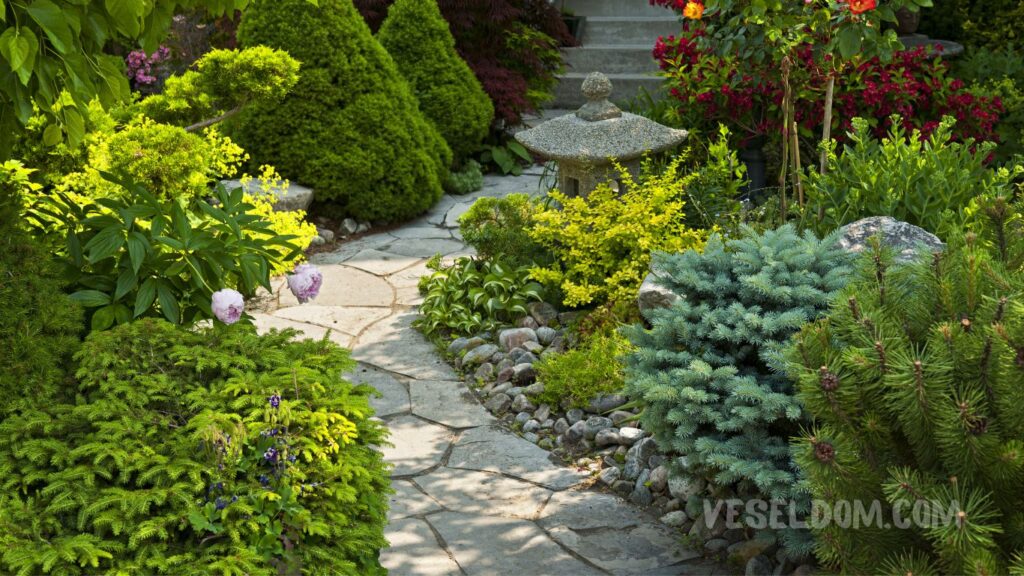
How to choose a style
The choice of style is one of the first and most important steps in the design of the courtyard area. In this process, all elements must be harmoniously combined with each other as much as possible, without departing from the overall composition. For large country plots, the choice of style can be more flexible, but when designing one hundred meters, it is important to adhere to the principles of restraint and balance.
Here are a few styles that can be the best choices when decorating such a small area:
- Classic, regular style. This style is characterized by the presence of the main compositional axis, which determines the main planting works. The use of straight paths is allowed, even in such a small area, and it can add asymmetry, making the arrangement of the territory more interesting.
- Rural style. This style welcomes bright colors and the use of natural materials, such as wood, stone, vines, and wood paneling. Among the vegetation, dwarf forms of fruit trees, medium-sized shrubs and decorative objects that are placed chaotically, such as wells, wooden or metal benches, logs, barrels, and original flower beds are suitable.
- Hi-tech style. This style is distinguished by the use of modern materials such as glass, plastic, metal, and concrete. The color palette can be quite limited, including white, sand, silver, light gray tone, and possible accents in green, blue, red, yellow or orange colors. Modern lamps and abstract sculptures can be used to decorate the area.
- Eco-style. This style uses exclusively natural materials, such as stone paving, wooden structures and abundant vegetation. The selection of plants is based on the principle of minimal intervention in the natural environment, and the plants must correspond to regional characteristics. Water features, such as small fish ponds, can add authenticity to this style.
- Japanese style. The main feature of this style is asymmetry, where no design element should match in size, shape and color with others. A restrained color palette with minimal accents is important here. Ornamental fruit crops, rhododendrons, junipers and virgin grapes are suitable for vegetation. Japanese stone gardens, dry streams, stone lanterns, benches and other decorative elements are characteristic of this style.
To even out the unevenness of the terrain, you can create a mini-relief in one or two zones, including small ponds with bridges, retaining walls or alpine slides. In addition, flower beds with a variety of plants that bloom at different times of the year can add beauty to your area.
Where to start planning
Planning the development of the site always begins with the development of a detailed plan of action, and the size of the territory does not matter here. When creating such a plan, be it on paper or in a computer version, it is necessary to define the main zones (residential, recreational or garden), choose the most suitable types of plants and specify the places for their planting. If it is planned to create a reservoir on the site, be sure to include it in the plan.
When choosing a place to place each individual object, be sure to take into account the relief of the area, the shape of the territory, the type of soil and the level of illumination of individual zones, which is especially important when choosing plants. If the soil surface has significant elevation differences, consider moving the soil to level the area. When performing this task, be sure to remove plant debris from the soil.
Dividing the territory into zones and choosing plants for planting are the main tasks at the first stage of planning, so it is important to consider these aspects in detail.
Zoning
The main components of any suburban area will always be a residential building, farm buildings, a garden area and a recreation area. Unfortunately, it will not be possible to place large objects in the limited space of one acre, but after careful consideration, competent zoning can be carried out.
Importantly! If the selected territory has a predominantly sandy type of soil, the foundation of the building should be placed at a depth of 40-70 cm, in the case of sandy-clay soil – at a depth of approximately two meters.
Usually, many landowners allocate the most space for the garden and vegetable garden, the area of the recreation area and flower beds is reduced by three times, and what remains is taken away for farm buildings. If desired, the vegetable garden can be replaced with a small pond surrounded by a green lawn. This will significantly expand the area of the recreation area.
When zoning, the shape of the plot must be taken into account. Square or oval areas are much easier to work with than irregularly shaped areas, where individual zones may not be placed as you would like. The micro-relief, water table and soil composition of the site should also be taken into account in order to achieve effective plant growth and ensure the longevity of the buildings.
Selection of plants for planting
When landscaping an area of 1 hectare, it is important to follow the generally accepted rules for choosing plants:
- Take into account the requirements of plants for temperature changes, lighting and humidity in the area chosen for planting.
- Place the plants so that the height increases from south to north: low-growing crops should be allocated a place in the southern part of the territory, and tall-growing ones (for example, apples and pears) in the north and northeast.
- In the case of poor soils, consider replacing the topsoil with a fertile layer by adding compost, manure and peat. This is especially important for plants.
- Carefully plan the color scheme of the territory, providing moderate bright accents, and keep the main palette in calm “warm” shades.
Among the popular examples of vegetation suitable for one acre can be:
- Thuja varieties Holmstrup, Kolumna and Smaragd.
- A beautifully trimmed, evenly green lawn.
- Compositions from juniper bushes.
- Riparian plants for water features such as marsh yarrow and irises.
- Low-growing fruit trees, for example, Japanese quince or cherry.
- Curly roses, annual vines such as morning glory and thunbergia.
- Flowering crops for flower beds, such as rudbeckia, goldenrod and evening primrose.
- Ground cover plants, bryophytes and purslane.
Adhering to the general principles of plant selection, taking into account their appearance and size, you can create combinations of bushes, low grasses and flowers, the main thing is that they harmoniously combine with each other and with the general design of the garden.
Examples of landscape design on one hundred
There are many possibilities for decorating a one-acre plot, and it all depends on the creativity and wishes of the owner. For a convenient choice of stylistic direction, it is always useful to consider several possible options.
Proven examples in this case are:
- Forest corner: Creating a forest atmosphere through the competent use of volumes and high objects, such as raised staircases-bridges, fountains, tall sculptures and medium-sized fir trees in certain parts of the site. Using a vertical design can add interest. In this style, a place for recreation can include a small pond and a fountain, and coniferous plants will create the aroma of the forest.
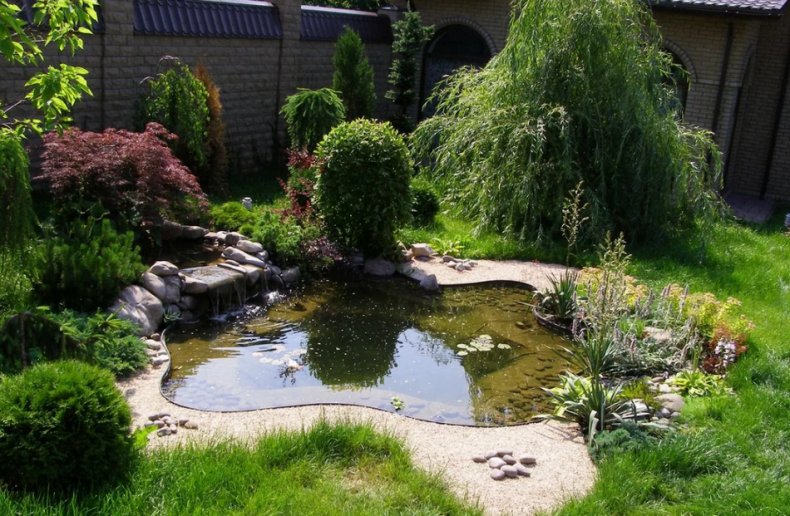
- Country paradise with a garden: This style is practical and includes a large number of garden beds. To prevent contamination of the lawn and paths, you can protect the garden with boards or plant fruit plants in containers evenly spaced on the site. Clean and organized Dutch gardens can be a great source of inspiration. The recreation area may include several lilac bushes and wooden benches.
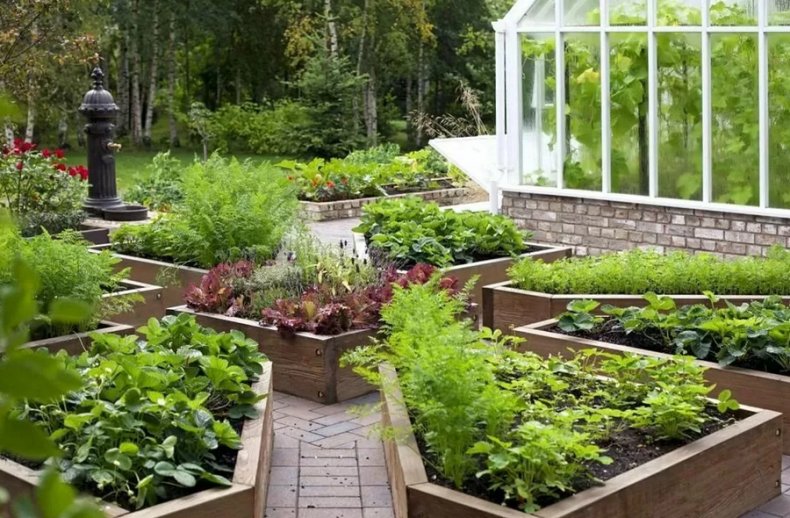
- Mini-beach: Creating a comfortable beach or a small pool on a sunny site. This idea will appeal to both adults and children. The beach can be equipped with comfortable beach chairs, umbrellas and even sports grounds. The high sand above the water with the possibility of a convenient jump will add to the atmosphere. Sun loungers on the lawn can be used for the parent’s recreation area.
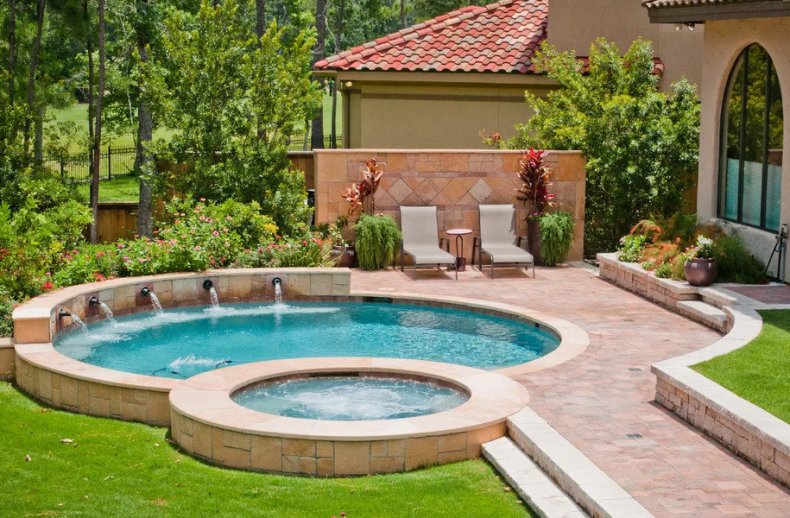
- A picnic center with a pond and a patio: The patio style consists of creating two main areas: a picnic and a recreation area, which are separated by the style design and the height differences of the landscape. A patio, like a courtyard, is best placed under trees or canopies, and a pond with deckchairs and a sports ground – on a sunny area. Plants such as lilacs can provide shade on the water and create a pirate flag island for children.
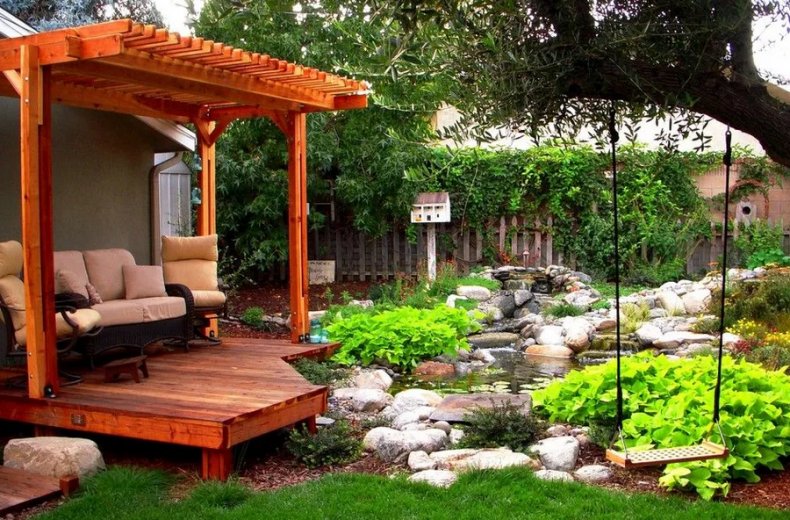
When choosing furniture, you should consider the style of the chosen design. You can use massive wooden chairs with soft pillows, or plastic furniture sets, depending on the chosen style and needs. Furniture can be resistant to weather conditions, which is especially important for outdoor areas.
In general, landscaping a small area is an exciting and creative process that helps create a unique corner of the space. Taking into account the rules and creativity, even on a minimal area, you can create a real paradise.