
The month of May is the time of the juicy heat of spring and the beginning of summer, when the beloved garden finally takes on a complete and perfect appearance. When the last wonderful residents are planted in it, the flower gardens are also not left behind, adding the final touches to them – May flower crops. Let’s consider which flowers to salt in May, as well as the peculiarities of their cultivation.
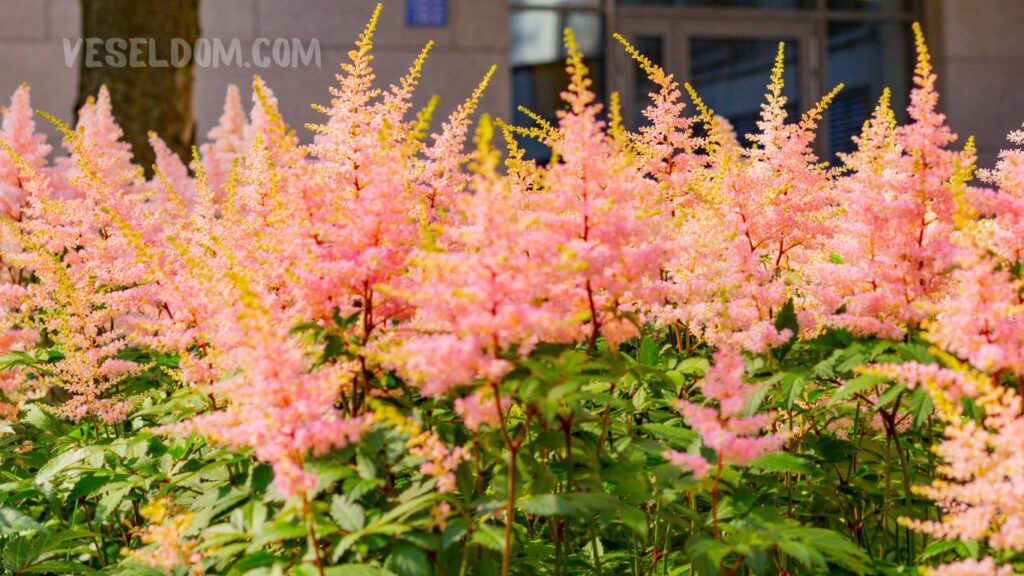
Astilbe is a variety of pink
Amateur gardeners are recommended to propagate it in the simplest way – by dividing the rhizome of the mother plant. Astilbe impresses with its fluffy, pink, purple, white or peach blossoms, which resemble miniature cotton candy sticks. This plant is not demanding on lighting, so it can be successfully planted under trees where other flowers may have problems growing.
Interestingly, astilbe also thrives well in areas with close groundwater, which makes it possible to use it to decorate swamps, reservoirs and wet areas. It creates spectacular flower beds and attracts the attention of bees and butterflies with its nectar. Astilbe is a great choice for creating flower arrangements in your garden in May.
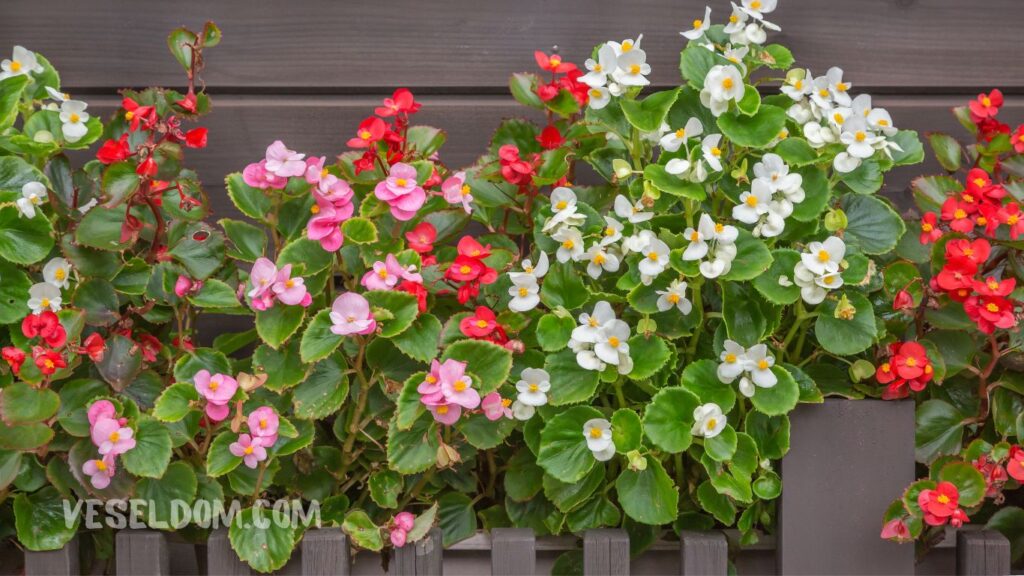
Begonia is a flower bed beauty
In the open field, this flower can be a little capricious, just like at home. The soil for begonias should have a neutral pH level, and in terms of lighting, it is better for the plant to receive sunlight in the middle of the day and shade in the afternoon. It is also important to feed it regularly during the summer, every two weeks.
In order to enjoy abundant and long flowering in the current season, it is recommended to plant pre-germinated tubers in the soil. This approach will help the begonia to acclimatize faster and start flowering. It is necessary to place the tubers in the appropriate place on the flower bed, providing sufficient space for the growth and branching of the plant.
Thanks to its bright flowers, the begonia will become a beautiful decoration of your flower bed in May, attracting eyes and giving a joyful mood with its unsurpassed flowering.
Gypsophila is the tenderness of your garden
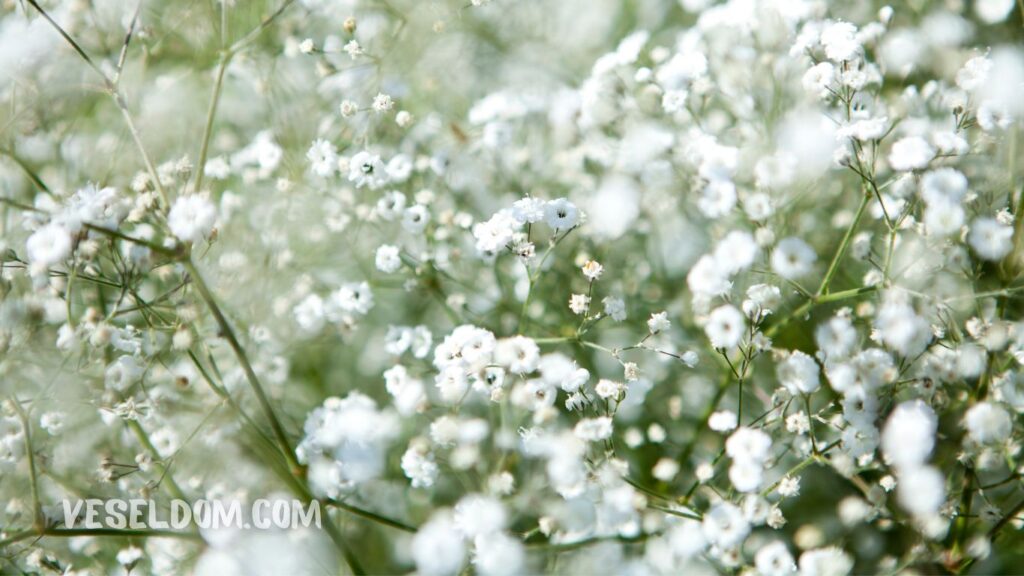
If you need a great background for spectacular bright flowers, then gypsophila is just what you need. These plants, which form low bushes (up to 80 cm), create an airy, lacy canvas, snow-white or pale pink. Hypsophila can be called “Cinderella” among gardeners, because it is often used to change and give a new look to other plants.
Most varieties of gypsophila are planted according to the 60×60 scheme, which allows you to create an even and harmonious composition. It is not picky about soil composition and lighting, but needs regular watering to ensure optimal growth. Gypsophila has unparalleled lightness and tenderness, adding charm and elegance to your garden.
With its delicate flowers and graceful leaves, gypsophila creates an unparalleled effect in your garden, adding lightness and romance to it. It can be used as a separate element or in combination with other flowers, creating fascinating compositions and impressing with its beauty.
Godetia is a Californian rose
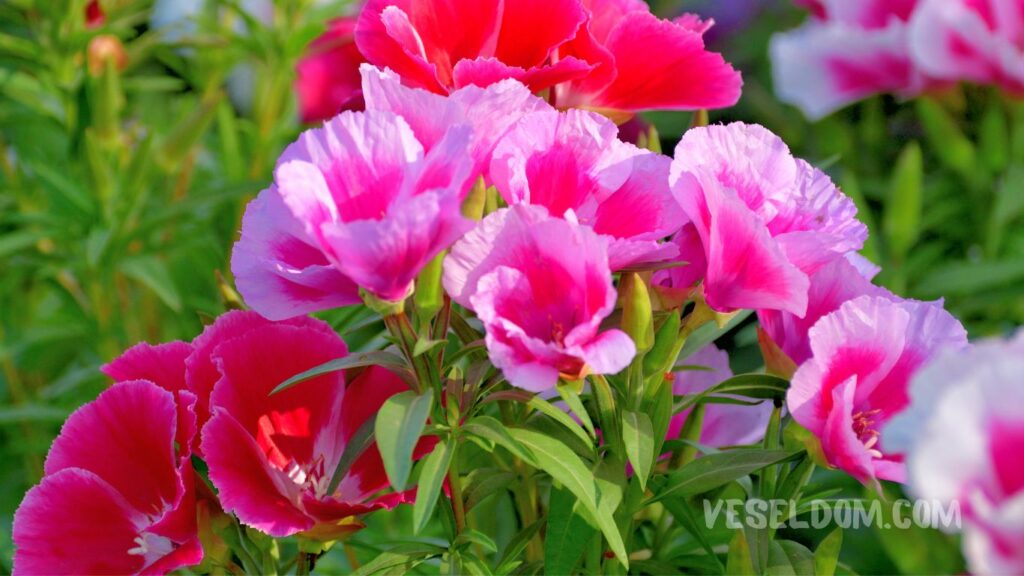
Godetia is also called the California rose, in memory of its place of origin. The seeds of this elegant annual plant with large flowers, similar to porcelain cups, are sown from the beginning of May, regardless of possible frosts. Godetia blooms in the second half of July, and in order for the garden to be decorated with these flowers until the autumn frosts, it is necessary to remove dried flowers and old, flabby leaves in a timely manner.
Especially tall varieties of Godetsia are recommended to be supported with supports, such as rods or pegs, to avoid the stems breaking off under the weight of the blooms. This measure will help preserve the aesthetic appearance of the plant and emphasize its beauty. Godetia combines beautifully with other flowers in flower beds and provides a pleasant aroma that adds atmosphere to the garden.
Thanks to its exquisite flowers and unparalleled beauty, gothesia will be an excellent addition to your garden. It will attract attention with its bright colors and fragrance, creating a unique atmosphere in the natural environment of your garden during the summer season.
Calendula – simplicity and brightness
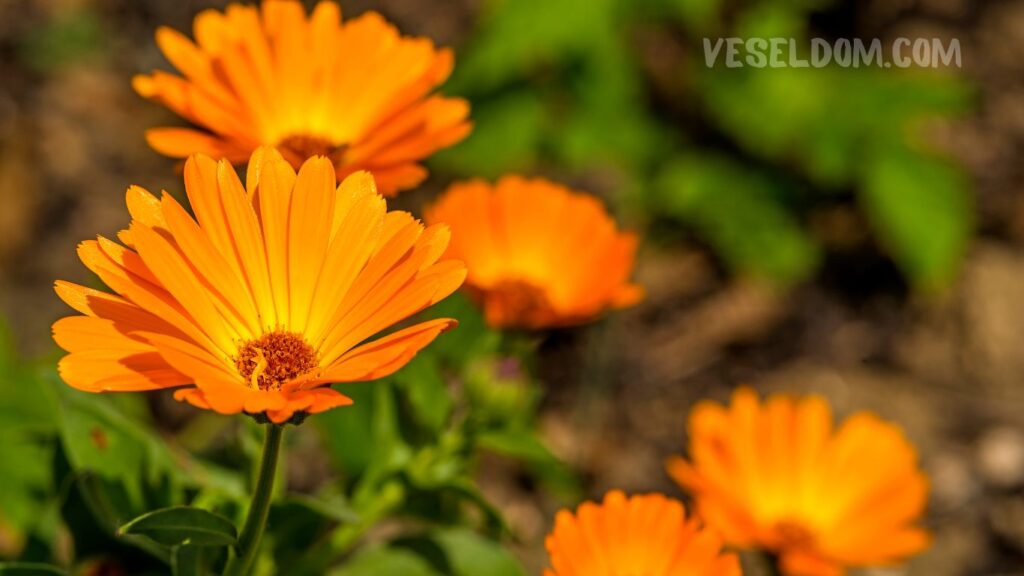
Some gardeners neglect calendula, seeing it as an ordinary and outdated flower. However, calendula is not limited to the classic amber look – breeders create real calendula miracles. For example, the variety “Prince of India” impresses with thick, terry, delicate salmon inflorescences.
Landscape designers recommend planting calendula along paths, which creates a spectacular combination of colors and looks particularly attractive. Calendula also looks good in borders, flower beds and containers, providing bright accents in the garden. It is perfectly combined with other flowers and creates harmonious compositions.
In addition, calendula has properties that are useful for the garden. Its bright flowers attract insects, in particular beneficial insects that help in the fight against pests. In addition, calendula is considered a medicinal plant with anti-inflammatory and healing properties.
Thus, calendula is not just a simple flower, but a real symbol of brightness that can decorate your garden and attract attention with its beauty and useful properties.
Daisy is the pearl of the flower bed
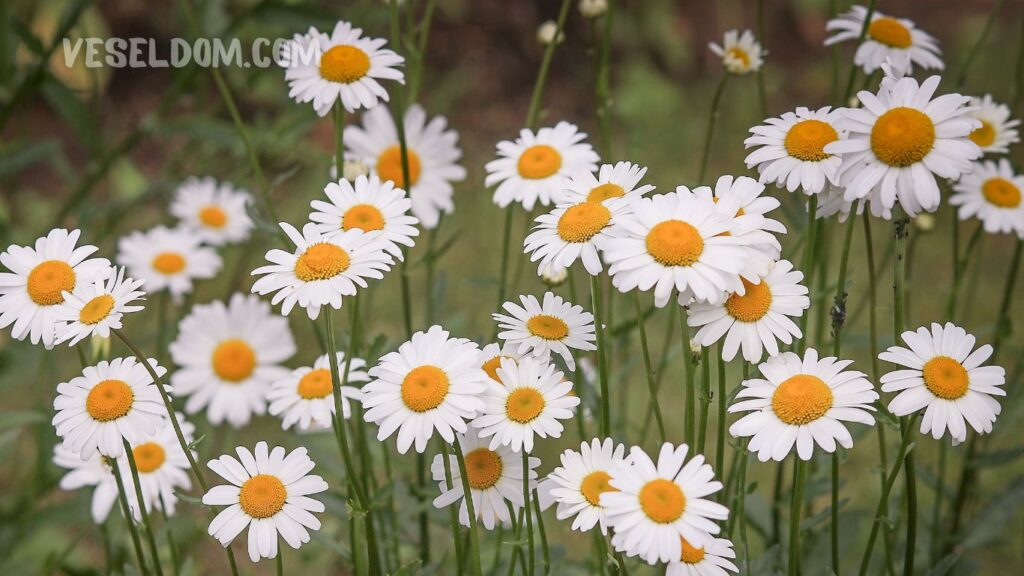
If the rose is called the queen of flowers, then daisies are like modest river pearls. Separately, they may seem simple, but in the hands of a talented person, they turn into something wonderful. Daisies add their charm to flower beds and low meadow lawns.
Daisies sown with seeds in open ground will bloom only the following year, therefore, in order to obtain flowering in the current season, it is recommended to plant seedlings in May. This will allow you to enjoy their blooming diamonds already this year. Seedlings can be purchased or grown independently by sowing seeds in a suitable acidified soil mixture and providing it with the necessary care.
Daisies are flowers of delicate beauty, which attract attention with their simple but elegant flowers and give a fresh and light feeling. They perfectly combine with other flowers and create a romantic mood in your garden.
Nasturtium – bright colors of the fence
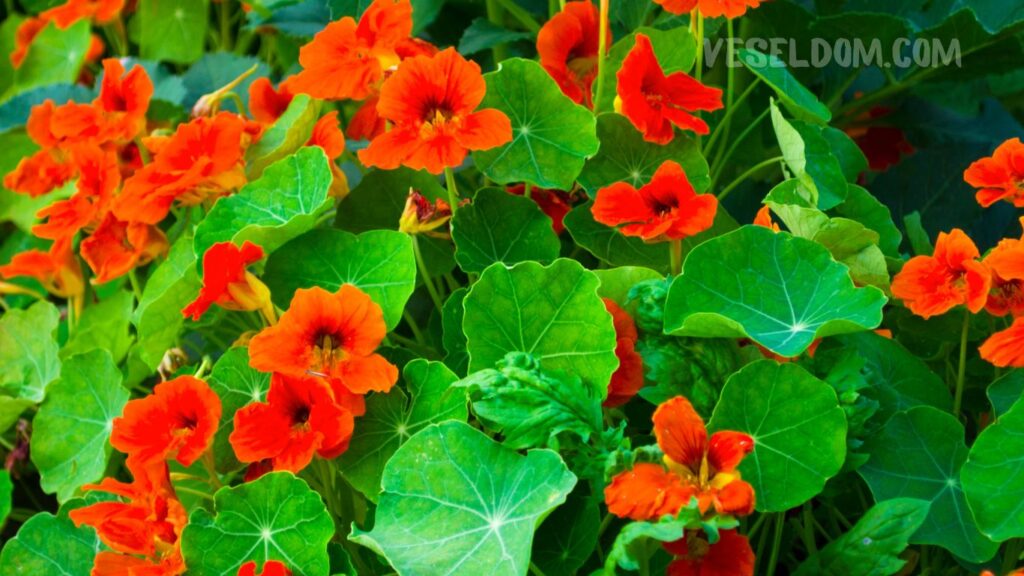
Nasturtium is an undemanding flower for those who prefer easy care in the garden. It is ideal for summer residents who do not have much time to constantly take care of their garden. This annual plant quickly weaves everything that is offered to it, for example, a fence, lattice of gazebos or supports near the wall of the house.
Nasturtium flowers are theoretically edible and can be used to decorate desserts. However, for this it is recommended to grow plants using only natural fertilizers and not chemical preparations that may be available in stores. This will preserve the naturalness and safety of flowers for their further use in culinary experiments.
Thanks to its bright colors, nasturtium creates a striking effect on your fence. It adds lively notes of color and beautifies the surrounding environment. In addition, nasturtiums are known to have repellent properties that reduce the likelihood of harmful insects attacking other plants in your garden.
Nemesia is a decoration in pots
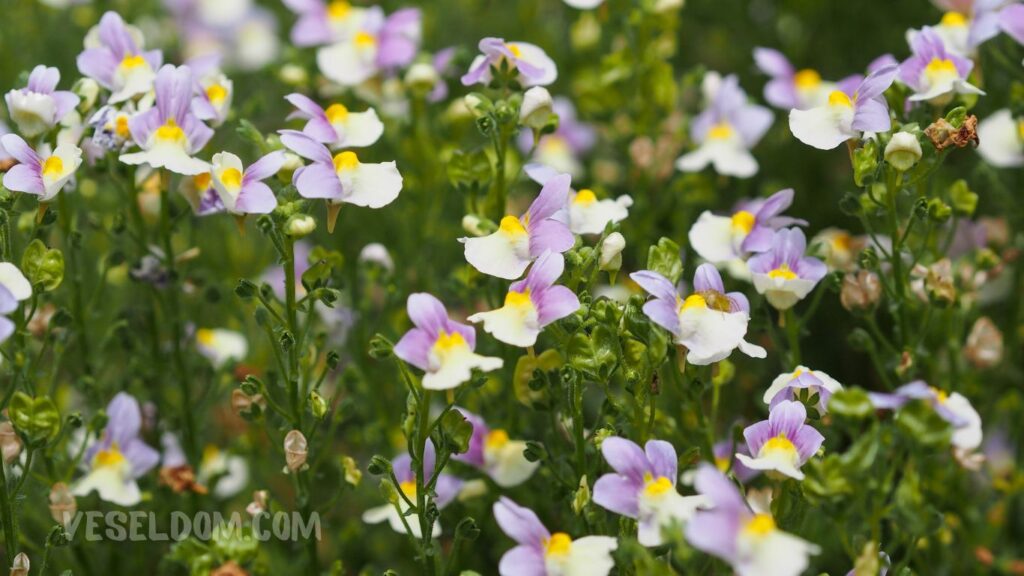
Nemesia is a flower that vaguely resembles pansies, if we talk about the shape of the petals of certain varieties and their combination of colors, for example, purple with white or red with pink.
In warm regions, nemesia can be sown by seeds directly into the soil, but in cool regions it is recommended to plant seedlings in the garden in May. In both cases, it is important that the air temperature rises steadily to +16 °C and above.
Nemesia is an excellent choice for growing in pots. It will create a wonderful accent on your terrace, balcony or window shelf. This flower is also quite resistant to cold, so it can be used to decorate spring and autumn compositions. Nemesia requires moderate watering and enough sunlight for healthy growth and colorful blooms.
Thanks to its charming flowers, nemesia will create an unparalleled atmosphere in your garden or on your balcony. You can enjoy its bright colors and unsurpassed aroma during May days, adding aesthetic pleasure to your green area.
Bold – create an amazing blooming carpet
Landscape designers recommend planting fennel separately so that it creates a dense flowering carpet on the ground. The palette of varieties is represented by all shades, from pink lollipop to purple, and even white. The scent of this beautiful plant is easier to pick up at dusk than during the day, as the bold is particularly attractive to moths among all pollinators.
Fenugreek is an undemanding plant that grows well in sunny areas with well-drained soil. It is an ideal choice for forming flowering carpets on your garden lawn, in flower beds or at the edge of flower beds. Thanks to its charming flowers and pleasant aroma, boldness attracts attention and creates a magical atmosphere.
In addition, fennel can be an attractive addition to cornflowers, thyme and other flowers, creating harmonious compositions in your garden. It is also a honey plant, attracting insects, particularly butterflies, which are important pollinators for many other plants.
So, fennel is a beautiful plant that creates a spectacular carpet of flowers in your garden. Its variety of shades and wonderful aroma add beauty and romance to your green space.
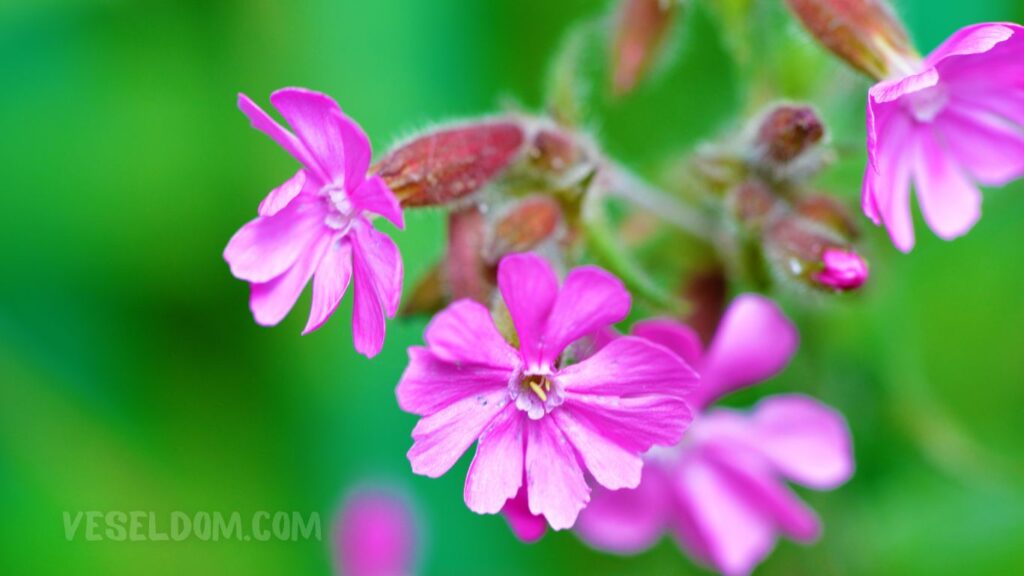
Chrysanthemum is the queen of autumn
Chrysanthemum requires a permanent sunny place and fertile soil for its full development. It is recommended to plant bushes at a distance of 20-30 cm from each other to provide them with enough space. In case of unpredictable weather, seedlings can be protected using non-woven material. Chrysanthemums bloom late, in the second half of July, and continue to decorate the garden even after the leaves of trees and shrubs begin to acquire shades of bronze and gold.
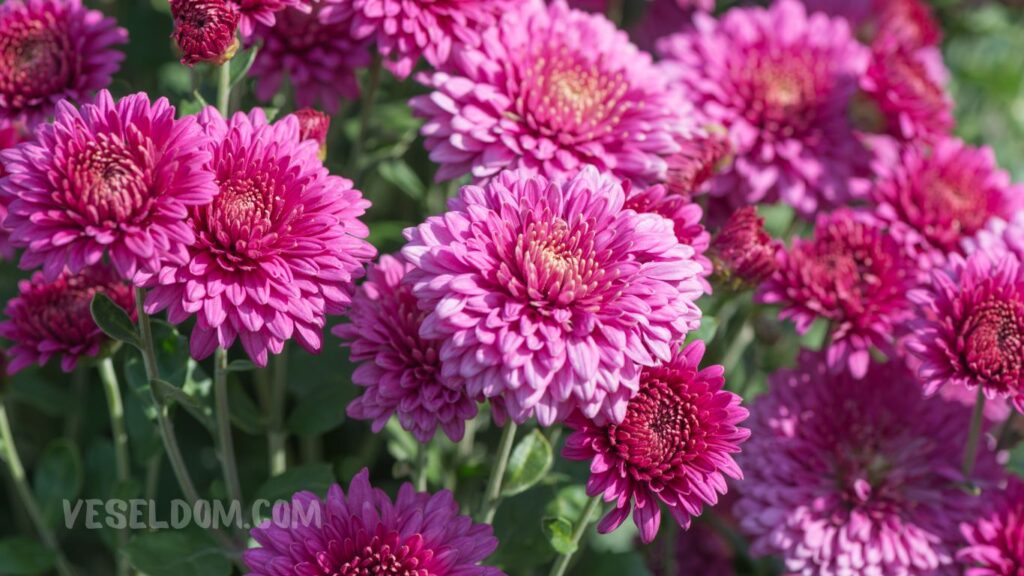
It is recommended to buy hybrid varieties of chrysanthemums in a store, since own planting material does not always inherit all the characteristics of the parent plants. In the store, you can find a wide selection of varieties with different shapes and colors of flowers, which ensures that your garden will be decorated with the best hybrid chrysanthemums.
Chrysanthemums are not only the queens of autumn, but also a magnificent accent in your garden, which will attract attention with its majesty and colorfulness. They can be used to create flower beds, borders, flower arrangements or even as flowers for various ceremonies and events. Enjoy the majesty and grace of chrysanthemums in your garden!