
Protection of potatoes from pests and diseases on crops can be done by biological, cultural and/or chemical methods. Control of crop infestation does not depend solely on the use of agricultural chemicals, and more and more industries are gradually appreciating the benefits of an integrated approach. The general protection strategy is the use of both chemical and non-chemical treatments.
Cost-effective and safe pest and disease management strategies are essential to maintain production efficiency and quality. Modern methods of crop management may be among the simplest methods of control. These include practices such as watering at strategic times during the growing season, rolling the soil to prevent cracking, or just good crop hygiene. Cultural practices used in potato crops will depend on the dominant pests and diseases in the area.
Note. It is important that pests and diseases are correctly identified before implementing protection strategies!
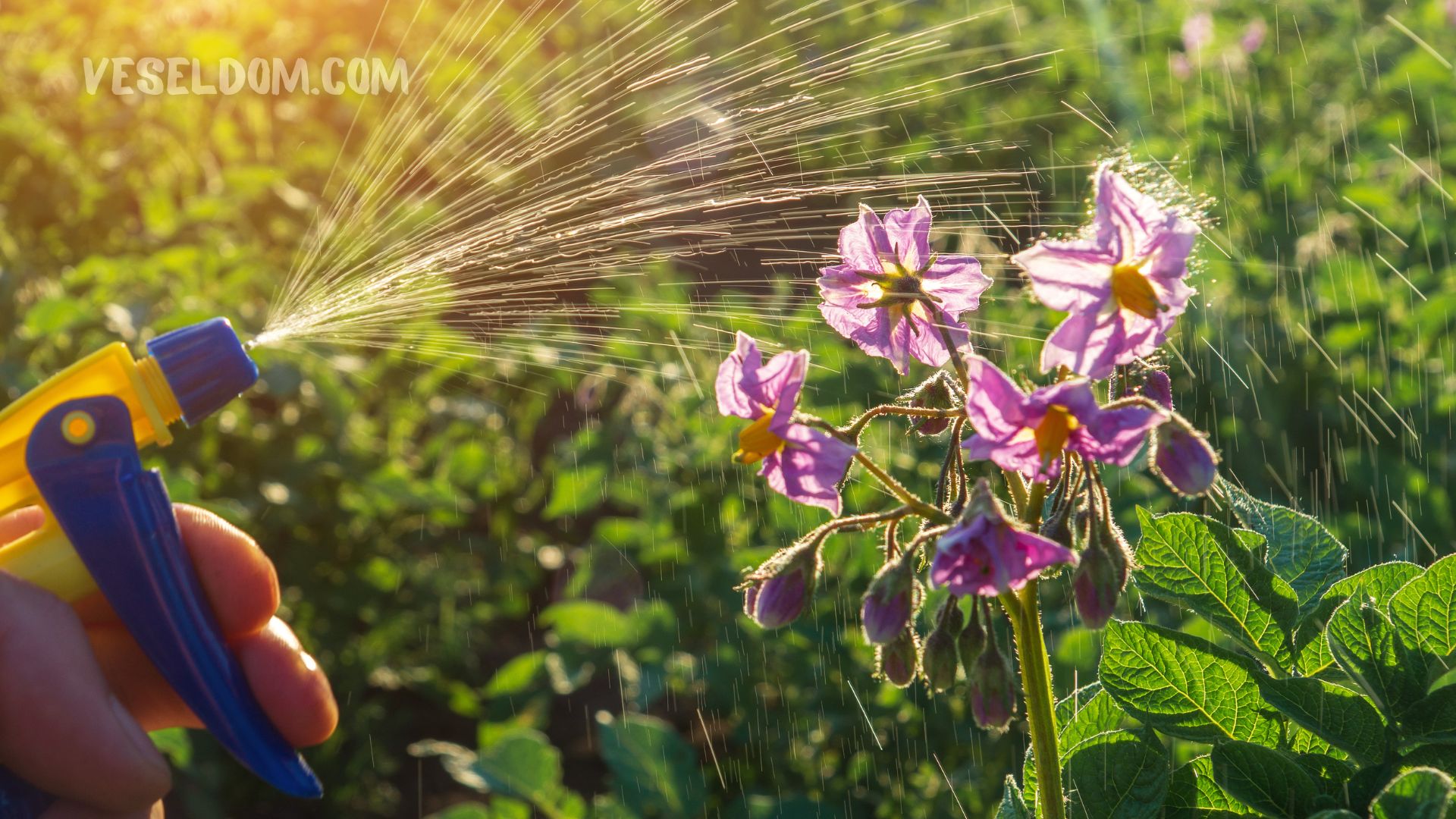
In some cases, crop management methods may conflict with each other. There are two critical steps to follow when deciding which methods are best for your crop:
- Analyze the history of the garden and determine which pests and diseases were common in previous years;
- Preventive measures are applied to pests and diseases of greatest concern. For example, if powdery mildew was common in previous years, irrigation should be limited around the tubers.
Order of work
The following table shows which conservation practices apply to each crop stage and why.
Table 1. Pest and disease management practices for each sowing stage
| Harvest stage | Action | Reason |
| 1. Before landing | Review the garden’s history and identify what R&Ds have been the biggest risks in the past (especially with soil) | This will make it possible to determine which pests and diseases the crop will be exposed to, and therefore determine the most suitable methods of use |
| Clear the seeded areas and remove weeds and self-sowing potatoes | Weeds and self-sowing hide viruses, insect pests and diseases that can be transferred to the new crop | |
| Avoid continuous planting of potatoes (minimum 2 years between crops) | Reduces the accumulation of pests and diseases in the soil | |
| 2. Landing | Use of certified seeds | Certified seeds are grown according to strict hygienic rules and will reduce the risk of introducing diseases and pests into the crop |
| Use of plant varieties that are less susceptible to powdery mildew or common scab | In soil where there was previously scab, less susceptible varieties will reduce the risk of the disease | |
| Changing the planting depth according to the relative risk of developing diseases and pests | Deep-growing varieties are less susceptible to the attack of the potato moth | |
| Shallow planting will help reduce rhizoctonia infection
|
||
| Plant in optimal conditions of soil temperature (16-20ºС) and soil moisture | High temperature and high humidity can lead to seed damage | |
| Low temperature and high humidity contribute to rhizoctonia infection | ||
| 3. Flipping | Maintain and improve soil structure and create well-drained hills | Poorly drained soils that become saturated easily promote diseases such as powdery mildew, blackleg and phoma (gangrene) |
| Maintain good ground cover throughout the season | A good soil cover acts as a barrier, preventing the potato moth from reaching the tubers and greening
|
|
| Control pests and diseases throughout the season | Control measures are only necessary when pest populations reach critical levels
|
|
| 4. Irrigation | Check the ground cover of the tubers regularly throughout the season | Uprooting prevents the greening of the tubers, and also protects them from attack and development |
| Manage irrigation to avoid pest attack | A field with a history of powdery mildew should not have saturated soil when the tubers are planted | |
| Fields with a history of common scab should have moist soil when the tubers are planted
|
||
| Avoid water stress | Maintaining good crop health makes plants less susceptible to pest attacks and disease development (especially black spot) | |
| 5. Pruning | Maintain the soil barrier by using irrigation | Prevents greening, attack of potato moth and late blight |
| 6. Harvesting | Before digging, make sure that the tubers are ripe | Ripe tubers have a protective skin, which reduces the risk of infection |
| Harvest as soon as possible after maturity | Increased time in the ground increases the risk of pests and diseases (e.g. rhizoctonia, silver kerchief, black spot, wireworm) | |
| Handle tubers with care when harvesting | Damage to tubers creates an entry point for disease (e.g. dry rot, soft rot) | |
| Store the crop in cool (12-18ºC), moist conditions | Hot and dry or cold conditions increase tuber damage and risk of rotting | |
| 7. After harvesting | If the tubers were very wet when harvested, place them in a drying tent with warm air circulation to dry | Free moisture on the tubers increases the risk of rotting and destruction of seeds |
| If the tubers were cold at harvest or have just been removed from cold storage, warm them to at least 12 °C before sorting or cutting the seeds. | Cold handling of tubers is likely to damage them and increase the risk of disease | |
| Handle the tubers carefully during sorting and inspection | Damage to the tubers increases the risk of infection and can make them unmarketable | |
| If tubers are to be refrigerated, pre-cure them by keeping them at 14-16ºC and 85-95% relative humidity, with good air flow, for 10-14 days | Healing heals skin wounds and reduces the risk of harboring rot (such as dry rot) | |
| Do not save tubers for seed | Uncertified seeds increase the chances of pests and diseases (especially viruses) in the next season’s crop | |
| Store tubers at optimal temperature and humidity (3-4ºC for seeds; 4-10ºC for cooking; 10ºC for processing tubers; 85-95% RH for all) | Storing tubers in optimal conditions minimizes disease and extends shelf life |
Hygiene in the barn
The potato shed is a source of disease. Fungi and bacteria that cause diseases on potatoes can be found:
- in the dust that covers the barn floor;
- on sorting rollers, seed cutting blades and inner boxes.
The shed also contains a large amount of airborne spores produced by fungi such as silvery mildew, and therefore generally has a high potential for contamination of clean seed stocks. This issue is as important to commercial growers as it is to seed growers.

Dust removal
Regular dust removal (morning, noon and night) with a vacuum cleaner is recommended to minimize seed contamination during sorting.
Sweeping is not the answer as it just redistributes the dust.
Cleaning and high pressure washing
Cleaning and high-pressure washing are most important to minimize soiling of sorting equipment, boxes and seeds (which should be cleaned between seed lots and between different generations) and floors and walls at the end of the season.
Disinfectants can also be effective, but may not be necessary in many cases. The situations where a disinfectant is needed and the best disinfectants to use are currently being determined.
Thrips
Thrips are sometimes a problem in potatoes. They are of particular concern in seed crops, as certain species (notably onion thrips and western flower thrips) are responsible for virus transmission. The risk of virus infection will be reduced by crop management practices such as weeding and self-sowing, planting certified seed and maintaining proper crop nutrition.