
Melissa is a wonderful plant that has a huge number of useful properties. It can be used both in the kitchen and in the treatment of various diseases. In order to provide the “green assistant” with proper care, it is recommended to study its features. Let’s analyze how melissa is grown on the windowsill throughout the year in the conditions of the apartment.
In natural conditions, the height of the plant can exceed 1 m, but melissa growing at home usually grows no more than 30 cm. Many shoots covered with light green leaves form on the branching stems.
Melissa has a special fresh smell, reminiscent of lemon, for which the plant has the unofficial name “lemon mint”.
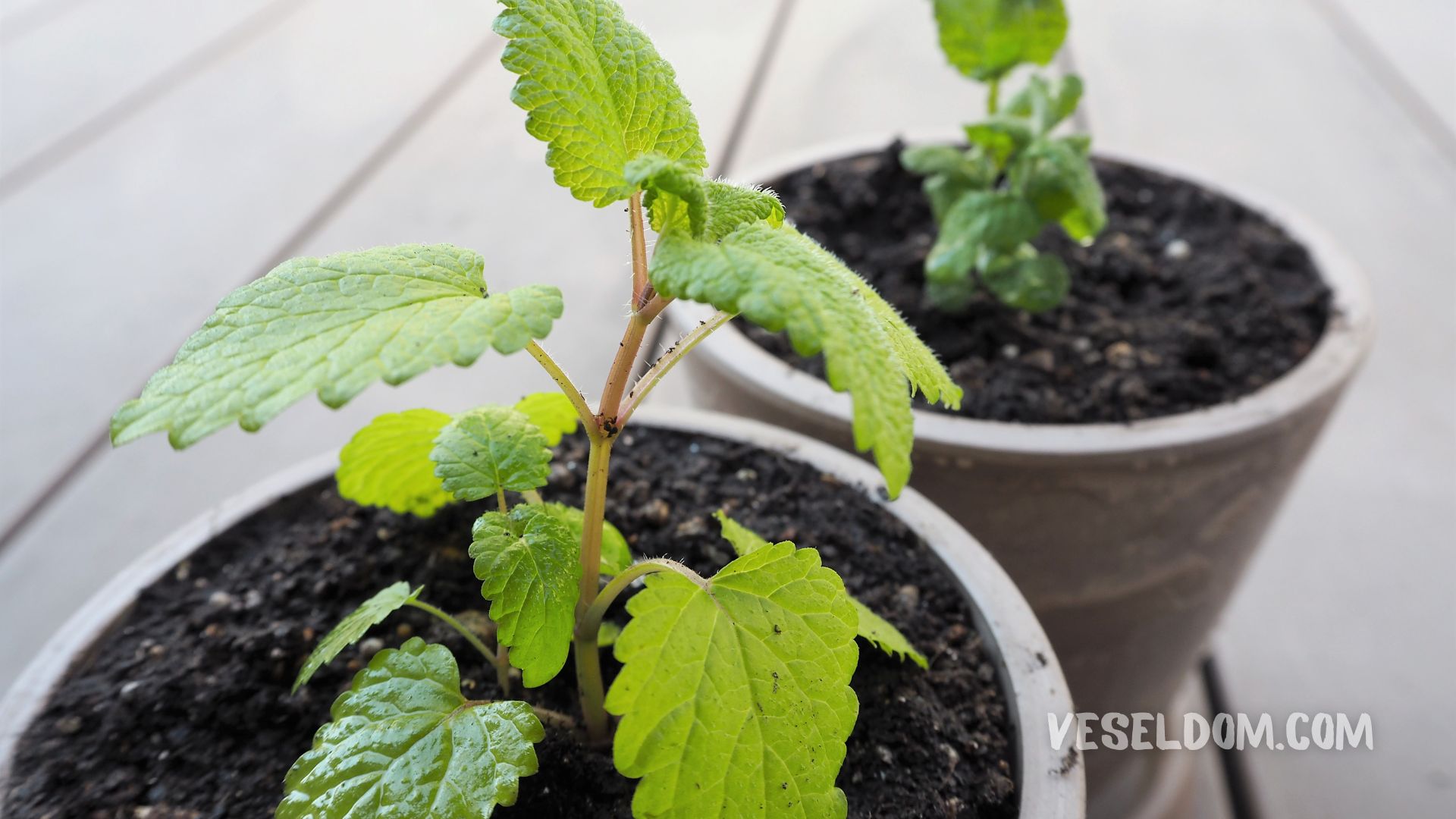
Choosing a pot and soil
To grow a plant, it is good to choose a container with a height of 10-15 cm made of any material, except wood. Drainage holes should be provided at the bottom of the pot.
When planting, a drainage layer is placed on the bottom (small crushed stone is a popular material) and covered with a soil mixture. A simple solution is to stock up on a ready-made “store” composition (a universal one is suitable), but it is better to make the soil yourself by mixing soil from the garden and sand in equal proportions (peat is also suitable instead).
Lighting and temperature
Lemon balm is a light-loving culture, and for its cultivation choose a windowsill facing the bright side. At the same time, direct sunlight can damage the tender leaves, so the pot with the grass is placed in light penumbra or the lighting is diffused.
If the windows of the room face north, then you will have to use a phytolamp to compensate for the lack of natural light. It will be indispensable in the winter season as well, since a light day of at least 10 hours is needed for good crop growth.
Phytolamps are installed at a distance of 0.6 m from containers with shoots.
In the summer, the grass tolerates even high (+25 oC) temperatures well. In the cold season, if the lemon balm is not exposed to light, it should be provided with a temperature no higher than +15-18 oC, otherwise the plant will be strongly stretched, and the stems and leaves will be underdeveloped. In addition, the content of essential oils in them will noticeably decrease.
Watering
An excess of moisture has a negative effect on the health of the culture, so irrigation is carried out as the top layer of the soil dries.
Before watering the plant, the water is allowed to stand for 24 hours to remove harmful substances from it. The temperature of the liquid should be room temperature. Lemon balm is usually watered under the root.
In the cold season, when the air in the room becomes dry due to heating devices, the grass will need to be sprayed from a sprayer to provide it with the necessary level of humidity. Water is the same as for irrigation. Spraying should be done every day. In the summer, spraying is not mandatory, but it is usually carried out to give the leaves more juiciness.
Pruning
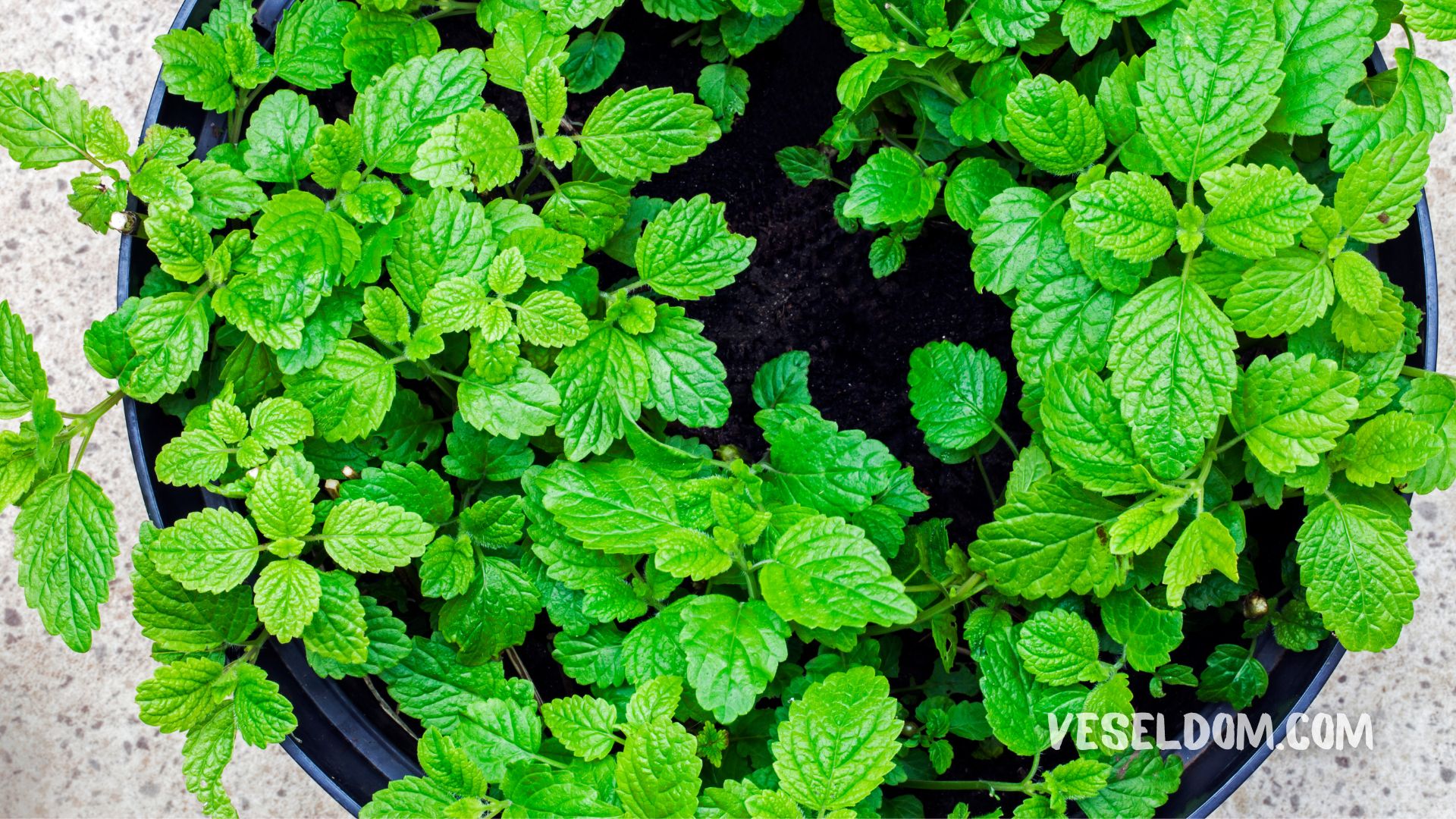
In order for the bushes to grow stronger and become more lush, you can start cutting the branches after the grass reaches a height of 15 cm. It is also worth removing the buds, because after flowering, the lemon balm leaves become coarser.
Feeding
In the spring, when new shoots begin to form on the plant, flower growers often use a solution of urea (1 g per 1 liter of water) or mineral fertilizers – potassium salt (1 g) + superphosphate (1 g). Nutrient solutions are introduced into slightly moistened soil. During the summer, once every 3 weeks, a dry tea infusion is applied to the soil (4-5 bundles per plant).
They feed the grass until autumn, while the growing season lasts. Florists advise to apply nutrients after each cutting of leaves. In winter, the plant does not need additional nutrition.
Everyone can grow lemon balm at home. It is worth investing a little effort to have fresh greens on the table all year round!