
Eggplants are demanding vegetables that react to transplanting, temperature fluctuations, insufficient nutrition and lack of humidity. To successfully grow this crop, you need to have a lot of patience. The process begins with planting seedlings and caring for young sprouts. Let’s look at the rules of how to sow eggplants for seedlings to get healthy vegetables.
Growing eggplant seedlings at home requires stable temperatures, moderate humidity and proper nutrition. When sowing seeds, it is important to avoid too wet soil to prevent the spread of diseases such as black leg, to which eggplants are very sensitive. An excess of sunlight and heat leads to excessive stretching of seedlings, which can negatively affect its rooting in open ground or in a greenhouse, as well as delay the ripening of fruits.
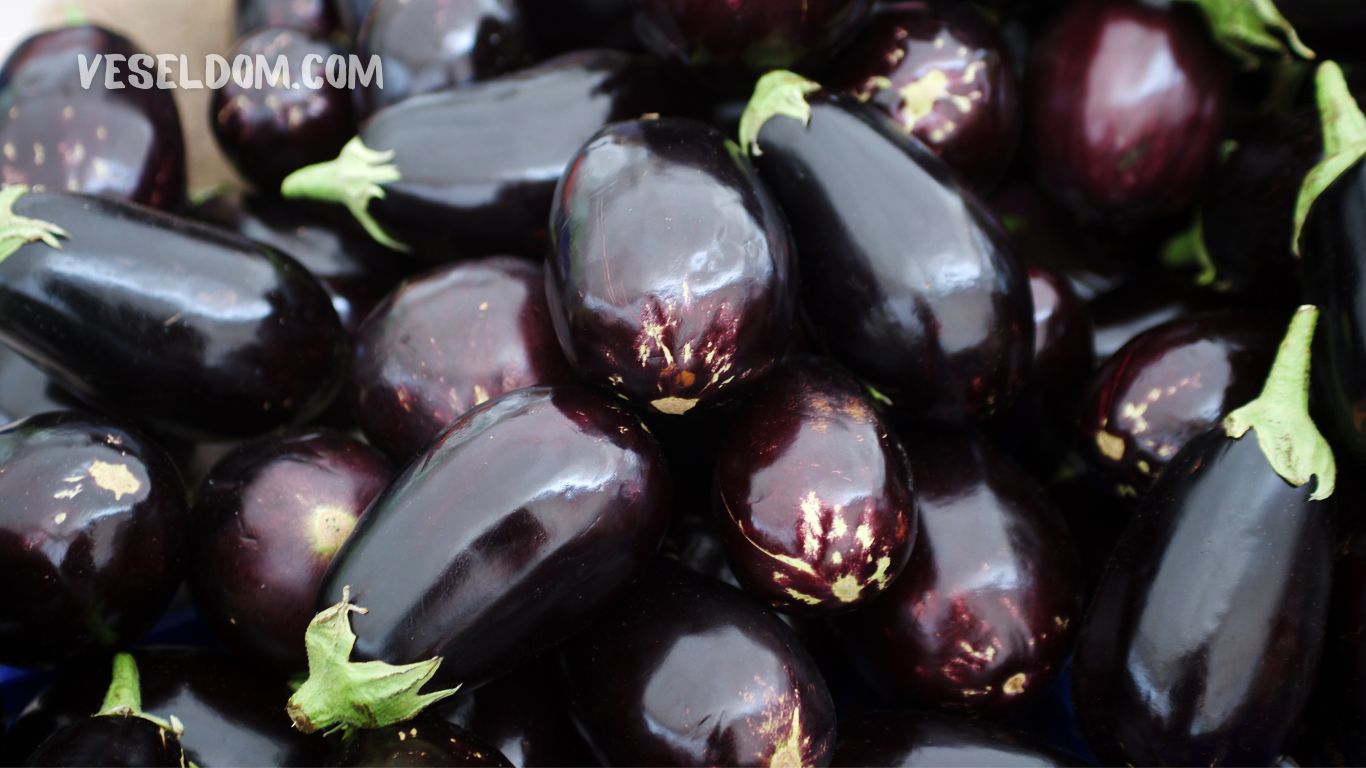
Seed preparation
Before proceeding to planting eggplants for seedlings, it is important to properly prepare the seeds. They should be checked for similarity, mechanical damage and calibration.
Calibration
Calibration is done visually, selecting the largest, dense and healthy seeds for further preparation for sowing. Small seeds are also separated and sown separately from large ones. Dark, uneven or damaged specimens should be discarded.
Check for fullness
Seeds are also checked for fullness to weed out empty specimens. This check can be done using the following steps:
- Dissolve 1 tablespoon of salt in 500 ml of water.
- Place the seeds in this solution for 10 minutes.
- If the seeds float to the surface, they should be discarded.
- The seeds that have sunk to the bottom are ready for sowing.
Seeds that pass this test usually produce friendly seedlings 99% of the time.
Treatment with stimulating drugs
To improve the germination of seeds, you can use stimulating drugs, such as zircon, Epin and others. These preparations help the seeds to activate and germinate faster. To prepare the preparations, you should follow the instructions on the package, as well as keep the seeds in the preparation for the recommended period.
If desired, before sowing eggplants for seedlings, you can also germinate seeds. This is especially useful if each seed is planted in a separate container without further transplanting. To germinate the seeds, place them for several days in wet gauze or cotton cloth on a flat vessel until a sprout appears. Seeds that have not hatched should be discarded.
Boarding dates
To choose the optimal time for sowing eggplant seeds for seedlings, it is recommended to first read the information about the growing season indicated on the seed packet. There are early varieties with a short growing season, medium varieties and late varieties, each of which has its own fruiting period. For example, early varieties may produce fruit 60 days after sowing, while late varieties may take 80 days. It is important not to exceed the maximum period of growing seedlings at home, which usually should not exceed 80 days, as this can cause a delay in the formation of buds and fruiting.

To determine the date of planting eggplant seeds for seedlings, you can be guided by the following rules:
- 10-14 days for seed germination are added to the fruiting period indicated on the seed package.
- If an intermediate transplant (picking) is planned, another week is added to the obtained result.
The later it is planned to transplant the seedlings to the beds, the later sowing should be carried out. In general, the optimal time for sowing eggplants for seedlings usually falls from the second decade of February to March 10-15. It is worth noting that these terms are statistical averages for heat-loving crops, and may differ depending on specific climatic conditions and recommendations of local agronomists.
Soil preparation
Young eggplant seedlings are very sensitive to fungal and bacterial infections, so the soil must be disinfected before planting. This can be done by heating in the oven, steaming or pouring hot water. It is enough to heat the soil in a hot oven for 15-20 minutes. You can also leave the soil in the cold for 1-2 days.
The composition of the soil should include humus, sand and sod land. It is important that the soil is rich in organic matter, which contributes to the active development of plants. If you prepare the soil yourself, you can add long-acting complex fertilizers. The more nutritious the soil, the stronger the plants will grow, and the need for additional feeding will be less frequent.
Methods of growing seedlings
The choice of the method of growing seedlings depends on the availability of available space for placing the plants. If you have enough space, you can use classic boxes, and if space is limited, you can use peat tablets or the “snail” method, although these methods require further picking of plants.
When using boxes or separate containers, it is necessary to provide for the presence of drainage holes. The distance between the seeds should be approximately 3 cm. If the seedlings are to be transplanted, the volume of the pot should not be less than 300 ml.
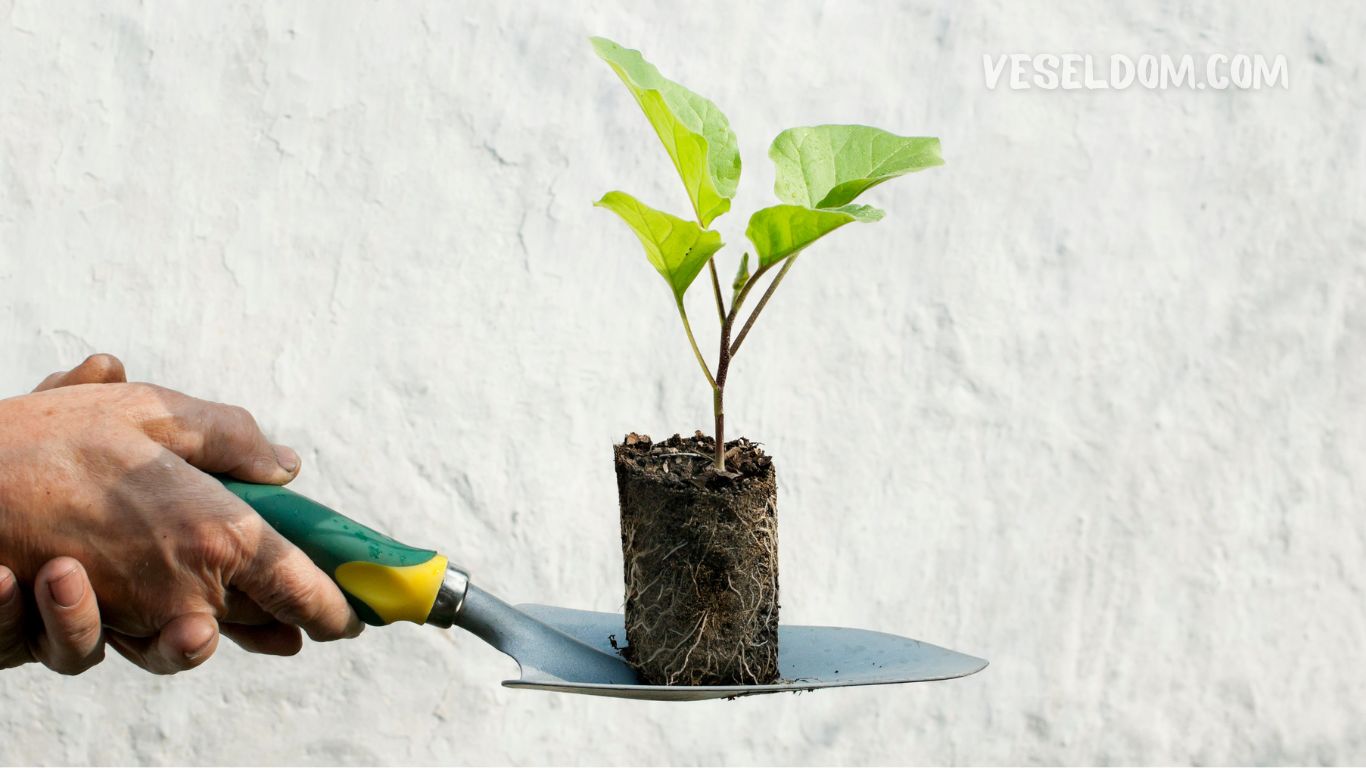
Peat tablets should first be dipped in water, and then placed on a large pallet or in a box for further sowing of seeds. During the growth of the plants, the tablets can be easily transplanted together with the seedlings into larger containers.
The “snail” method is a compact sowing method. To create it, you can use a strip of substrate for laminate (as a budget option) and ready-made soil. A strip with soil is twisted in the shape of a snail, turned vertically and fixed with a rubber band or rope.
Step-by-step instructions
Step-by-step instructions for the correct planting of eggplants for seedlings in boxes:
- Prepare a box filled with moist soil. Lightly tamp the soil in the box, creating a layer 5-7 cm deep.
- Make grooves in the soil with a depth of 1-1.5 cm and a distance between them of about 3-4 cm.
- Place the seeds in the grooves at a distance of 3 cm from each other. Leave enough space between the seeds for their development.
- Cover the seeds with a 10 mm layer of moist soil to cover them completely.
- Water the crop with warm water. Make sure the water is warm but not hot to avoid damaging the seeds.
- Cover the container with plastic wrap to create a greenhouse effect. This will help retain moisture and heat for rapid seed germination.
- Place the seed box in a warm place with sufficient lighting. You can place it under artificial lighting or near a window where there is enough sunlight.
- After the first shoots appear, remove the plastic wrap, but continue to provide the seedlings with sufficient light and regular watering.
Thus, you will be able to enjoy healthy and strong eggplant seedlings, ready for further transplanting into an open soil bed.
What to do after sowing
After sowing eggplant seeds for seedlings, it is important to follow several steps for proper care:
- Periodically ventilate the planting containers by removing glass or polyethylene, and allow the soil to dry from condensation. This is necessary to avoid waterlogging of the soil and the development of pathogenic microorganisms.
- After hatching the seeds and the appearance of young sprouts, move the boxes to a bright place, but with a cool microclimate. This will help the plants develop a strong root system without pulling out the stems. Water the plants sparingly.
- It is important to ensure a calm microclimate when growing eggplant seedlings at home. Avoid sudden changes in temperature, humidity and drafts.
- After 20-25 days, if high-quality fertilizers or humus were not added to the planting boxes, you can provide additional plant nutrition. Apply fertilizers according to the manufacturer’s recommendations.
- When picking, when the seedlings have sufficiently developed leaves, carefully transplant the plants, trying not to damage their root system. If possible, transfer each plant to a larger container.
- After warming the soil to at least 15 °C, the plants can be planted on the beds or in the greenhouse. Make sure the soil is properly warmed to provide optimal conditions for eggplant growth.
By following these steps, you will ensure the proper development of eggplant seedlings and prepare them for the future transplant to open ground or a greenhouse.