
Breeding guinea pigs at home has two main goals: obtaining eggs and meat products. Guinea fowl eggs are unique dietary products that are significantly superior in composition and characteristics to chicken eggs. Therefore, breeding guinea pigs is a promising direction for farming. Let’s consider how guinea fowl eggs differ from chicken eggs.
Features of guinea fowl eggs
Guinea fowl eggs are delicate and valuable. This is not only because of their low popularity, but also because of the low egg-laying of these birds. Already from autumn to spring, guinea fowls significantly reduce the number of eggs they lay.
Compared to chicken eggs, guinea fowls produce far fewer eggs: a chicken lays about 300 eggs a year, while a guinea fowl lays only about 120.

The appearance of the eggs is also different:
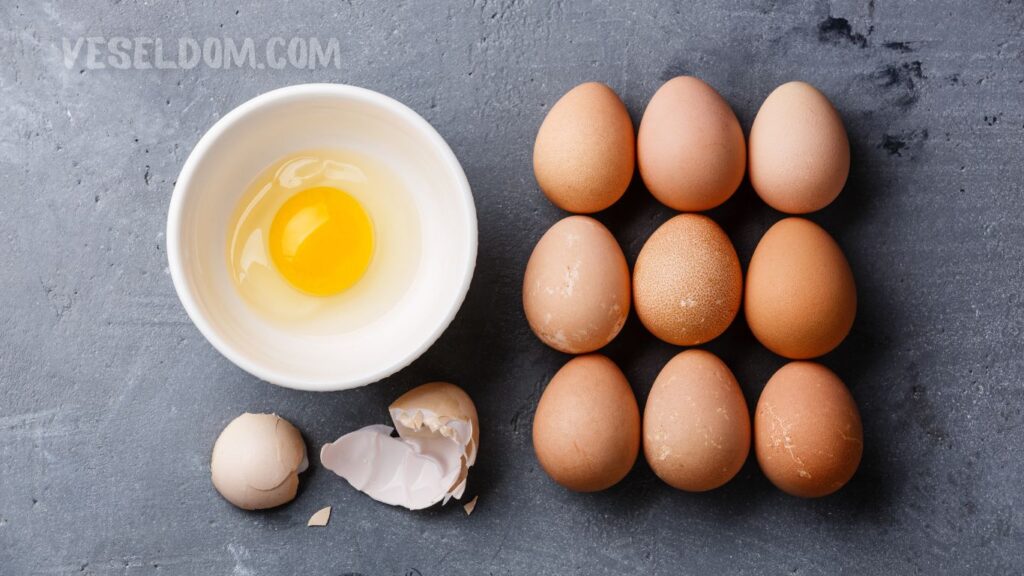
- The guinea fowl egg is smaller in size and has a more pronounced “egg” shape, with one side rounded and the other more elongated.
- The weight of a guinea fowl egg can be similar to an average chicken egg, due to the thicker and stronger shell, which takes up about half the weight of the egg.
- The color of a caesar egg is brown-yellow (cream) and does not have a glossy shine. It may have a characteristic speckled pattern.
- The shell of a guinea fowl egg is stronger because of its shape and structure. This is related to the behavior of guinea fowls in nature: they can fly, even sitting on an egg. Therefore, a guinea fowl egg can withstand a fall from a considerable height without damage.
- The content of guinea fowl eggs is also different: the yolk of a guinea fowl egg is thicker and occupies a larger volume than a chicken yolk.
- The shell of guinea fowl eggs is less porous, which makes them suitable for long-term storage. If the appropriate temperature conditions are observed, guinea fowl eggs can be stored for up to 1 year. The low porosity of the shell helps to prevent the protein under the shell from drying out, which extends the shelf life of the yolk.
Such features are especially convenient for farmers: products can be stored and transported over long distances, but from an economic point of view, chickens that lay eggs are more profitable.
The influence of eggs on human health
What effect do guinea fowl eggs have on the human body? First of all, it is worth studying their differences from chicken eggs in the composition of vitamins, amino acids, useful elements and energy value. For example, the calorie content of Caesar eggs is 3-4 times lower than that of chicken eggs (43 kcal versus 157 kcal).
This difference is due to their composition:
- Proteins and carbohydrates are contained in approximately the same proportions – 12.8 g and 0.7 g per 100 g of product, respectively.
- Fats differ significantly in quantity: only 0.5 g in chicken eggs, 11.5 g in chicken eggs.
Caesar eggs also contain identical micro- and macroelements (such as phosphorus, magnesium, potassium and others), vitamins (groups A, B, E, PP and others) and amino acids (lysine, methionine and others).
This composition of the product contributes to a positive effect on human health. The composition of Caesar eggs is rich in useful substances that have a beneficial effect on the body.
The benefits of eggs
The benefits of guinea fowl eggs significantly exceed those of chickens. This is explained by the ratio of useful substances in their composition.
It is recommended to use guinea fowl eggs when:
- Allergies to chicken protein.
- Metabolic disorders.
- Diseases of the gastrointestinal tract.
- Avitaminosis.
- Nervous disorders.
- Pregnancy and breastfeeding.
- Weight loss processes.
The yolk contains a significant amount of carotenoids, which give it a bright color. They affect visual function and improve immunity. Group B vitamins contribute to the normalization of the nervous system and have a beneficial effect on it.
The increased content of vitamin E in guinea fowl eggs makes them useful for skin and hair. These eggs are used in cosmetology for masks and skin care products. They contribute to skin rejuvenation, increase its elasticity and improve color. Hair becomes strong and soft after using Caesar eggs.
These eggs are useful for iron deficiency and vitamin deficiency, including seasonal. They saturate quickly and for a long time, are recommended for loss of strength and exhaustion.
Dietary guinea fowl eggs are often used as substitutes for chicken in the process of losing weight or gaining muscle mass (for athletes), due to their low calorie content.
In addition, these eggs do not contain albumin, a substance that often causes allergic reactions in people. Therefore, guinea fowl eggs can be consumed even if there is an allergic reaction to chicken eggs.
Caesar eggs are especially useful for pregnant and lactating women. They not only compensate for the deficiency of useful and nutritious substances, but also normalize the state of the nervous system.

It is recommended to include guinea fowl eggs in the diet of young children, as they reduce the likelihood of allergic reactions and are better absorbed by the child’s body.
Pity the eggs
Guinea fowl eggs do not harm the human body, if they are not abused. However, certain limitations should be taken into account.
The high protein content in Caesar eggs can overload the liver. Therefore, it is not recommended to consume Caesarian eggs during acute periods of liver and kidney diseases.
Although an allergic reaction to Caesarian eggs is unlikely, it is recommended to start using them with a small portion. This will help determine the presence of an individual reaction of the body to this product.
Given these limitations, guinea fowl eggs can be a safe and beneficial addition to the human diet. However, as with any product, it is important to stick to reasonable portions and variety in the diet to ensure a balanced diet.