
Home breeding of broilers is traditionally a priority for most breeders who raise chickens for meat. Crosses are preferred due to their precociousness, which helps to obtain a large amount of dietary meat quite quickly. But proper feeding and maintenance of broilers are somewhat different from traditional poultry farming. The key points of this process will be discussed below.
Choice of breed
Raising any chickens at home must begin with the correct selection of the appropriate breed. For some breeders, it comes as a surprise that broilers are rich in variety of species. Sometimes it is believed that “broiler” is a breed, but in fact it is the name of a cross – a line of chickens with unique properties. The cross itself is a mixture of breeds. Its breeding requires the creation of certain artificial conditions for the development of chickens.
Since broilers are a cross, it is not surprising that there are more successful options among them. It is believed that the following crosses have the highest profitability:
- Ross-308 and 708;
- Broiler-61;
- Avian Farms;
- Cobb 500 and 700.
The high performance indicators of the above-mentioned breeds are explained by the fact that they are pure variants of crosses.
In general, the general characteristics of broilers of different breeds are very similar. The chicken is larger than ordinary chickens, has a calm character. Adults reach a weight of up to 4.5 kg for a hen and 5.5 for a rooster. Even following only general recommendations, you can observe a rapid increase in meat mass. And having studied the subtleties of growing, characteristic of the chosen breed, this process can be accelerated additionally.
Breeding methods
The main secret of the popularity of broiler crosses is that you can get a large chicken suitable for slaughter 70 days after buying chickens. It is unprofitable to keep them longer than this period. In addition, starting from the 75th day, the palatability of the bird deteriorates.
The age of 2.5 months is considered the maximum for meat crosses. The main task that must be solved by a private breeder is the choice of a method of renewal of the feathered flock. The following two methods are considered optimal:
- Extensive – young birds are bought in the spring, the bird is raised until mid-summer, or until it reaches marketable weight. After that, the batch is slaughtered, and the next purchase of chickens is made already in the next season.
- Intensive – purchase of chickens is carried out every three months throughout the year. During this time, the previous population has time to grow up to the state of target use.
The optimal technology is selected based on individual conditions of maintenance. For example, to grow a dozen broilers, it is more convenient to use the intensive option in order to be able to diversify the menu all year round, but not spend too much time on it. The extensive option is suitable for a breeder who wants to stock up on meat once a whole year. As a rule, in this case we are talking about growing a flock of one hundred individuals or more.
Poultry farms always use an intensive method, as it allows you to completely update the livestock four times a year and make a profit from the sale of finished meat products.
Incubation of eggs
When breeding broilers for the first time, some breeders try to get stock by buying eggs. The reason for this lies in the fact that the price of eggs is significantly lower than the purchase of day-old chickens.
By creating the right conditions for incubation, you can achieve survival at the level of 90%. But if you add to this the cost of electricity and losses from low-quality eggs (they cannot be avoided), then the final savings will be quite small. The maximum that can be achieved is to reduce the cost of the chicken by 50%.
The main problem of this option is that the sale of broiler eggs is carried out only on poultry farms engaged in their breeding, or by private individuals engaged in the same. Therefore, without taking into account the costs of the journey to the place of purchase of the first batch of eggs, you can find yourself in a situation where the final cost of it and day-old chickens will be equal.
The purchase of special equipment becomes mandatory. Based on all of the above, it is better to start experiments with incubation when breeding ordinary chicken breeds, and start with meat crosses only when this decision does not become a critical loss of time and money.
In the future, when the own stock will grow enough for the laying hen to provide the necessary supply of eggs for the incubator, this option can help save a little. But there is one nuance here – it is often necessary to keep the bird longer than the economically profitable 75 days. Therefore, day-old chicks are considered a more convenient option among most breeders.

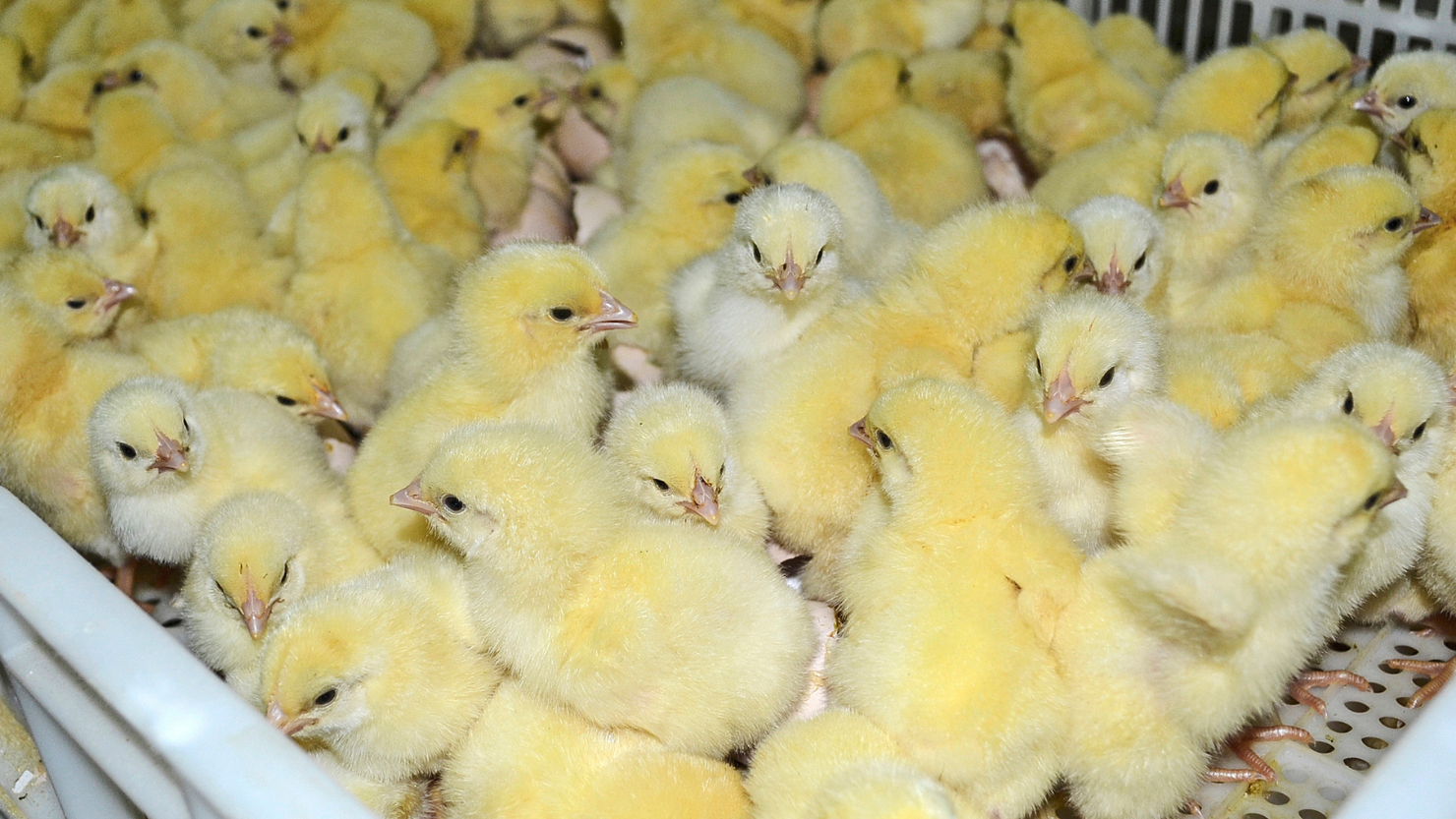
Buying day-old chicks
Buying day-old chicks is quite risky. Babies are still too weak, and they often do not survive the trip from the place of purchase to the breeder’s house or cottage.
Importantly! The first days after buying a chicken require special care and mandatory veterinary procedures. By taking all the appropriate actions to improve the health of the chicks, you can achieve 100% preservation of the flock.
Being an artificially bred hybrid, broilers do not have sufficient biological resistance to the negative effects of the environment. Based on this, antibiotics and vitamin complexes are a key feature of breeding meat crosses, which cannot be forgotten.
Buying adult chickens
There are many reviews that claim that a ten-day-old chicken is better than a day-old chick. Indeed, they are much stronger, because they have already overcome the most dangerous period of their bird life. But their price also increases according to age. Therefore, it is quite difficult to answer this question unequivocally – it all depends on the individual preferences of the breeder:
- A day-old broiler is cheaper, but you need to spend time on it, buy and give the necessary vaccinations or pay for the services of a veterinarian, buy special feed.
- Chickens that are 10 days old or more are significantly more expensive. This is due to the fact that the breeder has already carried out all mandatory veterinary procedures. The bird’s body has strengthened, and the risk that it will get sick during transportation to a new farm is practically reduced to zero.
The key argument in favor of older chickens is survival. But, as mentioned above, if all recommendations are followed, even one-day-old birds can survive absolutely everything.
Those who decided to build a business on domestic breeding of meat hybrids will find it useful to compare the cost of the three options described above. If we take the average value of growing day-old chicks, then incubation allows you to save from 5 to 7% due to the fact that:
- an egg is 30% cheaper than a bird;
- electricity costs for incubation slightly increase the cost;
- the loss from low-quality eggs will be 5%.
Similar indicators are achieved only if you use good equipment and buy high-quality eggs. In reality, the expected benefit can be completely leveled off or completely turn into a loss.
Buying ten-day-old chicks increases the total cost of the carcass by an average of 17%. But this frees the breeder from worries about the most dangerous period of life of young livestock. So, from the point of view of convenience, it is better. But from an economic point of view, newborn chicks are a more profitable option.
Methods of maintenance
The meat cross of poultry does not require the creation of a system of perches and nests, which is traditional when breeding ordinary chicken breeds. Proper organization of housing conditions allows you to raise a large individual that is suitable for slaughter, but has not yet had time to enter the reproductive age and start laying. For broilers, cage or floor cultivation and separately equipped brooders for chickens are relevant. But any “home” option, especially with the use of a closed utility room, additionally requires:
- Disinfect surfaces with lime. It is recommended to perform it before each settlement of the next livestock.
- Reliably protect the room from drafts, but at the same time provide good ventilation, which helps to control the level of humidity and air purity.
- Take care to maintain a constant temperature at the level of +30 for chicks and young animals, gradually lowering it to +20 as the slaughter date approaches.
- Make a good lighting of the room, especially when it comes to the winter time of the year.
- Choose the optimal location of feeders and drinking bowls, which allow all birds to freely access water and food, without resorting to fighting.
- Carefully monitor the cleanliness of the floor covering by creating a dry loose litter made of sawdust or straw no more than 10 cm thick. It is quite easy to clean it of dirt and spilled water.
These recommendations are standard for the absolute majority of poultry, but in the case of broilers they are more relevant. Crosses are more sensitive to maintenance disorders and their consequences than a strong country chicken. Therefore, even an adult can die if the humidity inside the room or the quality of the feed is insufficient for some time.

Cage maintenance
A specially assembled cage for breeding broilers helps to save space in the chicken coop, allows you to create a multi-tier system for growing broilers and accelerates the growth of livestock. The feathered is deprived of the ability to move freely and spends most of its life resting, gaining weight. The disadvantage of this is that it is impossible for the bird to occupy the warmest place, so it is important to ensure that the air temperature in the room is not lower than +35 degrees.
It is important to remember that the maximum number of feathered inhabitants per standard size cage is a fixed number of individuals. For example, for the KK-20, it is no more than twenty birds. This figure does not change from the moment of settlement to the time of slaughter, regardless of the size of the live carcass.
At first it may seem that the chickens in the cage are too free, then – that it is too tight. Here it is important to remember that the less the bird moves, the faster it gains weight. In addition, the cages are designed for a strictly certain number of birds, the optimal value of which has been verified in real conditions.
Note! Litter is not needed for cage keeping. The main condition for the cleanliness and health of livestock is regular disinfection of the rods. In everything else, the standard requirements for a poultry house are put forward. According to sanitary and epidemiological regulations, cages are the safest and most hygienic option for both birds and humans.
Floor maintenance
Floor cultivation is considered a less convenient option due to the fact that a very spacious room is required for breeding large livestock. Ordinary poultry, including meat, for example, a turkey or a duck, spends most of its life outside the coop, so it can spend the night in cramped conditions. Thanks to this, it is somewhat easier to monitor cleanliness, and a significant part of waste remains outside.
When it comes to floor breeding of broilers, all the disadvantages of this option become obvious. First of all, one square meter of space is suitable for a maximum of ten birds. Plus, in any case, it is necessary to plan a space for regular maintenance work. To raise a herd of 100 heads, a building of at least 15 square meters is required, of which no more than 5 are allocated for farm passages and other things.
The second disadvantage is the increased need for regular sanitary measures. The floor, even with the best bedding, is very quickly contaminated with droppings, because the broiler is usually not turned out to graze at all. All this increases the risk of developing diseases, so it is necessary to monitor the cleanliness of the flooring more carefully and to give more preventive vaccinations.
Note! Constant cleanliness of the litter is vital for raising a healthy flock of broilers. Otherwise, the requirements for the organization of the poultry house are standard – chickens need plenty of heat, fresh air and the right nutritious menu.
Humidity and temperature regime
Optimal temperature, maintained at a constant level, is one of the most important conditions for the healthy development of broilers. Regardless of whether we are talking about floor or cage keeping, the room must be heated. For this, you can use electric heaters, special lamps or other options of cheap heating systems. It should be remembered that the younger the bird, the warmer the air should be.
For the first week of a broiler’s life, the optimal value is considered to be no lower than +28.. +33 degrees Celsius. It can be reduced no earlier than in a month, but only to the value of +20 oС. Even a short-term decrease can cause developmental delay or death of chicks. Summer reduces heating costs, but in winter these costs are necessary, otherwise livestock may die completely.
The appropriate level of humidity for broilers is at the level of 50-60%. Strong deviations from this value in both directions are equally dangerous. It is believed that chickens will develop normally even with fluctuations in the range of 40-70%, but it is better to try to avoid such fluctuations. They indicate the imperfection of the chicken coop.
The danger of non-compliance with the humidity level:
- Increased humidity – the development of pathogenic microflora is activated and accelerated. Evaporation of mucous membranes increases in chickens, which, together with high air temperature, causes heat stroke.
- Reduced humidity – the formation of dust increases, the degree of irritation of the mucous membranes increases, the body temperature of birds decreases.
- A drop in humidity to 35-40% increases the mortality rate.
The amount of moisture will be indicated by the condition of the feathers and the behavior of the young. Under normal conditions, it is smooth and shiny.
Importantly! Dry air makes birds want to drink as much water as possible, their feathers take on a shaggy, brittle look. Raw air makes the feathers dirty, faded, the birds begin to huddle in a pile in order to warm up and dry out.

Feeding
High-quality feed is the basis for the rapid healthy development of any pet. When it comes to broilers, this fact is doubly relevant. Crosses seriously differ biologically from traditional breeds, so their nutrition has also undergone changes. For example, it has been proven that it is ineffective to feed livestock on grass. In this case, the full growth potential of the chicken, whose task is to gain maximum weight as quickly as possible, is not realized. It is possible to reach the standard broiler mass values on pasture, but the time required for this will allow to change the stock twice.
Broiler crosses grow much faster than ordinary chickens, their body rapidly absorbs and processes useful substances. And the younger the bird, the more vitamins it needs for life. Therefore, even special combined feeds are divided into three main types:
- Starters are necessary for chickens from the first day to at least the tenth day inclusive.
- Growing or fattening – recommended in the first month of life.
- Finishing – nutritional complexes that help livestock to gain weight as quickly as possible.
There are many skeptics who prefer to create their own feed mixtures or “natural” compositions, translating this into concern for the ecological purity of the chicken carcass. In fact, the absolute majority of ingredients from which compound feed is produced are natural.
Broiler is a species bred for active growth on the basis of compound feed. Refusing it causes hidden diseases, stunted growth, and a number of other problems in chickens. If a broiler is sick for at least half of its life due to a lack of vitamins, then there is no question of the ecological purity and usefulness of the meat. It is more correct to buy or prepare combined feed yourself according to a recipe that has been tested many times.
The first 5 days
It is recommended to feed baby broilers in the first five days of life at least 8 times a day. The basis of the diet is protein, which is abundant in boiled eggs, cheese, and dairy products. The latter must be low-fat, and in case of stomach problems, it is better to exclude them. Millet becomes an important indispensable product.
It is possible to offer chopped greens from the third day of life, but not more than 20% of the total volume of feed. Grass flour should be given carefully, because the body of a weak bird processes fiber very slowly. On the fifth day, mineral substances are added to the diet – bone meal, crushed chalk, shells. The minimum daily dose of minerals per chick is 3 grams.
From 6 to 30 days
Starting from the 6th day, the number of feedings is gradually reduced to 4 times a day. The young become more independent, the daily feed rate gradually increases from 15 to 120 grams. For the first two weeks, you can follow the diet for broiler chickens.
Then mashed carrots, pumpkin, fresh cabbage, and yeast are added to the “menu”. Dairy products and other calcium-rich foods become paramount. Chicks at this stage grow very intensively, and protein and calcium are key elements that ensure development.
Importantly! Regardless of the type of vitamin and mineral additives, grain remains the main ingredient of the menu, which makes up at least 60% of the total weight of feed.
Fattening for slaughter
One month after hatching, young chickens can be transferred to finishing feeding. There are two main options for effective stimulation of weight gain – buying feed for fattening or preparing it at home.
The recipe for preparing a balanced dry mixture:
- corn – 20%;
- soy – 20%;
- wheat – 25%;
- barley – 25%;
- peas – 10%.
This mixture will become an excellent base to which the necessary mineral substances, absent in cereals, are added – fat, yeast, shells, special vitamin supplements.
If the growing process is organized correctly, the one-month young will weigh 1-1.6 kg, and within 45 days it will reach the mark of 2.5 kg. After that, the period of intensive growth stops. Part of the protein feed can be gradually replaced with juicy grass, but not too intensively, otherwise it will not be possible to reach a weight of 5 kg on the 75th day.
Diseases and prevention
Diseases, as well as treatment of broilers, are similar to those for ordinary chicken breeds. The most common and dangerous among them are:
- Worms or heterokidosis – cause a delay in growth, worsen the quality of meat. Cattle are treated with piperazine. A preventive measure is thorough maintenance of cleanliness in the room, timely disinfection and washing of surfaces, especially if dirt has already accumulated.
- Arthritis is a “human” disease of the joints, which chickens can also suffer from. A five-day course of ampicillin in a dosage of 10 mg per 0.5 kg of an individual will help to cope with it. Prevention – balanced feeding and dry, warm chicken coop bedding.
- Ascites, or fat folds in the abdomen. The reason is oversaturation of the diet with corn or similar grains, which cause the growth of adipose tissue. For prevention, you should diversify the menu of broilers with fresh greens.
- Poisoning is the result of eating poor-quality mixtures or not observing the optimal daily dose. The remains of a wet mixture are no less dangerous than the use of rotten products. Food begins to rot, becoming an excellent environment for the development of bacteria. Prevention is the use of only high-quality ingredients when preparing food, as well as strict dosage of portions.
Many serious diseases do not have special external signs for a long time, but are capable of causing mass death. If broilers show the first signs of loss of appetite, aggression, apathy, it is necessary to consult a veterinarian for advice and treatment.
Importantly! There are diseases of chickens, after which no amount of heat treatment can eliminate the danger to human health. Such diseases include salmonellosis, pseudotuberculosis, Newcastle disease, allergy.
Terms of cultivation
Different poultry farmers offer more than one table of terms for growing broilers, which promises the maximum result in the minimum time. In fact, the rate of growth of livestock depends very much on the degree of concern of the breeder about the young offspring and the organization of the correct conditions of maintenance. The breed of cross country also has a great influence on the final result.
Some believe that a broiler must grow to a maximum value of 4.5-5.5 kg. In fact, only poultry farms can afford to grow the largest individual without financial losses. It is better for private poultry farmers to stop for 45 days – by this time, young birds gain up to 2.5 kg of live weight, and their rapid growth stops.
In order to reach the maximum mass, you need to invest in combined mixtures, which many consider unprofitable. It is impossible to reach the maximum on green or yard grazing. Those who decide to grow broilers further should keep in mind that it makes no sense to keep them longer than 75 days, since in addition to stopping growth from the third month of life, the palatability of the carcass is noticeably reduced.