
Strawberries or garden strawberries are rightfully considered one of the tastiest and most beautiful berries that can be grown in the backyard. It has become a favorite crop for many gardeners, as growing strawberries in general does not present any particular problems. This berry is undemanding to conditions and soil, which allows it to successfully grow and bear fruit even on rather poor soils. However, to achieve a high yield and quality fruits, proper care of strawberries is necessary, and for this it is important to know certain secrets of its cultivation.
In this article, we will look at the important aspects of growing strawberries: the selection of seedlings, the correct planting and the necessary care during the growing season. You will learn about the optimal choice of strawberry seedlings. We will reveal the technology of correct planting of strawberries, taking into account the placement of rows, planting depth and other important factors. In addition, we will provide comprehensive information on the necessary care for strawberries, including watering, fertilizing, pest and disease control.
Knowing these key aspects of growing strawberries will help you achieve high results and enjoy the delicious berries of this wonderful crop. Do not miss the opportunity to grow your own strawberries with pleasure and joy, because growing them is a real pleasure for any gardener.
Soil preparation
Growing strawberries begins with proper soil preparation. In order to achieve successful growth and a bountiful harvest, it is necessary to take into account certain soil requirements.
The soil for strawberries should be sandy or sandy loam with an acidity in the range of 5.5-6.5 pH (which can be measured using litmus paper). It is important that the soil is light, well permeable to air and does not retain excessive moisture. Clay soil can cause strawberry roots to rot, and peaty soil, with a large amount of organic matter, often promotes the spread of diseases.
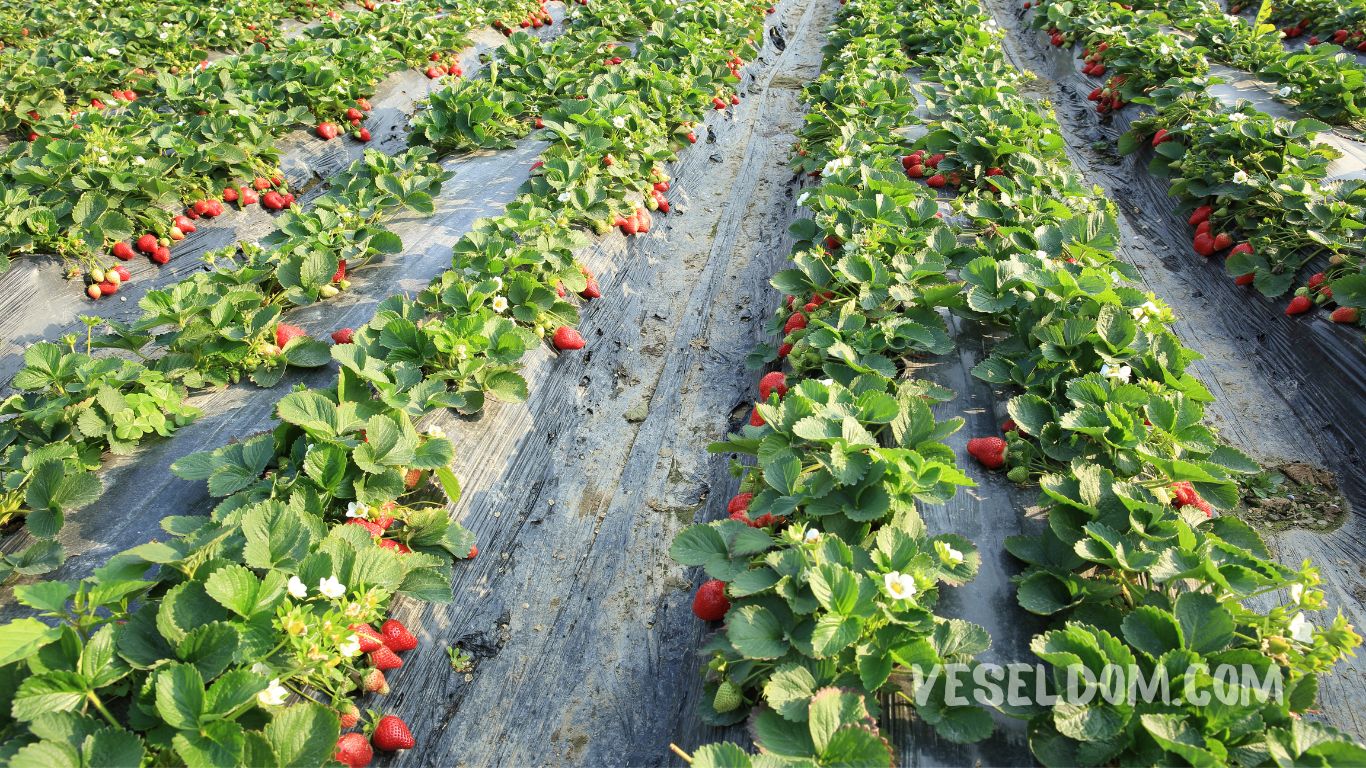
Before planting strawberries, it is necessary to carefully dig the soil. To make this work easier, you can use a pitchfork instead of a shovel. During digging, all weeds should be removed, as they can fill the entire spatial niche and interfere with the normal development of the planted plants.
It is also important to take into account which crops grew on the bed before, if planting strawberries is not carried out on a freshly created bed. The place where potatoes, cabbage or tomatoes grew before is not suitable for strawberries. But after cereals, garlic, onions, root crops and legumes, strawberries will grow well. It is also important to choose a well-lit area with a southwest side and a slight slope, where the strawberry bushes will grow faster and the crop will ripen earlier.
Proper soil preparation is an important step for successful strawberry cultivation. It creates favorable conditions for the development of plants and helps to achieve high quality and quantity of fruits.
Selection of seedlings
With a wide variety of strawberry species, it is important to make the right choice of seedlings. It is recommended to give preference to proven varieties that are suitable for a specific region. When choosing a variety, you should pay attention to the taste, storage properties (if necessary), maturity (early, medium or late varieties) and whether the variety is remontant.
The optimal time to purchase seedlings is spring, as early planting will allow young plants to get stronger over the summer. However, strawberries can also be planted in autumn, when the gardener is less busy and the weather is still quite favorable. During this period, young bushes will have time to take root and take root before the onset of winter.
Strawberry seedlings can be purchased with an open root system (but it is less resistant) or in pots (although it costs more, its roots are stronger). It is desirable that the seedlings are healthy and well sorted. In addition, when choosing seedlings, it is important to pay attention to the following points:
- The leaves should not have spots that may indicate the presence of fungal diseases.
- The paleness of the leaves can be a sign of the most dangerous disease – phytophthora necrosis, for which there are still no effective control methods.
- Shrunken young leaves may indicate a strawberry mite attack.
- A healthy seedling should have 3-4 shiny green leaves.
- Seedlings with an open root system should have roots about 10 cm long, and in potted seedlings, the root system should fill the entire pot.
By following these tips when choosing strawberry seedlings, you will create conditions for healthy and productive plant growth, which will bring you a rich harvest.
Planting strawberries
Before planting strawberries, the soil should be prepared by mixing it with compost, manure and ash. Dig the holes, which should be deep and wide enough, with a size of about 30-50 cm. The distance between the rows should be about 40 cm. It is better to plant the seedlings in the evening, having previously soaked them in a growth biostimulator for two hours. After that, place the seedlings in the holes, fill them with soil and water them abundantly.
For better rooting of strawberry seedlings, you can also apply the mulching method. By covering the soil with organic material, such as straw, straw chips or dry grass, you will protect the root system of plants, preventing overheating, evaporation of moisture and the development of weeds.
Cultivation of strawberries
After planting, it is necessary to water the plants thoroughly to provide them with sufficient moisture. In the future, regular watering of strawberries will be necessary, especially in dry periods. It should also be taken into account that strawberries do not tolerate water stagnation, so the soil must be well drained.
Proper planting and proper care of strawberries will create conditions for its healthy growth and fruitful fruiting.
How to care for a strawberry bed
Growing strawberries requires a certain amount of care to achieve a high quality harvest. Here are some recommendations for caring for a strawberry bed:
- Pruning flowers and tendrils: When seedlings are planted in spring, they quickly form flowers and tendrils. However, they should be pruned, as they prevent the seedlings from taking root properly. Give the seedlings time to get stronger, and they will be able to bear fruit and multiply next season.
- Mulching the beds: It is important to mulch the strawberry beds. This will protect the soil from erosion during rains or watering, will help retain moisture, prevent the development of weeds and reduce the need for watering. Pine mulch is an effective option for strawberries as it also protects against disease and deters pests.
- Feeding: Two weeks after planting, you should feed strawberries with biohumus or bird droppings infusion. These organic fertilizers contain a lot of easily digestible nitrogen, which promotes plant growth.
By following these care steps, you will create optimal conditions for the healthy growth and development of strawberries, and therefore, you will receive an excellent harvest of delicious berries. The effort spent on caring for the garden is definitely justified by the results!