
Keeping turkeys in the first days of their life is a task that requires special attention and knowledge. It is important for novice farmers and those who are going to raise turkeys to understand that the first days of life of these little birds are of crucial importance for their further development and health. In this context, proper care and attention are the key components of success.
If you dream of successful farming with turkeys, then knowledge of the peculiarities of keeping turkeys in the first days of life will be your most important tool. This article will guide you through the necessary aspects and tips to ensure a healthy start for your poultry farm. Despite all the challenges, raising turkeys successfully is a task undertaken with responsibility and dedication, and it can lead to great achievements in the world of farming. Let’s start with the basic knowledge and tips that will help you in this interesting and important business.
Selection of turkeys
The first and most important stage in raising turkeys is the correct choice of the future inhabitants of your farm. The future success and productivity of your farm will depend on this. Here are some tips for selecting turkeys:
- Choice of breed
There are many different breeds of turkeys, and each of them has its own characteristics and advantages. Decide what breed you want to grow. For example, bronze turkeys are known for their large fleshiness and high quality meat, and white turkeys are recommended for egg production. Do your research on breeds and their characteristics to make an informed choice.
- Supplier selection
Choose a reliable turkey supplier. It is important to make sure that the turkeys were healthy and received the necessary care in the previous stage. Pay attention to the reputation of the supplier and ask about guarantees regarding the quality and health of the chicks.
- Age of turkeys
It is important to know the age of turkeys at the time of purchase. They must be young, healthy. Young turkeys adapt better to a new environment and diet.
- Appearance and health
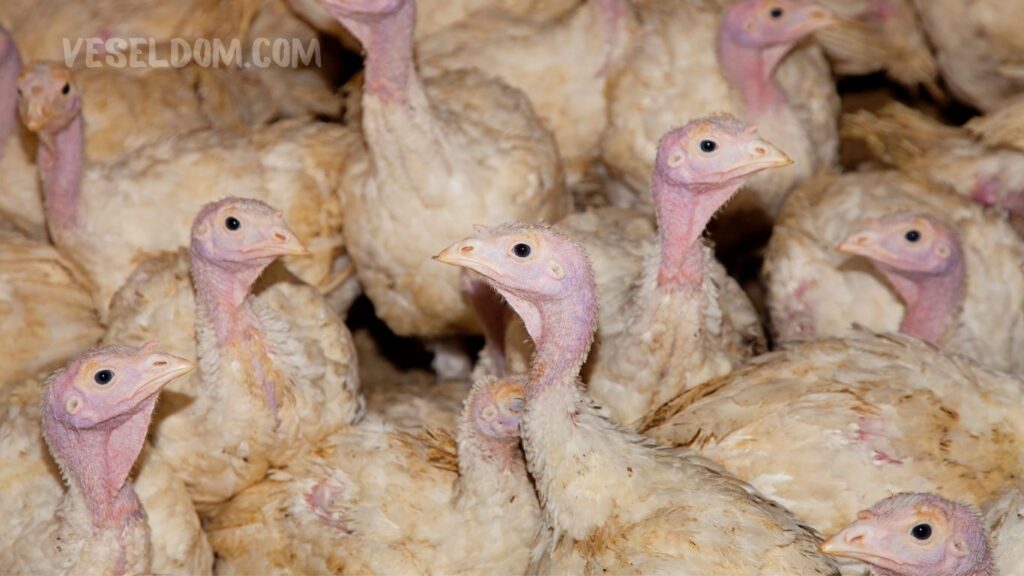
Pay attention to the appearance of turkeys. They should have bright eyes, a dry beak and fluffy plumage. Avoid buying turkeys with signs of disease or parasites.
- Number of turkeys
Determine how many turkeys you need. Calculate your needs and room capacity for them. Do not overcrowd the farm as this can lead to stress and conflict among the birds. For example, for a room of 10 square meters. you can buy 30-50 turkeys, depending on the breed.
Transportation
Before taking turkeys home, prepare vehicles and conditions for comfortable transportation. Here are some important guidelines for transporting turkeys:
- Transport boxes or containers . They should be large enough to ensure a comfortable position of the chicks (so that they do not sit on each other’s heads), but not too large to avoid injury in the box during shaking during transport.
- Security. Secure the container with the turkeys and place bedding such as straw or pillows under the box. Fixation will prevent the container from tipping over, and the litter will help absorb vibration, which will reduce stress for the turkeys.
- Ventilation : Provide adequate ventilation in the crate or container so turkeys can get fresh air during transport. But do not make the holes too large so that the chicks do not get out.
- Temperature conditions : Maintain optimal temperature conditions in the vehicle. Turkeys are sensitive to temperature fluctuations, so it is important to avoid overheating or hypothermia. It is desirable that the temperature in transport is approximately the same as in the place of keeping the birds before transportation.
- Protection from light : Turkeys should not be exposed to bright sunlight during transport as this can stress them.
- Transport in a group : Turkeys are best transported in small groups to ensure their safety and socialization.
- Water and feed : Make sure turkeys have access to water and food during transport.
How many birds you bring to your farm as a result will depend on the correct transportation of turkeys. Unfortunately, non-compliance with transportation requirements leads to deaths among chicks.
Preparation of a place for keeping
Properly preparing the place for keeping turkeys is an important aspect of successful farming. If you are ready to provide the birds with comfortable and healthy conditions, this will contribute to their normal growth and development. Here are some tips for arranging housing for turkeys:
- Room selection
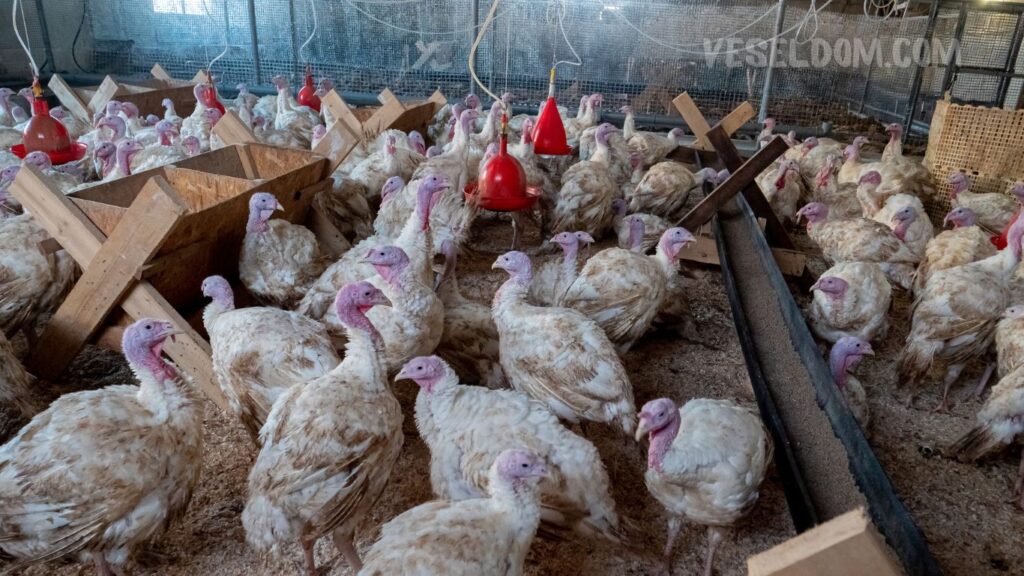
Choose a suitable room for keeping turkeys. It should be well insulated, protected from weather and pollution, and have the possibility of ventilation. It is advisable to take into account that turkeys grow quickly, and they need additional space over time.
- Heat and lighting
Provide optimal temperature conditions for turkeys. They need a constant temperature of about 32-35 degrees Celsius in the first weeks of life. Lighting plays an important role in regulating the sleep cycle and alertness of turkeys: daytime should last 12-16 hours, and night time, when darkness is provided, should last 8-12 hours. If it is not possible to provide natural lighting, special lamps for growing birds with an on/off timer are purchased.
- Floor and bedding
Place proper bedding on the floor that absorbs moisture and allows the turkeys to move around easily. It can be straw, hay or other suitable materials. In specialized farm stores, you can buy ready-made bedding, which will definitely not have extra parts that can injure turkey chicks.
- Ventilation
Provide adequate ventilation in the house to prevent the accumulation of harmful gases and to provide fresh air for the turkeys. But at the same time, there should be no drafts in the room that will cool the air. Loss of heat will have a bad effect on the health of small turkeys.
- Nests and feeders
Set up resting nests and feeding troughs. Feeders should be located at a sufficiently high level to avoid contamination of feed.
- Protection from predators and pests
Make sure your facility is protected from predators and pests that can harm turkeys. If you previously carried out pest control indoors, do not forget to remove all traps and poison.
- Water supply system
Provide access to clean water for the turkeys. Additionally, consider installing an automatic water supply system to ensure constant access to water.
Proper preparation of the place for keeping turkeys is a step towards their health and comfort. Following these recommendations will help provide them with the right conditions for normal growth and development on your farm.
Feeding and water
Feeding and access to water are extremely important aspects of keeping turkeys in their first days of life. Proper nutrition and adequate water supply help to ensure normal growth, development and general health of birds.
- First 24 hours : During the first 24 hours after birth, do not attempt to feed the turkeys. They have the ability to use the stomach reserves received from the mother. For turkeys reared without a mother : If turkeys are reared without a mother (artificial rearing), they can be fed a special feed for young animals that contains all the necessary nutrients.
- Starter feed for young birds : After the first 24 hours, you can start feeding the turkeys. Usually, a special starter feed for young animals is used, which contains optimal nutrients, such as proteins and vitamins.
- Feeding Frequency : Feed the turkeys frequently, making sure their feedings are evenly spaced throughout the day. In the first week of life, feed them every 2-3 hours.
- Water : Provide access to clean water. It is important that water is available 24 hours a day, as turkeys use a lot of water. Use special water containers that prevent water contamination and help avoid spills.
Vitamins and supplements:
- Vitamins : Make sure the starter feed contains the vitamins and minerals your turkeys need for good health.
- Probiotics : You may want to consider using probiotics, which improve digestion and promote bird health.
Invitation of a specialist
If you are new to farming or raising turkeys, it is recommended that you consult a veterinarian or an experienced turkey specialist. They will be able to provide you with advice on optimal feeding and care of turkeys.
The overall goal in this section is to ensure adequate nutrition and access to water for the young. Following these recommendations will help create healthy conditions for the growth of turkeys and maintain their good health in the first days of life.
Temperature conditions
Small turkeys are particularly sensitive to temperature changes, and optimal temperature conditions in their room are an important aspect of their care. Deviation from the correct temperature can lead to stress and problems with the growth and health of the young.
First week:
- Temperature zone : In the first week of life, turkey chicks require very warm conditions. The temperature should be approximately 32-35 degrees Celsius (90-95 degrees Fahrenheit).
- Use of a lamp : Infrared lamps or heat lamps are usually used to maintain these temperatures. They should be placed over areas where turkeys rest and feed.
- Constant observation : It is important to constantly observe the turkeys – they give signs if they are warm or cold. If they huddle together under the lamp, this is a sign of overheating, if they bend their necks and look for a warmer place, then this is a sign of cold.
The second week and beyond:
- Gradually reduce the temperature : Starting from the second week of turkey life, gradually reduce the temperature by 2-3 degrees Celsius every week.
- Normal temperature : Usually, when turkeys are about three weeks old, they can be kept at normal temperature conditions for adult turkeys, which are about 18-21 degrees Celsius (65-70 degrees Fahrenheit).
- Place to rest : Provide a place to rest away from heat sources of infrared light.
Remember that each breed of turkey may have its own temperature requirements, so it is important to monitor the behavior of the young and respond to changes in temperature conditions to ensure their comfort and health.

Health and veterinary care
The health of young turkeys is an important aspect of their rearing. In the first days of life, they are especially vulnerable to disease and stress, so it is necessary to monitor their condition and provide veterinary care if necessary. Here are some tips for this:
- Constant observation : It is important to constantly observe the turkeys. Pay attention to their activity, appetite, appearance of plumage and behavior. If you notice any changes in these aspects, it may indicate health problems or stress.
- Signs of Illness : Learn to identify the main signs of illness in turkeys, such as loss of appetite, scattered plumage, lethargy (lethargy), and feeling cold or overheated.
Veterinary care:
- Regular check-ups : Schedule regular visits to the vet for preventive check-ups of the young. A veterinarian will be able to identify possible problems and provide recommendations for health support.
- Vaccination : Consider vaccinating your turkeys against certain diseases, particularly those that are common in your area. Vaccination can help prevent disease and protect young animals.
- Emergencies : Be aware that sometimes emergencies may arise, such as injuries or other unforeseen events. Keep in constant contact with your veterinarian.
Care products:
- Isolation of sick turkeys : If you notice an illness in a turkey, isolate it from others to prevent the disease from spreading.
- Keeping the turkeys clean : Keep the turkeys’ living area clean. Clean conditions contribute to the prevention of diseases and stress.
The health of turkeys in the first days of life is especially important. Constant monitoring, preventive measures and veterinary care will help to ensure that the young will be healthy and ready for normal growth and development.
Socialization and stimulation
Socialization and psychological stimulation of young turkeys are important aspects of their upbringing and development. Properly influencing the psychological state of turkey poults can improve their adaptation and social behavior. Here are some methods of socialization and stimulation of young turkeys:
- Regular contact with people : It is important to have regular contact with young turkeys, especially in the first days of life. Talk to them, hold them gently, let them feel your presence. This will help them get used to people and reduce their fear of them.
- Maneuverability : Provide the young with access to space where they can move and play. They need to be able to walk and explore their environment.
- Joint housing : Keeping young animals in groups promotes their socialization. They learn to interact with each other, develop communication skills and achieve psychological comfort.
- Gradual contact with other turkeys : If you are introducing new turkeys to an existing group, do so gradually and observe the birds’ reactions to their new neighbors.
Providing socialization and psychological stimulation of young turkeys contributes to their normal development and adaptation. Careful care and consideration of their psychological needs contribute to their happy and healthy growth.

Growth and development
In this last chapter, we will look at the growth and development of turkeys in the first stages of their lives, as well as how to take care of their healthy development:
First week:
- Growth of the cannon on the body : During the first week of life, turkeys are actively growing and developing largely thanks to the cannon. The down performs the function of thermal insulation and protection against the cold.
- Appropriate feeding : Feed the young with high-quality feed and ensure constant access to water for optimal growth and development.
The second week and beyond:
- Lowering the temperature : Starting in the second week of turkey life, gradually lower the temperature in the room by 2-3 degrees Celsius every week.
- Change in nutrition : During this period, the young can start switching to more adult food. Gradually introduce new types of food and increase the intervals between feedings.
Tracking growth and health:
- Weight and size : Keep track of the weight and size of the turkeys. Compare their scores with the norms for their age and breed.
- Health : Observe the general condition of the turkeys. Pay attention to signs of stress, illness and other health problems.
- Veterinarian recommendations : If necessary, consult a veterinarian and follow his recommendations regarding the growth, development and care of turkeys.
Managing the growth and development of young turkeys in their first year of life is very important to ensure their continued success both on the meat farm and in egg production. By following the recommendations for feeding, care and medical monitoring, you will be able to support the healthy and sustainable development of your young turkeys.
Conclusions
Keeping turkeys in the first days of their life is an important stage in farm production. Providing them with proper care, feeding, psychological stability and medical control are key factors for successful growth and development. It is important to follow the recommendations for the selection of turkeys, conditions of their transportation, keeping and lighting, as well as to ensure their gradual transition to a normal rhythm of life. Pest control and regular visits to the veterinarian also play an important role in maintaining the health of young turkeys.
Sources:
- “Raising Turkeys: A Guide to Turkey Nutrition” by University of California Agriculture and Natural Resources.
- “Turkey Production – Agribusiness Handbook” by the Food and Agriculture Organization (FAO).
- “Raising Young Turkeys” by the University of Minnesota Extension.
- “Raising Turkeys” by the National Sustainable Agriculture Information Service.
- “Turkey Farming: Everything You Need to Know” by Backyard Poultry.
- “Raising Turkeys” by the University of Florida IFAS Extension.
- “Turkey Production: Breeding and Selection” by the University of Kentucky Cooperative Extension Service.
- “Brooding Turkey Poults” by Mississippi State University Extension.
- “Understanding Turkey Behavior” by The Poultry Site.
These sources provide valuable information and advice on keeping turkeys, as well as advice from leading poultry and farming experts.