
Turkeys are important farm birds that have gained recognition due to their special properties and usefulness to humans. This article is devoted to the study of the basic rules for their maintenance, as it plays a decisive role in achieving the best results in agriculture and the economy in general. To understand the requirements for keeping turkeys and the importance of keeping them, let’s first look at what turkeys are and why they are so important in today’s world.
Turkeys are birds from the pheasant family, which have numerous varieties and subspecies, but in general they are similar to chickens. The main difference between them can be found in the size and color. Turkeys have long legs, thumbs and feathers that can be very colorful. The main characteristic of turkeys, which makes them especially important for humans, is their tasty and low-calorie meat, which is widely used in gastronomy and the food industry.
Turkeys not only help to satisfy people’s appetite, but are also used in agriculture to grow and obtain high-quality meat, which is healthier and less fatty compared to other sources of protein. They are important in today’s world, as they are important in the food industry, economy and providing the population with quality and tasty products.

The importance of proper maintenance of turkeys
Compliance with the requirements for keeping turkeys is a crucial condition for achieving the best results in agriculture. Improper maintenance can lead to numerous problems and losses that will affect the quality and quantity of products entering the market.
Below are key aspects of the importance of proper turkey housing:
- Productivity: The proper maintenance of turkeys allows you to achieve maximum productivity, which includes a high yield of meat and eggs. This is important for agricultural enterprises and farms, as it affects their profitability and competitiveness in the market.
- Product quality: Proper keeping of turkeys helps ensure high quality meat and eggs. Product quality is critically important for satisfying consumer demand and maintaining a positive brand image.
- Health and safety: Proper feeding, hygiene and housing conditions of turkeys contribute to maintaining their health. This makes them more resistant to various diseases and viruses, reducing the risk of livestock losses.
- Economic efficiency: Properly keeping turkeys has a positive effect on agricultural efficiency and helps reduce treatment and care costs, which helps increase profits.
- Consumer demand: Meeting the demand for high-quality and safe products, such as turkey meat and eggs, allows expanding sales markets and increasing farm profitability.
Given the importance of keeping turkeys properly, this article will provide readers with detailed information on the key requirements.
Ensuring appropriate conditions of maintenance
Keeping turkeys involves creating and maintaining specific conditions that affect their health and productivity.
Holding space
A properly chosen and equipped place for keeping turkeys plays an important role in ensuring their comfort and health. The main requirements for the holding space include:
- Space: Each turkey should have enough space for normal movement and wing development. Estimate about 2-3 square meters per turkey.
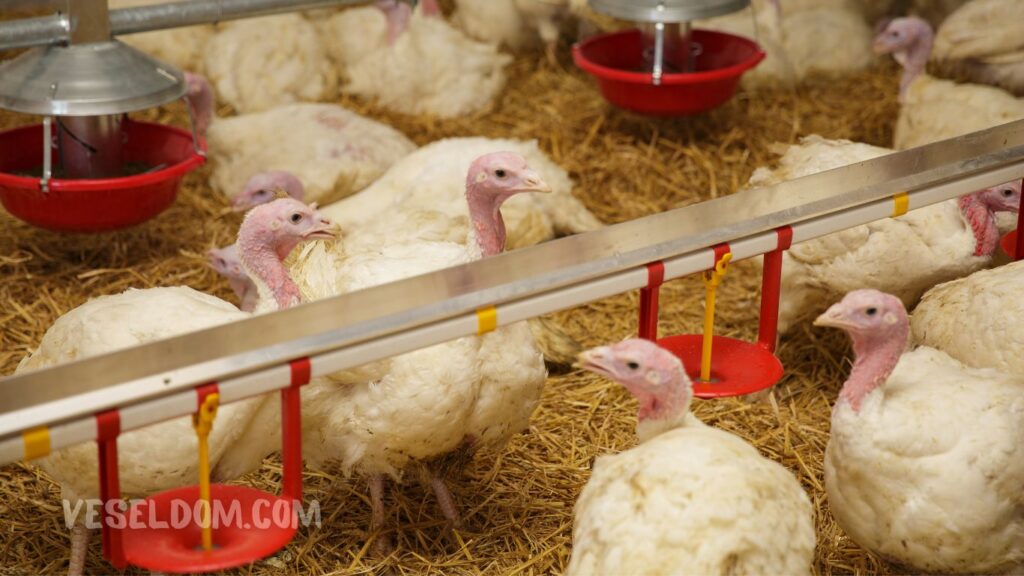
- Floor: The floor in the room must be dry and well ventilated. It is recommended to cover the floor with hay or straw bedding.
- Weather protection: When keeping turkeys indoors, it is important to protect them from rain, snow, and extremes of temperature.

Temperature and humidity
Indoor temperature and humidity control are key factors in keeping turkeys comfortable. The main requirements in this regard include:
- Temperature: The temperature in the room should be maintained at an optimal level. For turkeys, the optimum temperature is usually in the range of 18°C to 21°C.
- Humidity: Humidity affects the health of birds and is reflected in the quality of products. Usually, the optimal humidity level for turkeys is around 60-70%. A hygrometer can be used to measure humidity.
Lighting
Proper lighting is an important aspect of keeping turkeys. The main requirements for lighting include:
- Natural light: Turkeys need access to natural light, which promotes even development and health. Daylight requirements can vary from 12 to 16 hours per day, depending on age and stage of development.
- Artificial lighting: In cases where natural light is not sufficient, artificial lighting should be installed. Use lamps that are close to the natural spectrum of light.
Ventilation
Effective ventilation in the room helps maintain fresh air, remove unpleasant odors and excess moisture, which can negatively affect the health of turkeys. To ensure adequate ventilation, you should:
- Ensure the presence of ventilation holes or fans that ensure a constant flow of fresh air in the room.
- Avoid overdrying or overcooling the air that turkeys breathe.
Feeding and water
Proper feeding and access to clean water are other key aspects of keeping turkeys. In this section, we will consider how to provide turkeys with proper nutrition and the necessary amounts of water.
Diet of turkeys
Turkey diets must be carefully designed to meet their nutritional needs and promote healthy growth and development. The main aspects of feeding turkeys include:
- Protein: Turkeys need high quality protein in their diet for proper growth and development. The optimal level of protein in the diet is usually about 18-20%.
- Carbohydrates: To give turkeys energy, add about 50-60% carbohydrates to the diet.
- Vitamins and Minerals: Keep in mind that turkeys need a variety of vitamins and minerals. Add vitamin and mineral supplements or provide them through your natural diet.
- Hay and greens: Add hay and fresh greens to enrich the diet of turkeys. They not only add variety to the diet, but also contain useful fibers.
It is important to develop a diet that takes into account the age and stage of development of turkeys, as their needs can change over time.
Access to clean water
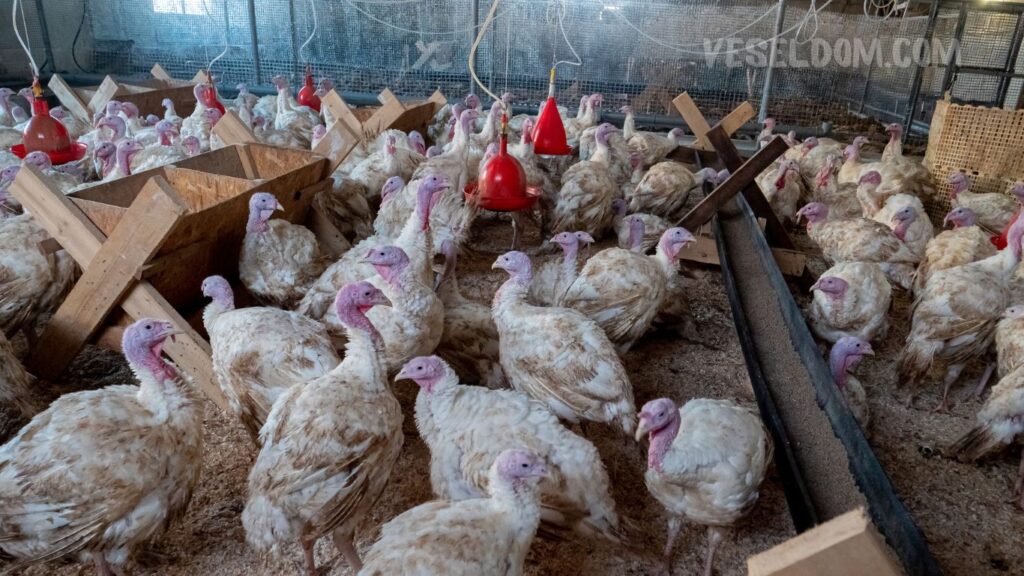
Access to clean water is a vital aspect of turkey feeding. Turkeys have a great need for water, especially in hot weather. The main requirements for water include:
- Constant access: Provide turkeys with constant access to clean water, especially during inclement weather. They should be able to drink water at any time.
- Water purity: Water must be clean and reliable, free from impurities and microbes. Clean and wash drinking bowls regularly.
- Amount: On average, an adult turkey can drink about 1.5-2 liters of water per day. Consider this.
Ensuring health and hygiene
Ensuring health and hygiene is an extremely important aspect of keeping turkeys, as it helps to prevent disease and ensure the general condition of the birds. In this section, we will look at preventive measures and hygiene procedures that help ensure the health of turkeys.
Prevention of diseases
Disease prevention helps to avoid diseases and keep birds in good condition. The main aspects of disease prevention include:
- Vaccination is an important means of preventing various diseases such as coccidiosis and bird flu. Divide the turkeys into vaccinated and unvaccinated groups and vaccinate them on time.
- Sanitary isolation: New turkeys or birds arriving from other farms should be isolated for a period of time to avoid the spread of infections and pathogens.
- Regular inspection: Carry out regular medical examinations of turkeys for signs of diseases and pathologies.
- Sanitation: Maintain sanitary conditions indoors and on the farm, including thorough cleaning, disinfection, and disposal of waste.
Hygienic procedures
Hygienic procedures play an important role in maintaining the health of turkeys and preventing diseases. They include:
- House disinfection: Regularly disinfect the room where the turkeys are kept. Use disinfectants that are intended for household use.
- Ventilation: Provide effective ventilation to remove moisture and odors that can promote disease.
- Sanitation: Keep the turkey feeding and roosting area clean and organized. Dispose of waste properly.
- Human Personal Hygiene: Practice good personal hygiene when handling turkeys to avoid human-to-bird disease transmission.
The importance of requirements for keeping turkeys
The effect of proper keeping of turkeys on productivity and product quality:
- Development: Proper housing keeps turkeys comfortable and allows them to grow and develop to their genetic potential. This affects their growth, mass and muscle development, which in turn determines the amount of meat and eggs they can produce.
- Quality of meat and eggs: Proper feeding and housing of turkeys affects the quality of meat and eggs they produce. Ensuring appropriate housing conditions and diet contributes to obtaining high-quality products that meet modern quality standards.
- Bird health: Proper maintenance includes preventative measures that help keep turkeys healthy and prevent disease. Healthy turkeys are less susceptible to disease, which contributes to sustainable poultry farming and reduces treatment costs.
Increasing farm efficiency and increasing profitability:
- Increased production: Proper maintenance of turkeys helps to increase the production of meat and eggs, which contributes to the growth of production volumes. This is important for farms that specialize in growing turkeys for commercial purposes.
- Reducing losses: Proper housing helps reduce losses due to disease, mortality and abnormal development of turkeys. This means less loss and more profit for the farm.
- Increased competitiveness: Farms that comply with the requirements for keeping turkeys and produce high-quality products become more competitive in the market. They can attract more customers and get higher prices for their products.
In general, the proper maintenance of turkeys has a huge impact on their productivity, product quality and farm profitability. Compliance with the requirements for keeping turkeys is an important condition for successful management in the field of turkey farming.
Conclusion
In turkey farming, as in any agriculture, adherence to requirements and best practices is an important factor in achieving high productivity and product quality. Proper maintenance ensures the growth and development of turkeys, improves the quality of meat and eggs, supports the health of the birds and helps reduce losses. In addition, it helps to increase farm efficiency and profitability, which makes turkey farming more profitable and competitive in the market.
Sources:
- United States Department of Agriculture. “Turkey Care: Guidelines for Farmers.”
- Poultry Federation of Ukraine. “A Guide to Keeping Turkeys.”
These sources provide important information and guidelines for proper turkey husbandry and success.