
Correctly selected diet for chickens is the basis of high productivity of poultry, health and obtaining quality products. Any mistakes in feeding can lead to lack of growth and eggs, and even to the death of chickens. Let’s consider what to feed chickens and how to properly make a diet for birds in the household.
General recommendations
Compliance with hygiene rules is an important aspect for the prevention of bird diseases during feeding.
Basic rules of hygiene:
- The feed must be fresh. Do not divide the prepared mixture into several portions.
- After feeding cooked vegetables and cooking waste, the feeder should be washed. Do not mix the new food with the remnants of the old.
- Meat and fish waste must be subjected to heat treatment. They should not contain sharp bones or their fragments.
- Dry grain should not be added to boiled food. Chickens prefer dry grain, sometimes ignoring the rest of the feed.
- It is not recommended to place greens in a common feeder or on the floor of the chicken coop. It is better to create a separate feeder with a large-mesh mesh at a certain height from the floor.
- Moldy and fresh bread should not be included in the diet of chickens. Mold can cause a number of diseases, and fresh bread can lead to the formation of a lumpy stomach and disruption of normal digestion.
- Chickens should have free access to gravel. It helps to grind food in the muscle stomach, increasing the efficiency of digestion. The lack of gravel can reduce the efficiency of digestion by up to 20% and increase the risk of diseases of the gastrointestinal tract.
Constant maintenance of the cleanliness of the feeder is a preventive measure against various bird diseases.

Diet norms
For full-fledged development and productivity of chickens, it is important to ensure their needs in minerals, proteins, fats, carbohydrates and vitamins. The rate of feeding depends on several factors, including the age of the hens, the season, the direction of productivity and breed characteristics.
Young animals need more frequent feeding, but in smaller portions. Depending on the season, the feeding rate can increase up to 20% due to increased energy needs. The winter period requires larger portions of feed or more frequent feeding to provide additional energy.
Breed characteristics also affect the feeding rate. For example, dwarf breeds need less feed compared to large breeds.
It was also established that the direction of productivity has an impact on the amount of necessary food. Chickens of egg breeds consume less feed, while chickens of meat-egg and meat breeds may need 15-20% more feed. This is due to their metabolism, mobility and tendency to obesity.
It is worth remembering that the exact rate of feeding may differ depending on the specific conditions of keeping, breeding breeds and the purpose of raising chickens. Therefore, it is recommended to contact a veterinary specialist or poultry consultant to select the optimal diet and feeding rates for your particular bird.
Diet composition
The diet of chickens should be balanced and contain all the necessary components to ensure their health and productivity. The main components of the diet include:
- Cereal crops such as corn, wheat, barley, oats. They are the main source of energy for chickens.
- Protein feeds, such as soy, fish meal, meat and bone meal. They contain the necessary amino acids for the growth and development of the bird.
- Minerals and vitamins that can be added as special supplements or natural sources such as shell sand for calcium and greens.
- Greens and vegetables such as cabbage, carrots, pumpkin. They enrich the diet of chickens with vitamins and minerals.

Approximate composition of the ration for one chicken:
- Whole grain: 40-50 grams
- Crushed grain: 50-60 grams
- Meal or cake: 12-13 grams
- Wheat bran: 10 grams
- Boiled potatoes: 20-50 grams
- Fodder yeast: 3-4 grams
- Root crops: 20-40 grams
- Fresh greens or digestive flour: 5-7 grams
- Fish or meat and bone meal: 5-7 grams
- Fresh extract: 20-30 grams
- Chalk or shell: 4-5 grams
- Bone meal: 1-2 grams
- Table salt: 0.5 grams
It is important to ensure the presence of all the necessary components of the diet, since any lack of feed can negatively affect the well-being of the bird and its productivity.
The diet of chickens changes with age. In the first days of feeding, it is recommended to use boiled yolk or corn grits. Gradually, depending on the type of breed, grain feed is introduced to laying hens, and protein feed to broilers.
It is worth noting that this is only an approximate composition of the diet, and it may vary depending on specific conditions, the breed of chickens and the purpose of rearing. It is recommended to consult with a poultry specialist or veterinarian to select the optimal diet and follow the necessary feeding standards for your bird.
Frequency of feeding
The frequency of feeding chickens is an important factor in their care. Chickens of egg and meat breeds are fed with different frequency. The feeding of chickens should be especially noted.
Egg direction
Proper nutrition of laying hens is the basis for achieving stable and high egg production. Any deficiency in nutrition will negatively affect the quality of their products, as the eggs may be small or have serious defects.
It is important to rationally distribute nutrients throughout the day, and not to give them all at once.
It is recommended to feed laying hens twice a day:
- Morning feeding: The first portion of feed should be given as early as possible in the morning. The main menu should include vegetables, greens, vitamins and mineral supplements that contribute to their general well-being and fertility.
- Evening feeding: An hour before bedtime, before putting the chickens on the perches, evening feeding should be carried out. At this time, it is recommended to serve cereal mixtures that have a longer period of digestion and assimilation.
This distribution of feeding ensures the proper functioning of the gastrointestinal tract of egg-laying hens and contributes to optimal formation and quality of eggs.
It is also important to provide laying hens with clean drinking water, which should be renewed regularly. Access to food and water should be unhindered and constant.
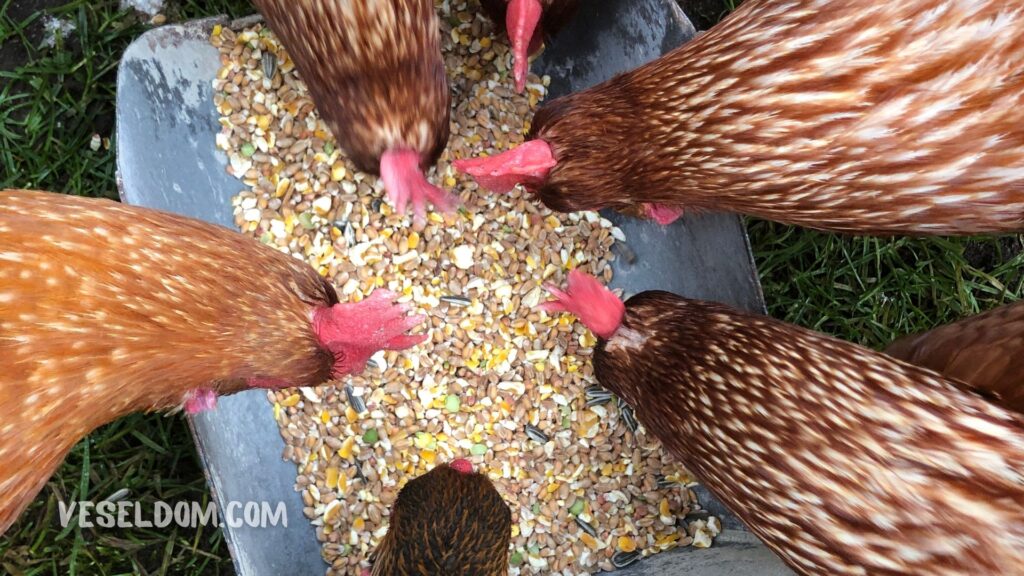
In addition, it is important to consider factors that affect the amount of feed consumed, such as the time of year, the size of the chickens and their breed characteristics. It is recommended that you consult a poultry or veterinary specialist for individual diet and feeding recommendations for your bird.
Meat direction
The special metabolism of meat breeds of chickens determines the need for increased frequency of feeding. Adherence to the correct feeding scheme is key to achieving optimal growth and development of meat poultry.
The recommended feeding scheme for meat breeds of chickens includes the following steps:
- Morning feeding (around 5-6 am): Feed a third of the required grain mixture, which provides the necessary energy balance and nutrients.
- Mid-day feeding (around 8 a.m.): Feed wet boiled foods such as cereal mixed with water or other liquid ingredients. This will contribute to the improvement of digestion and assimilation of feed.
- Double feeding in the afternoon (about 12 hours in the afternoon): Feed another portion of wet food to help provide the pet with the necessary nutrients.
- Evening feeding (2-3 hours before bedtime): The final portion of the remaining cereal mixture. This will allow the bird to maintain its energy level during the night and promote its growth.
It is worth noting that failure to observe the regularity of feeding and insufficient amount of feed can slow down the growth and development of meat poultry and negatively affect its productivity. Careful adherence to the feeding schedule is an important aspect of keeping meat breeds of chickens.
In addition to the grain mixture, broiler chickens should also be provided with access to clean drinking water, as well as the need for vitamins and minerals should be taken into account. A consultation with a veterinarian or poultry specialist can be helpful in determining the optimal diet and feeding plan for your bird.
Feeding chickens
The frequency of feeding chickens directly depends on their age. After hatching, they must be allowed to dry for several hours before feeding.
After that, it is important to ensure the availability of fresh feed in the feeder. In the first week, chicks are fed every 2 hours, including night time.
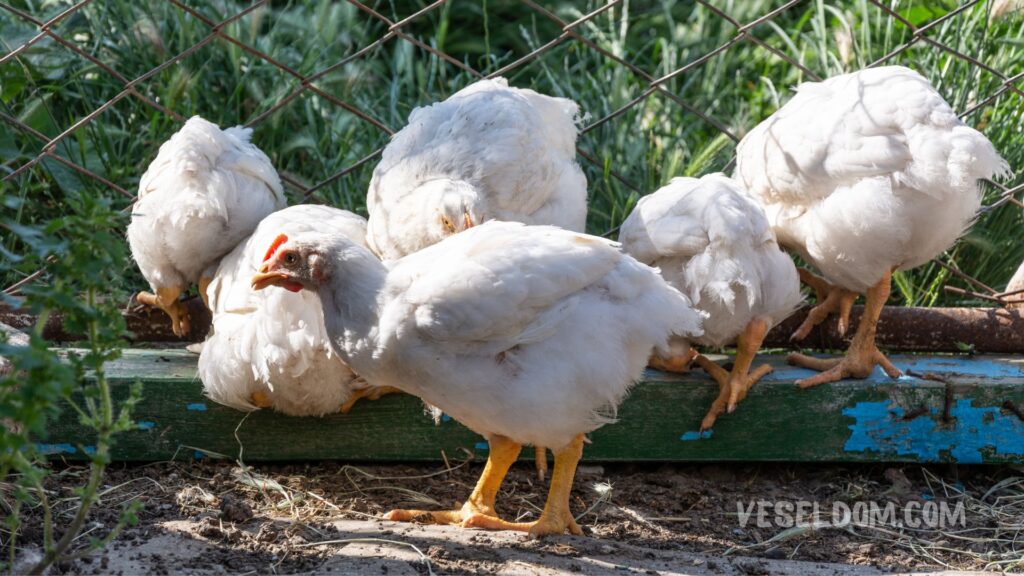
In the second week, the number of feedings decreases to 7-8 times a day. At the age of 15 days, chicks eat 6 times a day. In the third week, this amount decreases to 4-5 times. Starting from the month of age, the bird is fed 3-4 times a day. The intervals between feedings should be as uniform as possible.
The correct choice of a complete diet for chickens should be based on their age, breed, as well as the growing season and conditions of keeping. Insufficient nutrition leads first to a decrease in the productivity of the bird, and in the future – to the deterioration of its health and the loss of birds.
It is also important to consider that in the first few weeks of life, chicks need additional thermal support. Providing comfortable conditions of temperature, light and clean water are also key to ensure healthy growth and development of young animals.
Developing the optimal diet for chickens may require consultation with a veterinarian or poultry specialist. They will be able to provide additional information on feed selection and help ensure the chickens are getting the right nutrition for maximum results.