
Growing strawberries in greenhouses is a promising business that pays off quickly with small costs. It’s also a great way to have fresh berries for dessert all year round. However, it is worth remembering that strawberries are a capricious plant that requires special care. Let’s take a look at the necessary steps to grow strawberries in a greenhouse all year round.
What seeds are suitable for growing in a greenhouse
It is important to choose strawberry varieties that are suitable for growing in a greenhouse. Varieties must be resistant to infections and fungal diseases, and also transport well. In addition, the seeds must be self-pollinated and adapted to a neutral light day.
For growing strawberries in a greenhouse throughout the year, the following varieties are recommended:
- “Albion”: This strawberry variety is known for its high yield potential and excellent berry flavor. It has a long fruiting period and tolerates greenhouse conditions well. “Albion” is one of the popular varieties because it gives a stable harvest throughout the year.
- “Camarosa”: This strawberry variety is also considered an excellent choice for growing in a greenhouse. It has large bright red berries with a sweet taste. “Camarosa” adapts well to artificial lighting and provides yields throughout the year.
- “Seascape”: This strawberry variety is characterized by high yields and a long fruiting period. Its berries have a good taste and excellent resistance to diseases. “Seascape” also shows good results in greenhouse cultivation.
- “San Andreas”: This variety is known for its large and tasty berries. “San Andreas” adapts well to greenhouse conditions and shows a stable yield. It has high disease resistance and can be successfully grown throughout the year.
- “Everest”: This strawberry variety has quite large berries and excellent taste. It has a high level of resistance to diseases and weather conditions. “Everest” responds well to controlled greenhouse conditions and can provide a harvest throughout the year.
These strawberry varieties are relatively well adapted to growing in greenhouses, as they require stable conditions of temperature, light and humidity that can be more easily controlled indoors. However, it is important to remember that each region has its own characteristics, so before choosing specific strawberry varieties for growing in a greenhouse throughout the year, it is recommended to consult local agronomists or specialists who have experience in this field. They will be able to provide more detailed information on the best varieties for your specific region and growing conditions.

Methods of growing berries in a greenhouse
Growing strawberries in a greenhouse can be done by various methods, which depend on the size of the greenhouse and the time you are willing to spend on caring for the plants. Therefore, it is worth choosing the method that best suits your conditions. Here are some common methods:
In the soil
The most common method of growing strawberries is planting seedlings directly in the soil. This method is the most common and has several advantages. The main steps of this process are:
- Preparation of the beds: First, it is necessary to prepare the beds for planting strawberries. The beds must be prepared in advance, with the removal of weeds and loosening of the soil. The ideal shape of the bed is a flat, under-grooved furrow, which helps retain moisture and improves drainage.
- Planting seedlings: Strawberry seedlings are planted on the bed in a checkerboard pattern with an interval size of approximately 20 centimeters between them. The staggered arrangement of seedlings helps to maximize the use of space and ensures better air circulation around the plants.
- Mulching the beds: After planting the seedlings, the beds can be sprinkled with mulch. Mulch is a protective layer of organic or inorganic material (such as straw, hay, Styrofoam, film) that is spread over the soil around plants. It protects the soil and strawberry leaves from excessive moisture, insects and weeds. Mulching also helps retain moisture in the soil and stimulates faster fruit growth.
- Watering and care: After planting seedlings in the ground, it is important to provide them with sufficient moisture. Strawberries need regular watering, especially during the period of active growth and fruit development. Strawberry care includes weeding, loosening the soil near the roots, applying fertilizer, and regularly inspecting the plants for pests or disease.
Planting strawberry seedlings directly in the soil is an effective and affordable method that allows you to get a harvest during the season.

In bags
Growing strawberries in a greenhouse in bags is a popular method, especially for owners of small greenhouses. This method allows optimal use of the greenhouse space and provides convenient access to plants for care and harvesting. The main steps of this process are as follows:
- Preparation of bags: Use special bags or bags that are filled with soil. Bags should have well-drained bottoms, for which small holes are made or materials with good water permeability are used. Such holes allow water to drain after watering and avoid oversaturation of the soil with moisture.
- Planting seedlings: Place soil bags on racks or hang them, ensuring sufficient space between them. Place the strawberry seedlings in the upper part of the bags, about 10-15 cm deep. Provide sufficient spacing between the seedlings for their growth and development of the root system.
- Plant care: Provide strawberries with optimal conditions for growth and development. Water regularly, monitor soil moisture and avoid over-drying or over-watering. It is also worth providing the necessary lighting, ventilation and temperature regime in the greenhouse to ensure optimal plant growth.
- Additional recommendations: To feed strawberries in the greenhouse in bags, regularly apply organic or mineral fertilizers. In the growing process, you can also apply mulching, covering the surface of the bags with a layer of mulch. This will help preserve moisture in the soil, prevent the growth of weeds and protect strawberry fruits from direct contact with the soil, which will contribute to their cleanliness and preservation.
In addition, it is important to monitor the condition of the bags and their stability. Over time, signs of damage or aging of the material may appear, especially due to exposure to humidity and ultraviolet radiation. Periodically check the bags and replace damaged or worn ones.
Growing strawberries in a greenhouse in bags allows you to provide controlled conditions for the growth and development of plants, as well as increase productivity and the length of the harvest season. Pay attention to the requirements of specific strawberry varieties and consider temperature, humidity, light and fertilizer recommendations to ensure successful cultivation.
In PVC pipes
The technology of growing strawberries in a greenhouse using PVC pipes is an effective method that allows you to grow strawberries throughout the year. The main steps of this process are as follows:
- Preparation of PVC pipes: To create a structure from PVC pipes, you will need two sizes of pipes: thick pipes with a diameter of 100-150 mm and thin pipes with a diameter of up to 30 mm. The length of thin pipes should be greater than the length of thick pipes. In thick pipes, it is necessary to drill holes with a diameter of up to 5 cm at a distance of 15 cm from each other. Small holes should be drilled in thin pipes and wrapped with agricultural fiber to hold the soil.
- Preparation of the base: Pour expanded clay on the bottom of a large pipe and insert small pipes into it, through which water and fertilizers will be supplied. Then fill the pipe with soil and place the strawberry seedlings.
- Providing irrigation: The pipes must be connected to the water supply system or a barrel that is installed on the ceiling of the greenhouse. To prevent the soil from being washed away, large pipes are closed with plugs on both sides.
- Plant care: Provide strawberries with regular watering, control soil moisture and provide the necessary lighting, temperature and ventilation in the greenhouse.
This method of growing strawberries in a greenhouse with PVC pipes allows you to provide stable conditions for the growth and development of plants, preserve moisture and avoid fruit contact with the soil, which improves the quality of the crop. Additionally, the PVC pipe construction provides protection against harmful insects and weather conditions such as frost or hail.
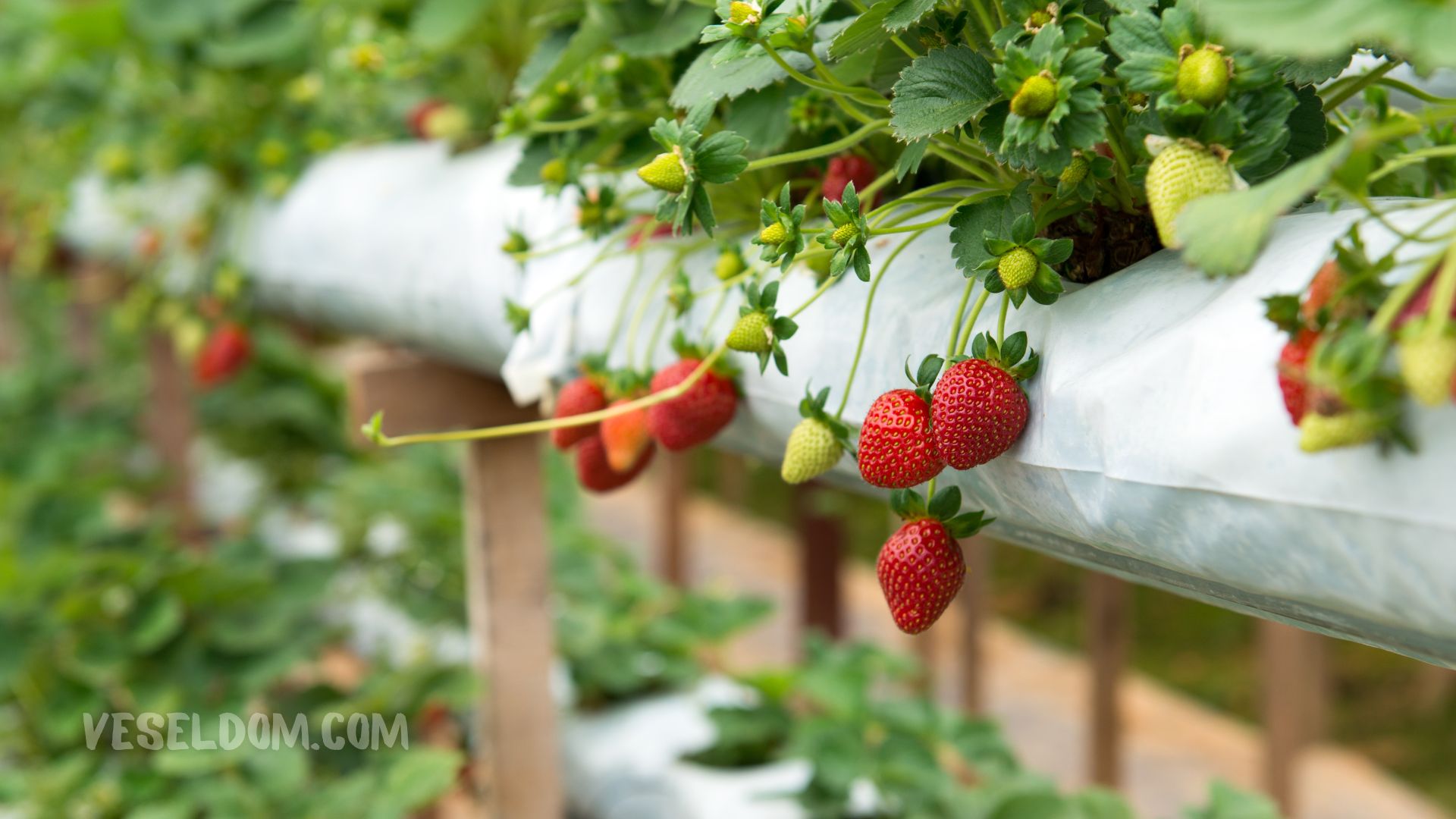
It is important to monitor the condition of the structure made of PVC pipes and its stability. Periodically check for damage or weak points and correct them in a timely manner. It is also important to clean the irrigation system regularly to avoid clogging and ensure the correct supply of water and fertilizers.
With the technology of growing strawberries in a greenhouse using PVC pipes, you can get a stable harvest of strawberries throughout the year. Follow the recommendations for strawberry varieties, temperature, humidity, light and fertilizer requirements, and enjoy fresh berries even out of season.
In pots
To grow strawberries in pots in a greenhouse, especially in oversized greenhouses, you will need pots with a diameter of about 20 centimeters or containers made of various materials, in particular wooden or plastic.
This method has its limitations, as strawberries in pots will not be able to expand their roots with a large volume of soil, which can lead to limiting the growth and yield of the plants. However, by using multi-level racks, you can optimize the space and plant many seedlings, increasing the overall yield.
When growing strawberries in pots in a greenhouse, it is important to ensure sufficient soil moisture and proper watering, as pots dry out faster than soil in beds or containers. Follow the guidelines for regular watering and fertilization to ensure healthy strawberry growth and development.
Don’t forget about regular plant care, including weeding, pest control, and disease protection. Applying additional methods, such as mulching, can help conserve moisture and reduce weed growth.
Although the method of growing strawberries in pots in a greenhouse has its limitations, it can be useful for small greenhouse owners who want to grow a limited number of strawberries or experiment with different varieties and hybrids.
Preparing the greenhouse for planting
Preparing the greenhouse for planting strawberries includes several important steps. It is necessary to decide what material to use for the construction of the greenhouse – film, glass or polycarbonate, depending on your needs and growing conditions.
To prepare the soil in the greenhouse, you can use the following recipe. First, pour the soil in the greenhouse with a solution of permanganous acid for disinfection. Next, prepare the soil mixture by adding the following components to the garden soil:
- 8 kg of old manure,
- 1 bucket of peat,
- ½ bucket of sand,
- 2 cups of ash,
- 70 g of superphosphate,
- 20 g of urea.
Before planting strawberries in the greenhouse, thoroughly clean the soil. Remove all stones, separate the soil from the remains of plants, insect larvae and eggs. For this, you can use your hands or special tools to help you remove unwanted elements.
It is also important to ensure proper drainage in the greenhouse to avoid water stagnation. Regularly ventilate the greenhouse, providing the necessary air circulation. This will help to avoid the development of diseases and pests.
Remember that before planting strawberries in a greenhouse, it is important to conduct research on the plant’s needs for moisture, lighting and temperature conditions. Follow the recommendations for watering, placing plants in the greenhouse and caring for them to achieve successful strawberry cultivation all year round.
Cultivation rules
To successfully grow strawberries and achieve a stable harvest, you should follow some important rules and recommendations. Here are some of them:
- Choose only healthy seedlings for planting to avoid the spread of pests and diseases.
- If you have a small greenhouse, pollinate the flowers yourself with a paint brush to ensure the dust.
- Provide regular ventilation of the greenhouse when the temperature reaches 21 degrees Celsius to avoid overheating.
- Adhere to the optimal temperature regimes: 10-12 degrees during planting, 20 degrees during green growth and 24 degrees during flowering.
- Use prophylactics such as Alirin, Fitosparin and others to prevent diseases and pests.
- It is recommended to use drip irrigation to effectively provide the plants with moisture.
- Maintain optimal humidity levels: around 85% during planting and up to 70% during flowering.
- In the absence of drip irrigation, water the seedlings under the root, avoid overwatering.
- Before winter, create a ventilation system to ensure proper air circulation.
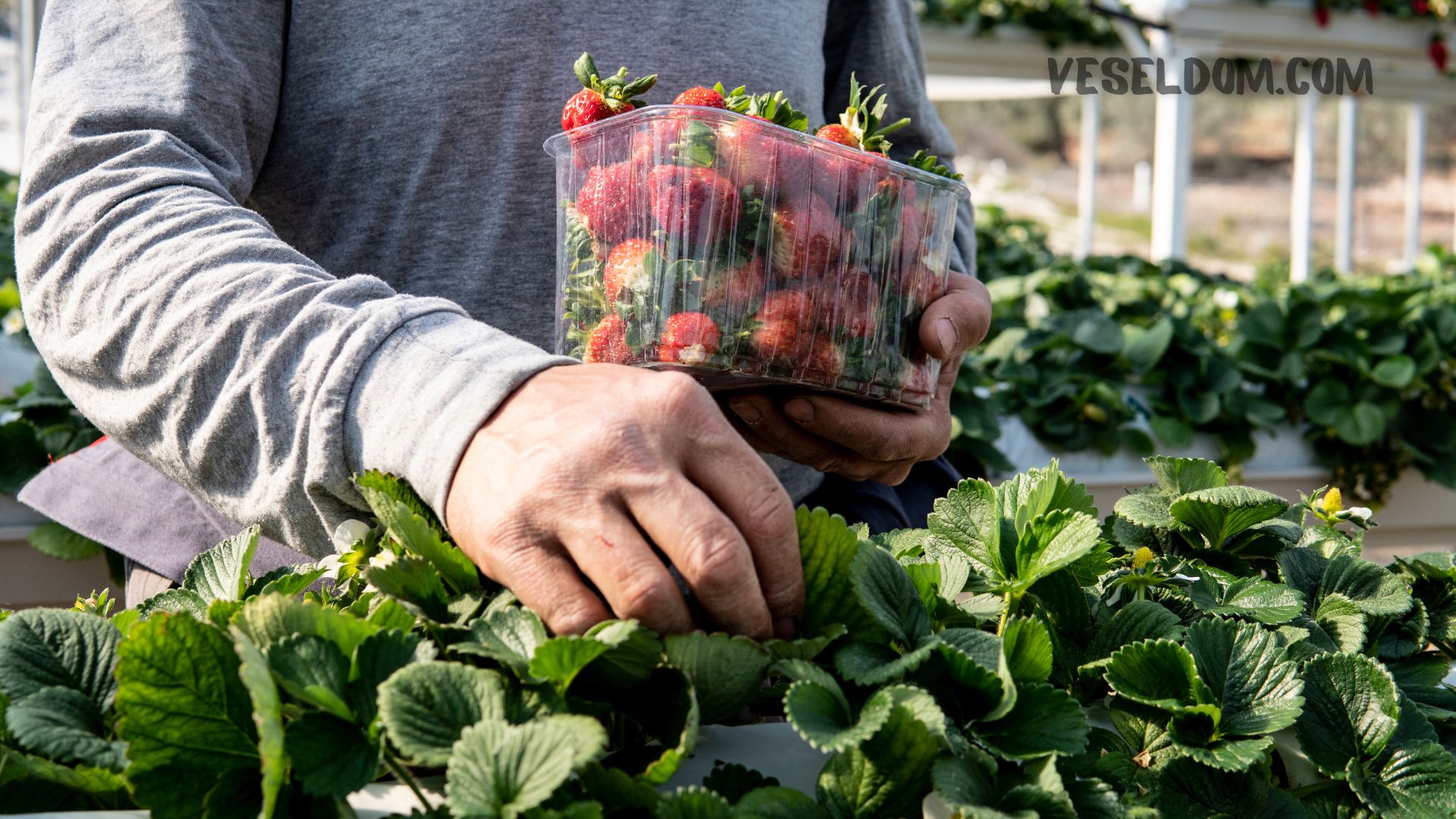
- Feed strawberries regularly, using store-bought fertilizers or prepared fertilizers yourself.
- Provide 8 hours of daylight to encourage flowering. If necessary, you can increase the lighting time to speed up the process.
- Regularly check the condition of the leaves and tendrils of the plants. When damaged or withered parts appear, cut them off in a timely manner to ensure healthy growth and development.
- In cloudy weather, use daylight lamps to illuminate the strawberries to create comfortable conditions for the growth and development of the berry.
- Regularly monitor and maintain cleanliness in the greenhouse by removing dry leaves, plant debris and any unnecessary materials that may become a source of disease.
- Provide sufficient watering, avoiding drying out or overwatering the soil. Regularly monitor soil moisture and adjust watering accordingly.
- Don’t forget to take care of your greenhouse regularly, including cleaning glass or film surfaces, repairing damage, and maintaining the right temperature and humidity inside.
In general, taking into account these growing rules, you will be able to create optimal conditions for strawberries so that they bear fruit regularly and delight you with delicious berries throughout the year.