
An increasing number of people breed broilers, among them not only professional farmers who know all the subtleties of this business. Quite often they are bought by summer residents, since this type of bird grows very quickly, and during the warm season you can get a lot of tasty meat. But the broiler is not a rather capricious chicken, so many people are afraid, doubting the feasibility of buying without special knowledge. This article will tell you how to grow broiler chickens, protecting yourself from most problems, and get excellent birds at the final stage.
Description of broiler chickens
First of all, broilers differ from other types of chickens in their size. An ordinary laying hen in the first week of life gains up to 500 grams, a broiler hybrid in the same period of time gains three times more. An adult broiler chicken can weigh four kilograms, and roosters – more than five.
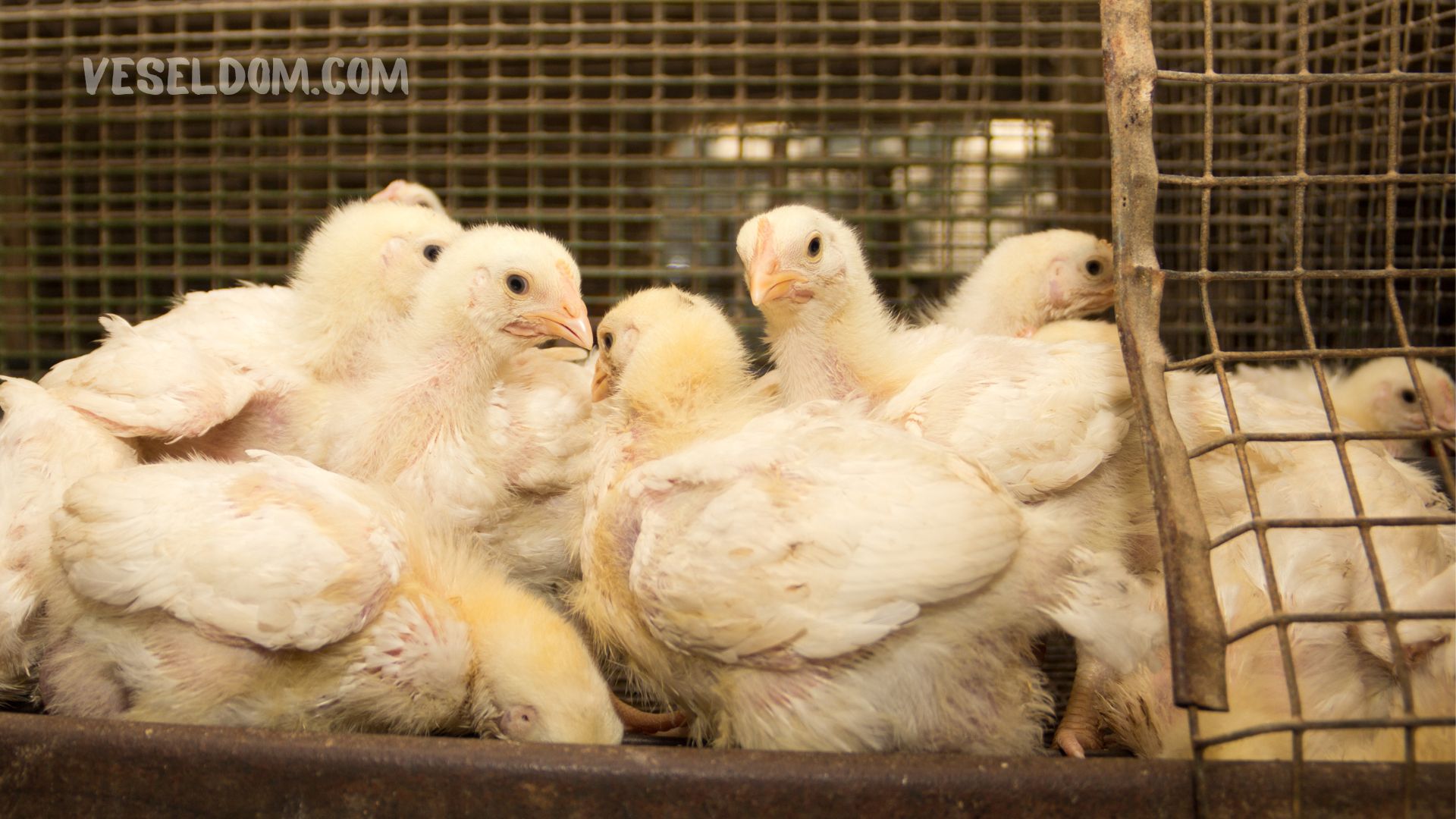
Broilers, regardless of breed, are well built and have a compact body, relatively short wings and legs. They are not characterized by high mobility, preferring a calm lifestyle, which is fully reflected in their phlegmatic character.
Also, their main feature is the white color, which was inherited from the breeds that became the parents of this species.

Physique
Of course, the main distinguishing feature of broilers from ordinary domestic chickens is a large body weight, which is caused by their main purpose – obtaining meat. Distinctive features of broiler birds are as follows:
- a massive rectangular body and a large, wide chest;
- even in small chickens, the thighs are characterized by particularly developed muscles and elasticity;
- since the weight of chickens is quite large, the legs are thicker and more stable than those of other breeds, but shorter;
- the wings of broilers are not designed for flight, so they are not as long as those of other types of chickens.
Note! When choosing broiler chickens, you should pay attention to the head – it is much larger than that of ordinary chickens. Also, from an early age, you can notice the absence of earrings and small combs. They do not develop, because the broiler lacks the breeding instinct.
Color
A characteristic feature of a broiler is its color. Adults are white, and chicks are always yellow. If on the market they try to pass off a chicken of a different color or with spots as a broiler, then this type is guaranteed to be a fake and should not be bought.
Rules of choice when buying
To get a good result at the final stage of growing broilers, you should approach the selection of chicks correctly. Additional information should be added to the above information on the structure and color of broiler breeds.
First of all, you need to think about the place of purchase of young animals – here you can choose one of several options:
- The most common is the market. Among its advantages in some cases is the proximity to the house or cottage. But this is the only benefit, because when buying chickens on the market, you cannot get guarantees that they are vaccinated, have quality characteristics, etc. Also, no one here will tell the truth about the conditions of keeping the birds put up for sale, so most of the chickens may die immediately after purchase. You should make a purchase from the hands only in extreme cases, especially since there are several more profitable options.
- When you go to a poultry farm, you can not worry about the breed of chicks, because they are guaranteed to sell exactly the declared one. But here it is quite difficult to get healthy birds. Also, unscrupulous poultry farms can sell defective chickens that will definitely not survive in the factory. But by making a purchase here, you can save significantly, as the price will be even lower than the market price.
- One of the most reliable options for purchasing strong, healthy chicks is to buy from a hatchery station. All the necessary vaccinations and procedures are done here. Conditions are optimally selected for a comfortable stay of chickens. The downside of this option is the limited number of parties, which are often already booked.

Not only breeding, but also the selection of chickens requires special skills. If the last two options are safe in terms of choosing a breed, then when going to the market, you need to be careful not to buy a laying hen instead of a broiler. The description of the main characteristics has already been done above, but there are still several important factors that need to be paid attention to:
- An important factor is the activity of the chicks – to check it, it is enough to slightly push the box in which they are.
- They must be stable on their feet.
- An equally important condition is the absence of sagging, baldness and other defects.
- The plumage is only clean, no traces of excrement or blood.
- Beak and paws of a gray shade.
- In general, chicks should leave a good impression on initial inspection.
Of course, no one can guarantee the honesty of the seller in the market, but it is worth asking about the availability of vaccinations. When making a purchase at a station or farm, vaccination documents must be shown.
The last piece of advice concerns the price: you shouldn’t expect to buy broiler chickens of meat breeds for too cheap a price. Such offers have pitfalls, as the price is usually quite high.
Conditions of detention
To obtain good results in keeping chickens, it is necessary to follow certain prescriptions for feeding, conditions, temperature regime and treatment. It is necessary to give prophylactic drugs, vitamins and other supplements. In the first aid kit, there should always be medicines for providing first aid at the first symptoms of infections or diseases.
Litter
When breeding broiler chickens, a lot depends on the characteristics of the litter. From its density and thickness, as well as from the selected material, the entire microclimate in the room where the chickens are located is determined. The general condition of the livestock depends on the litter, and in the future, the quality of the meat.
In general, when choosing litter for a chicken coop, you need to follow four points:
- The idea that chicken droppings are dry is wrong. It is necessary to choose materials that have the property of absorbing moisture. If the litter does not have this characteristic, then the moisture from the droppings will begin to soak into the floor and the feet of the chickens. If you do not ensure dryness for the young, it will lose its appetite, develop more slowly and start to get sick.
- The presence of heat is important for the good growth of chickens. A lamp is used to provide it, but it is also necessary to maintain the heat of the floor, otherwise even air indicators of 30 oC will not give the desired result. Paws should not remain cold under any circumstances.
- You should choose a material that will absorb the droppings well for the mineralization of the chickens’ contact with it. Otherwise, it will stick to the paws, feathers, and cause them discomfort, which will affect the general condition.
- Chickens peck almost anything, so you need to make sure that the litter particles are of a sufficient size, which prevents them from getting into the esophagus.
Summarizing the above, it is necessary to draw some conclusions on the characteristics of the litter for the room where the broilers will be kept:
- it should be a light, inexpensive material, since it needs to be changed often;
- harmless to birds;
- with good moisture absorption characteristics;
- big enough not to turn into fodder.
Coniferous sawdust is very suitable for these purposes. It is easy to mix and, if necessary, can be raked with an ordinary scoop. Also, this type of wood material eliminates unpleasant odors and absorbs moisture well. The smell of needles perfectly repels some types of insects. The maximum humidity of the litter is when it almost does not stick to the palms, and the formed lump easily falls apart when touched.
Note! Only fine pine shavings are better than pine sawdust for bedding.
It is not necessary to completely replace the entire bedding material. This procedure can be carried out selectively – in places of special pollution or accumulation of moisture (for example, under drinking bowls). The litter layer should be at least three centimeters if the floor is warm and ten centimeters if the floor is cold.
Cages
Cages are a fairly simple and convenient way of keeping broilers. One square meter of cage can accommodate up to 15 individuals. At the same time, it is not necessary to move the chickens before the start of slaughter. It is also important to create the most comfortable conditions for keeping. For example, in the first week of broiler chickens in a cage, the temperature should be an average of 32 oC, with a subsequent decrease to 18 oC at the age of one and a half months.

When growing cages, you need to follow a certain light regime and humidity:
- In the first twenty days, the light should be constant.
- In the future, the daylight hours will be reduced to 18 hours.
- Humidity should be no more than 60%, it can be determined quite simply by the activity of young broilers.
The main advantage of cages can be called compactness, ease of cleaning and high cleanliness in the room. But at the same time, you will have to spend time on their construction or money on their purchase.
Feeding
Broiler chickens are quite sensitive not only to housing conditions, but also to feed and its amount. In order to get large birds from young chicks as soon as possible, you need to monitor the diet and regularly fill the feeder. The diet of a day-old chick is significantly different from that of an adult individual, so it is necessary to observe the balance of their diet and the presence of all the necessary vitamins and trace elements.
To date, two types of feed are used in the home breeding of broilers – dry and wet. Wets should be prepared independently. They consist of boiled eggs, crushed oats, wheat and millet. This mixture should be the main one for broiler chickens in the first two weeks of life. Birds that have reached the age of three weeks are enriched with boiled potatoes.
An equally important component of the menu is protein food, without which full growth and weight gain are impossible. In order for the chicks to receive it in full, you need to give cheese, dairy products and feed the chicks with sour milk. Animal proteins in the form of fish and meat and bone meal begin to be given after the first ten days of the chicks’ life. The daily dose is no more than seven grams. In the future, it can be doubled.
When broilers are kept at home, the basis for feeding should be products of vegetable origin: sunflower cake, zucchini, meal, legumes and other fruits that grow on the homestead.
Starting from the third day of life, young broilers should receive greens. In the warm season, they are given young grass, grated carrots and other vegetable food at the rate of up to 5 grams per head. In winter, grass flour and sprouted cereals are added to the diet.
Importantly! You need to be very careful with flour, as excess can cause stomach upset in young birds, which will result in diarrhea. Sometimes treatment can be difficult, involving veterinary services and the use of antibiotics.
For prevention, it is necessary to take special measures and give broilers the following substances:
- Once every two days, the drinking bowl should be filled with a solution of potassium permanganate, diluted to a pink color.
- Gravel, the diameter of which is no more than five millimeters, should be added to the feeder – it will improve the work of the stomach and contribute to better assimilation of grain.
On the fifth day of life, chicks can be fed shell and chalk. The daily norm is 2 grams per head, but sand cannot be given.
In no case should minerals be mixed with other types of supplements or feeds. This also applies to gravel. Separate dishes are selected for them, standing apart from the others.
Chickens should have fresh water every day. It is very important to regularly wash and disinfect drinking bowls, otherwise diseases and infections that are dangerous for the health of livestock may occur. In order for the chicken to grow better, you need to add vitamins and oil solutions to the water, starting from the fifth day of life, strictly observing the dosage.
Since the main purpose of broilers is to quickly gain weight and obtain a large amount of meat, it is necessary to ensure that they do not starve. In the first week of life, chicks should be fed eight times a day. In the future, they are fed every four hours. Three weeks after hatching, chickens receive food four times a day, and after one month of life – twice a day.
Wet fodder should be prepared with the calculation of quick eating. In conditions of long-term storage, the mixture can harm livestock because:
- the product spoils quickly;
- flies and other insects often lay their eggs in food;
- pathogenic microorganisms develop in acidic food.
Importantly! Feeding a spoiled mixture is the main cause of upset stomach and many diseases, which are guaranteed to slow down growth and affect the weight of the bird. When using compound feed, it is necessary to follow the instructions for use exactly.
Temperature and humidity
Broilers need good care to get the maximum growth and weight. A healthy bird should weigh at least one and a half kilograms in the second month of keeping.
Not the last role for the health of the bird is played by the temperature indicators in the room where it is kept and air humidity:
- In the first 5 days of a chick’s life, it is necessary to ensure a temperature of 32 oC in the area of the heater lamp. The room itself should be at least 25 oC.
- Until the age of 10 days, the chickens are kept at a temperature of about 30 oC near the heating equipment, and the chicken coop should be at least 22 oC.
- At the age of two weeks, you can set the temperature of the heater to 29 oC, with an ambient temperature of at least 20 oC.
Note! It is necessary to closely monitor the humidity in the chicken coop, the maximum of which is 60-70%. As the bird matures, the humidity should be reduced to 60%. If it is winter outside, the humidity should not exceed 40%.
Diseases
Broiler chickens often go blind. This is a symptom of a serious infectious disease – salmonellosis or Marek’s disease. Among other diseases that occur due to improper care or careless attitude to the conditions of keeping, include: aspergillosis, salmonellosis, rickets, bronchopneumonia and a number of others. Each of them has its own symptoms and methods of treatment.
According to the information of experienced farmers, young broilers most often get sick in the first five days of life, then at the age of three weeks and a month after hatching. This means that in this period, it is necessary to pay more attention to their health and carry out preventive measures. You can make your life easier by knowing the symptoms of the main diseases and measures for their treatment.
One of the most dangerous diseases affecting young people is aspergillosis. It can be recognized by the following symptoms:
- Chickens behave apathetically and lethargically.
- The mood deteriorates, they look depressed.
- They start wheezing. Sometimes wheezing is accompanied by coughing and sneezing.
- Chickens lose interest in food.
Fortunately, this disease is quite easily cured with timely diagnosis and taking the necessary measures. A course of antibiotics should be prescribed by a qualified specialist, and the owner of the birds should isolate sick chickens before his arrival. To prevent infection, you should follow the rules of maintenance. The main cause of the disease is drafts.
Salmonellosis is one of the most dangerous airborne diseases. The situation is complicated by the possibility of infecting the entire flock through one sick bird. You can recognize it in time, knowing the following symptoms:
- The eyes of the young are swollen and watery, and the cloaca is inflamed.
- The bird drinks a lot, but at the same time it practically does not eat, diarrhea is observed.
- The legs are swollen, the chickens practically do not grow.
At the first signs of the disease, it is necessary to feed all livestock with chloramphenicol, observing the dosage specified in the instructions. For treatment, veterinarians prescribe Furazolidone or Streptomycin. Even after completing the course of treatment, the bird must be slaughtered urgently. Vaccination is necessary for prevention.
A disease that affects all chickens, regardless of age, is pullorosis. At the same time, it is the most dangerous for chickens.
Importantly! A chicken hatched from an egg laid by a pullorosis hen is guaranteed to be infected.
The main symptoms of the disease are as follows:
- Diarrhea with white excrement.
- Intermittent frequent breathing.
- Exhaustion of chickens is observed.
- The bird drinks a lot.
As soon as a sick bird is detected, it must be urgently isolated from others and given Biomycin. Furazolidone is added to the rest of the livestock. Trouble can be prevented by timely isolation of sick chickens and regular ventilation.
Quite often, broiler chickens suffer from a lack of vitamin D, which leads to the development of rickets. The main symptomatology is manifested in the following: falling on the feet, apathy, slowed growth. Treatment consists in filling the diet with the necessary vitamin and adding calcium. You should also monitor the calorie content of food, the access of young animals to fresh air, and the availability of sufficient space for walking.
If wheezing is detected in young chicks, one should be alert, as it may be a symptom of escherichia. It can develop in chickens with significantly weakened immunity and is transmitted both from individual to individual and through inheritance. In addition to wheezing, it is worth looking at the behavior of the herd. Sick chickens will be lethargic and apathetic, indifferent to food.
The main drugs aimed at fighting the disease are gentamicin, ampicillin and neomycin. They are quite effective, but still the disease can take many lives and the herd thins out considerably. Prevention consists in maintaining the necessary sanitary conditions, timely change of bedding, as well as strengthening immunity in weak broilers by adding ascorbic acid, glucose and other types of vitamins to the diet.
The danger of another disease – coccidiosis lies in the difficulty of diagnosis. He manifests himself only when it is no longer possible to help a sick chick. A sick bird has the following symptoms:
- Does not want to get up from the seat, behaves apathetically and depressed.
- There is no appetite at all, which causes complete exhaustion. Sick birds often die because of this.
- The chicken cannot coordinate its movements.
- Excrements are liquid, often with blood.
- Chickens are pressed to the heater, regardless of the air temperature.
All that can be done for a sick chicken is to kill it. There are currently no drugs against this disease. But at the same time, it will not be superfluous to conduct a stool analysis, which will make it possible to establish an accurate diagnosis, because these symptoms are also characteristic of other diseases that are successfully treated with antibiotics and other means.
Terms of cultivation
Broilers with proper care and normal housing conditions rarely get sick, so it is profitable to keep them. When choosing meat cross chickens, you can get a full-fledged bird already after one and a half months of keeping. The maximum period of breeding is two months, when they reach a weight of two kilos, it is simply unprofitable to keep them any longer, as growth slows down, and appetite, on the contrary, increases.