
Broilers are animal or bird hybrids that breeders get after crossing several breeds. Distinguishing features of broilers are: rapid development, unpretentiousness in care and ease of maintenance. Growing broiler chickens is an excellent option for a home business. Broilers already at the age of two months gain weight up to 2-3 kilograms, therefore, they can be sent for slaughter and further sale. However, in order for the business to bring the desired income, it is important to know the rules for choosing chickens or eggs for incubation, skillfully prepare the chicken coop for the settlement of young and remember the nuances of feeding meat chickens.
If you follow all the details of growing, then the costs of keeping broilers will definitely pay off. After all, broiler meat belongs to dietary food, does not cause allergic reactions, is tender and juicy, and also benefits people of all ages.
How to choose chickens
It is best to buy eggs or young animals from professional breeders at poultry farms. You should not buy material from the market, because in this case it is impossible to make sure of the health of the chicks. You should contact proven farms that have been selling eggs and chickens for home breeding for a long time.
First of all, you need to decide on the choice of breed. There are several dozen types of broilers, each of which has its own advantages and disadvantages. In general, such general features as precociousness, rapid weight gain, calm and peaceful character can be distinguished. Some crosses have a more fragile immunity, so they require more attention to maintenance. But the majority can boast of good health and resistance to various diseases.
Some farmers prefer to buy eggs for incubation. This is how it becomes possible to independently monitor the development of the chick. Eggs should be chosen carefully, because the quality of the material will depend on which chick will hatch – strong or weak.

Egg selection rules:
- Check the color – the egg should be uniform in color, without spots or streaks.
- Look at the size – the egg should be of medium size, not too small, but not excessively large either, as both options indicate a deviation from the norm. Small testicles will hatch weak offspring that will not be able to please the owner with the desired amount of meat or good egg production. As for large eggs, the shell on them is thinner than that of products of standard sizes. At the slightest mechanical damage, an infection will penetrate inside the egg, which entails serious consequences for the embryo, up to death.
- Choose eggs of the same weight – this will be a guarantee that all the chickens will hatch at about the same time.
Also, when choosing testicles, you need to specify the age of the laying hen that laid them. She should be more than 2 years old. The best age will be 8-10 months. As a rule, chickens begin to lay in 4-6 months, but it is not advisable to take the first clutches. They still won’t be as good as the next ones. After a year, the laying capacity of almost all breeds decreases sharply, so you should not buy products from an old hen either.
Importantly! After purchase, eggs should be stored in a dry and warm place. They should not be allowed to overcool or undergo sudden temperature changes. It is necessary to ensure that condensation does not form on the shell. No more than 2-3 days should pass after removal from the nest, and then the eggs should be placed in an incubator.
In addition to buying eggs, you can buy ready-made offspring from breeders. It also has its secrets:
- Do not buy day-old chicks, especially if the farmer is new. It is quite difficult to raise such chicks without additional incubation conditions. They usually die after a couple of days. If the poultry farmer did not have experience in raising day-old chickens, it is better not to take risks.
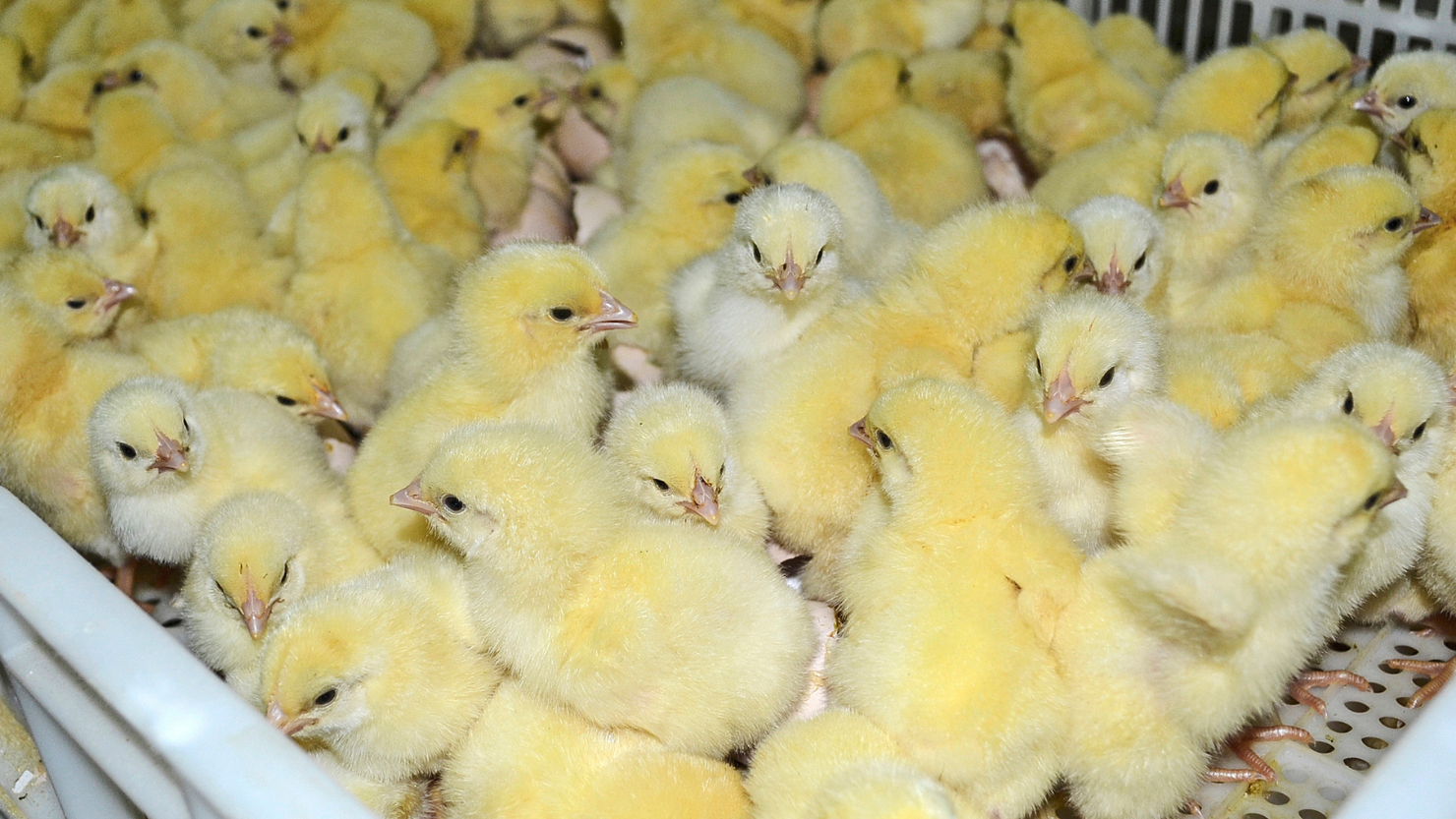
- It is best to buy feathered babies at the age of 10 days. This recommendation is related to the fact that in the first week of life, chicks are most prone to death. It will be prudent to wait for this moment and buy already strong and robust chickens.
- Sex does not matter when purchasing, so you can take both hens and roosters. But if there is a desire to check the sex, it is necessary to straighten the wing of the chick. Males will have feathers of the same length, but chickens will have different feathers.
- Chickens should be active, curious, mobile. If the chick looks weak, does not respond to sounds and light, moves sluggishly, it should not be bought under any circumstances. Unfortunately, such a bird will soon die or have to be culled.
- It is important to feel the body of the bird and examine the down. A healthy chicken will have a taut and soft tummy, and a sick one will have an excessively bloated one. The fluff in a healthy baby will be uniform, and in a sick baby it will be sparse, with bald spots.
To choose a place of purchase, it is recommended to study reviews on the Internet about various farms and breeders, ask for advice from acquaintances who already know how to grow broiler chickens at home.
Note! You should not buy chickens from the first best breeder. You should make sure of its reliability, ask the management to show the relevant documentation, communicate with previous clients if possible.
Specifics of keeping broilers
Feathered pets can be grown in two ways. Each farmer chooses the option that will be more convenient for his farm:
- Extensive method – a batch of chicks is purchased in the spring and the chickens are raised until about mid-summer, that is, until they acquire the desired marketable appearance. Then the livestock is slaughtered and sent for sale (if we are talking about meat breeds). Business is suspended until next spring. This option is suitable for owners who spend only a certain season in the country or in the countryside.
- Intensive method – involves non-stop breeding of chickens. Chickens are bought every 2-3 months, constantly updating the stock. The option is perfect for farmers who are determined to make serious money and live permanently in the village.
Keeping chicken crosses does not differ in strict conditions. However, some specificity is present. Owners should remember the following points:
- The chicken coop must be insulated and checked for cracks – chickens do not tolerate drafts.
- Install high-quality ventilation in the room where the broilers will be located.
- Control the humidity regime – fluctuations in the range of 68-72% humidity are permissible.
- Set the correct temperature regime – approximately 20-22 degrees Celsius.
- Provide the required length of daylight – at least 12-14 hours.
- Correctly calculate the area of the chicken coop so that the birds are not cramped.
- During the day, add food so that the bowls are not empty.
- Monitor the availability of water in drinking bowls.
- Regularly clean the aviary or cages in which the chickens are kept, and disinfect the feeders with drinkers.
If you plan to raise chickens intensively, then before settling a new batch of birds, you need to disinfect the cages or chicken coop. This is a mandatory preventive measure that prevents the risk of infection of young animals after the previous stock.
In cages
Keeping a cage type will be the best option if the owner plans to raise no more than 10 chickens. The size of the cage should be selected in such a way that the birds can easily reach the feed.
If there are more than a dozen chickens in the household, additional cages must be purchased. After all, if you put too many birds in one cage, it will be inconvenient to transport, and the chickens may start to show aggression due to lack of space.
When young chickens grow up, they are placed in different cages. At the same time, it should be remembered that broilers should always have access to food. Feeders can be built from improvised materials, as well as a drinking bowl (for example, take a sewer pipe and cut it in half).
Importantly! When caged, chickens gain weight faster, as they lack physical activity. The risk of infection with infections and parasites is also reduced, because it is not necessary to buy bedding for the cages. With regular cleaning and compliance with hygienic rules, cage maintenance becomes optimal for small farms.

On the litter
If you plan to breed broiders on litter, it is important to approach its composition responsibly. Requirements for bedding material:
- looseness;
- dryness;
- hygroscopicity;
- the ability to absorb harmful fumes.
Experienced poultry farmers advise choosing dried wood sawdust as bedding. It should not include large fractions so that the birds do not injure their paws. Before filling with sawdust, you need to pour a layer of quicklime on the floor of the poultry house, observing the proportion of 1 kg per 1 m².
Moved the young chickens to the chicken coop
At first, the chicks should be kept in a so-called brooder, which is a kind of “nursery” for small chickens. The brooder can be installed right in the house so that it is convenient to monitor the livestock. It is easy to make absolutely free of charge, with your own hands, from two large boxes.
Place a feed bowl and a drinking bowl inside. Lay oilcloth down and pour a layer of sawdust. When the chicks are 10 days old, they will start to press each other. The box of the young will become cramped, and then they should be transferred to the chicken coop.
Preparation of the chicken coop
Small chicks in the first days of life will experience stress from changing the environment and moving to a new place. It is necessary to monitor their well-being and provide the chickens with the necessary amount of comfort. The farmer must first prepare the chicken coop by performing the following actions:
- Disinfect the premises (cages).
- Plaster the walls and coat them with lime.
- Check the birdhouse for the presence of cracks, if found, close them. At the same time, you cannot use temporary measures, for example, plug the gap with a rag. Chickens are quite interesting birds, they easily dig a hole anew. As a result, a draft will appear again, and birds can also injure their beaks or tongues out of carelessness.
- Adjust the temperature regime in the room. In the first week of settling in the young, it should be around 30 degrees Celsius.
- Check the operation of the ventilation, so that all harmful vapors are removed from the poultry house in a timely manner, and fresh air enters.
- Adjust the humidity regime – it should not fall below 60%.
- Adjust the lighting to ensure the required length of daylight.
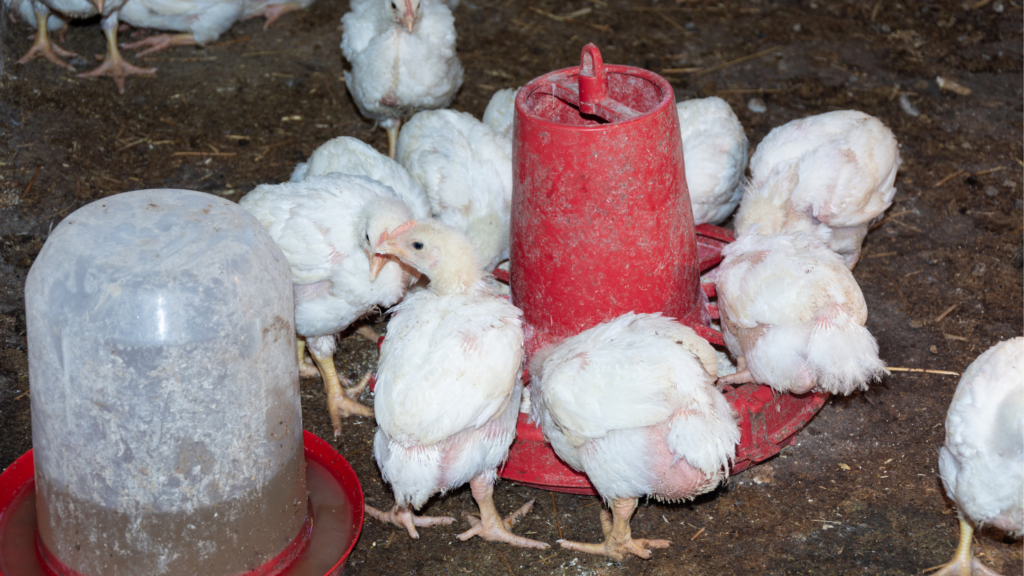
- Think in advance about the location of feeders and drinkers. They should be placed so that each bird can eat and drink freely whenever it wants.
- Cover the floor with sawdust (when kept on litter) or prepare the required number of cages, checking their strength.
- After settling in the chickens, clean the room every day, because in the first weeks the chickens are most vulnerable to the effects of parasites and harmful bacteria.
It should be reminded once again that it is better to buy chicks at the age of 10 days, since younger chicks are more prone to death.
Equipment for feeding and water supply
Farmers often make feeders and drinkers with their own hands. Even beginners can do it, because for the equipment it is enough to take a deep basin and a five-liter canister from under water.
The technology of making a drinking bowl from improvised materials:
- Close the can tightly.
- Make a hole in the lower part using a nail or a knife.
- Put the canister in the basin, pour water.
How to make a feeder from improvised materials:
- Prepare a plastic bottle (2-5 l), a pair of screws, a sheet of plywood and scissors.
- Cut the bottle into 2 parts.
- Make holes in the lower part.
- Using screws, screw the bottom of the bottle to a sheet of plywood.
- Lower the upper part with the throat down, placing it in the lower part of the bottle. Pour feed.
These are the simplest designs that you can make yourself. But there are also other options, which you can familiarize yourself with, for example, through YouTube or thematic forums of poultry farmers, by looking at photo instructions.

Light and temperature regimes
The duration of daylight hours should be at least 12-14 hours. If it is not possible to achieve such a regime naturally, it is necessary to connect additional artificial lighting.
Recommendations for the temperature regime:
- In the first days of settlement of the young, the temperature should be maintained at the level of 30-35 oC.
- From the 6th to the 10th day of storage, the temperature should be lowered to 26-28 oC.
- Then every week, the temperature in the room should be lowered by 3 oC, bringing it to 18-20 oC in the fourth week. But you cannot lower the mode below this mark, otherwise the chickens will not feel well enough.
Note! It is important to pay attention to the reaction of birds. If they clump together, it means they are cold and need to raise the temperature. If the chickens stretch their necks and spread their wings, lying on the floor, this indicates that the temperature is too high.
As a separate point, it is worth mentioning such a detail that when keeping in cages, the temperature in the poultry house should be higher than when keeping on the floor. This is due to the fact that, being in cages, the birds do not have the opportunity to get closer to the heat source.
Feeding
Three options for feeding broiler chickens at home have been developed – independent cooking, use of compound feed or addition of BMVD (highly concentrated mixture of proteins, minerals, vitamins). Each option has its pros and cons, it is important to familiarize yourself with all of them.
When preparing feed on their own, owners use the following products:
- wheat;
- corn;
- soybean meal;
- sunflower meal;
- fish or meat and bone meal;
- chalk.
It is obligatory to give vitamin supplements to livestock. Among the advantages of this method, it is possible to note the saving of funds, and the disadvantage is that the period of growing broilers increases by about 2 weeks.
Most often, farmers buy ready-made feed. This is convenient, as you do not need to spend time preparing the mixtures yourself. There is also an opportunity to grow a chicken of the required weight in the shortest possible time.
And finally, the third option is the use of supplements. The feed in this case is prepared independently from corn and wheat, and then the BMVD additive (a mixture of proteins, minerals and vitamins) is added to it. Such food will be cheaper than compound feed, but a little more expensive than the first option considered.
With any feeding method, if the proportions are correctly observed, the chickens will gain weight of about 2-3 kilograms by 2 months.
It is important to remember that it cannot be given to broiler chickens. The list of prohibited products includes:
- boiled potatoes;
- any bread;
- spoiled products;
- sand;
- boiled eggs
In addition to food, chickens should be provided with plenty of drink. At the same time, the water should be:
- clean;
- retired;
- warm (about 20 degrees).
Importantly! Birds younger than 2 weeks cannot be fed raw water, it must be boiled. You can also add a small amount of potassium permanganate. For a beneficial effect on digestion, some farmers advise to drip a decoction of chamomile or rosehip into the drinking bowl.
Combined feed
Compound feed is the most popular feeding option for broilers. There are several types of compound feed on sale, each of which is designed for a certain age of birds:
- Start – for chickens aged 1-14 days.
- Growth, Fattening or Grover – for chickens aged 15-35 days.
- Finish – it is given starting from the 30-35th day of life.
It is important to follow the instructions for calculating portions and number of meals.
Rules:
- the first week – feed 8 times;
- the second week – feed 6 times;
- the third week – reduce meals to 4 times;
- from the age of one month until slaughter – feed twice, in the morning and in the evening.
If you follow these recommendations, the chickens will not get fat, but will gain the right weight without health consequences.
Vitamin supplements
Young people must be given a course of antibiotics and vitamins to strengthen immunity. The course of antibiotics lasts, as a rule, 2 weeks.
Specific drugs are prescribed by a veterinarian, it is better not to experiment on your own, especially if this is the first experience of raising broilers. Antibiotics and vitamins are added to warm water and given to chickens.
Frequent diseases
Most hybrid breeds of chickens have strong immunity. However, this does not apply to all broilers. In addition, there is a list of diseases common to all domestic birds. It is necessary to know this list, and also to have an idea of how to prevent the risk of infection of pets.
List of typical chicken diseases:
- Heterakidosis – the presence of worms in the intestines. To prevent this from happening, you should regularly wash the chicken coop and disinfect the bowls and drinking bowls.
- Arthritis – occurs due to the sedentary lifestyle of chickens, especially if they are kept in cages. With arthritis, the joints weaken, the legs can bend and break. It becomes difficult and painful for sick chickens to move. If the disease is not advanced, you should try to use a drug called ampicillin. It should be given to sick birds within 5 days.
- Ascites is the accumulation of excess fat in the abdomen. Here the recommendation is obvious – you can’t overfeed the chicken. Fresh greens should also be added to the diet to improve metabolism.
- Salmonellosis is an infection that causes stomach upset. For treatment, you should consult a veterinarian, he will prescribe the appropriate medication.
- Pseudoplague – chickens are infected with this disease through an infected eggshell. Sick birds should be immediately removed from the chicken coop and sent to slaughter, and the premises should be thoroughly disinfected.
- Poisoning – occurs as a reaction to low-quality, spoiled or prohibited food. If chickens often suffer from poisoning, it is necessary to review their diet and the products they are fed.
Note! To study ailments characteristic of specific breeds, it is necessary to contact the breeder or carefully study the information about the chosen cross of chickens on the Internet, paper sources or video reviews.
Mistakes in growing broilers
Growing broiler chickens is a profitable business, but only if it is organized correctly. In the beginning, inexperienced farmers often fail, not understanding the reason for the failure. In fact, you only need to remember well the main rules of keeping and raising chickens, and then the whole process will go smoothly.
Basically, owners make the following mistakes:
- Gaps are closed poorly, due to which drafts are formed. This has a negative effect on the health of the chickens, the young catch a cold and die.
- Ignore the requirements for ventilation. Some believe that it is enough to set the optimal temperature regime, but forget about the importance of access to fresh air and removal of harmful vapors. As a result, the air stagnates, harmful bacteria multiply, chickens become infected and die.
- They do not check the heat of the floor. Even if the air temperature in the room will reach +30 oC, the floor can remain cold. It is necessary to check the temperature of the floor with your hand before settling the birds. If it is cool, you should insulate it – pour a larger amount of sawdust, check again whether all the cracks are closed.
- They do not inspect the floor for mold. The fungus can hide in the cracks between the boards. Mold is a source of reproduction of infections harmful to chickens. It is necessary to carefully inspect the coating of the chicken coop to make sure that it is clean and that the described problem does not exist.
- The lighting is too bright. Excessively bright light will quickly tire the chicks. As a result, they will become more aggressive, start biting themselves and fellow residents, get sick or even die.
- They put drinking bowls with water on the litter. You can’t do that, because the chicks will still spill the water. Once it gets on the bedding, it will wet it, which will contribute to the emergence and reproduction of harmful bacteria, especially fungus and mold. To prevent this from happening, it is necessary to install the drinking bowl correctly, as well as regularly clean the chicken coop and carry out disinfection procedures.
- Broilers are poorly fed. The diet should be varied – the quality of the food depends on how quickly the chickens will gain weight and how they will feel at the same time. With any feeding option, the diet must include fresh greens, as they are the richest source of vitamins and vital minerals. It is also important to let the birds drink vitamin complexes.
These are the most frequent mistakes of novice farmers, but they can be avoided if you remember the given recommendations.
In conclusion, it should be said that growing broilers is a profitable business. To calculate the specific profit from the sale, you need to use the formula:
- Approximately 1.8 kilograms of feed is spent on 1 kilogram of live weight.
- This means that it takes 6.3 kg of feed to keep a chicken up to a weight of 3.5 kg.
- It is necessary to add up the cost of fodder, and then multiply it by the total amount = the fodder cost will be obtained.
- It is also necessary to take into account other costs (equipment, veterinarian, purchase of chickens).
- Add up all costs and correlate them with profit (you can also determine what price to set for meat so that the costs pay off).
Note! Farmers praise broiler chickens and are satisfied with their breeding experience. If you are interested in this area, you should try to organize your own business, because this is an excellent option for obtaining additional or main income.
People’s need for meat only grows every year, and hybrid chickens make it possible to provide the population with the necessary amount of product in the shortest possible time. At the same time, broiler meat has excellent taste, does not cause allergic reactions, and is suitable for dietary nutrition.