
Every gardener knows how much fertilizer needs to be applied to the plot in order to reap a good harvest as a result. Worries begin in the spring, when you have to choose, and what to fertilize? The store, of course, has a large selection of products for every taste. But many of them are expensive and not environmentally safe. Fortunately, alternative and often not worse options are folk remedies for feeding the garden. Let’s consider the most popular methods.
Manure
One of the oldest means of fertilizing contains a huge number of complex substances valuable for the garden. In the spring, manure is used for the following purposes:
- increasing soil fertility by placing it in planting holes for seedlings or seeds;
- fast-acting feeding of weak plants, preparing a solution from it.
In order to safely apply manure directly under the plants, it must be compacted or strongly compacted, that is, with a shelf life of 3 weeks to 4 months.

Beans
This group includes many species, which are most often found in gardens – forage beans, field peas, clover, alfalfa, wild vetch, asparagus, burdock and seradella.
Siderates are sown early – as soon as the snow comes down and the soil can be dug. They do not require any care – everything is left to the forces of nature. And when they turn green and are ready to bloom – they are mowed and then, at their discretion, they are left lying on the ground as mulch or buried in the soil, digging up the garden.
The benefit of siderates is that they make the soil more loose and water-permeable, stimulate the growth of beneficial bacteria in it, and also saturate it with nitrogen.
Ash
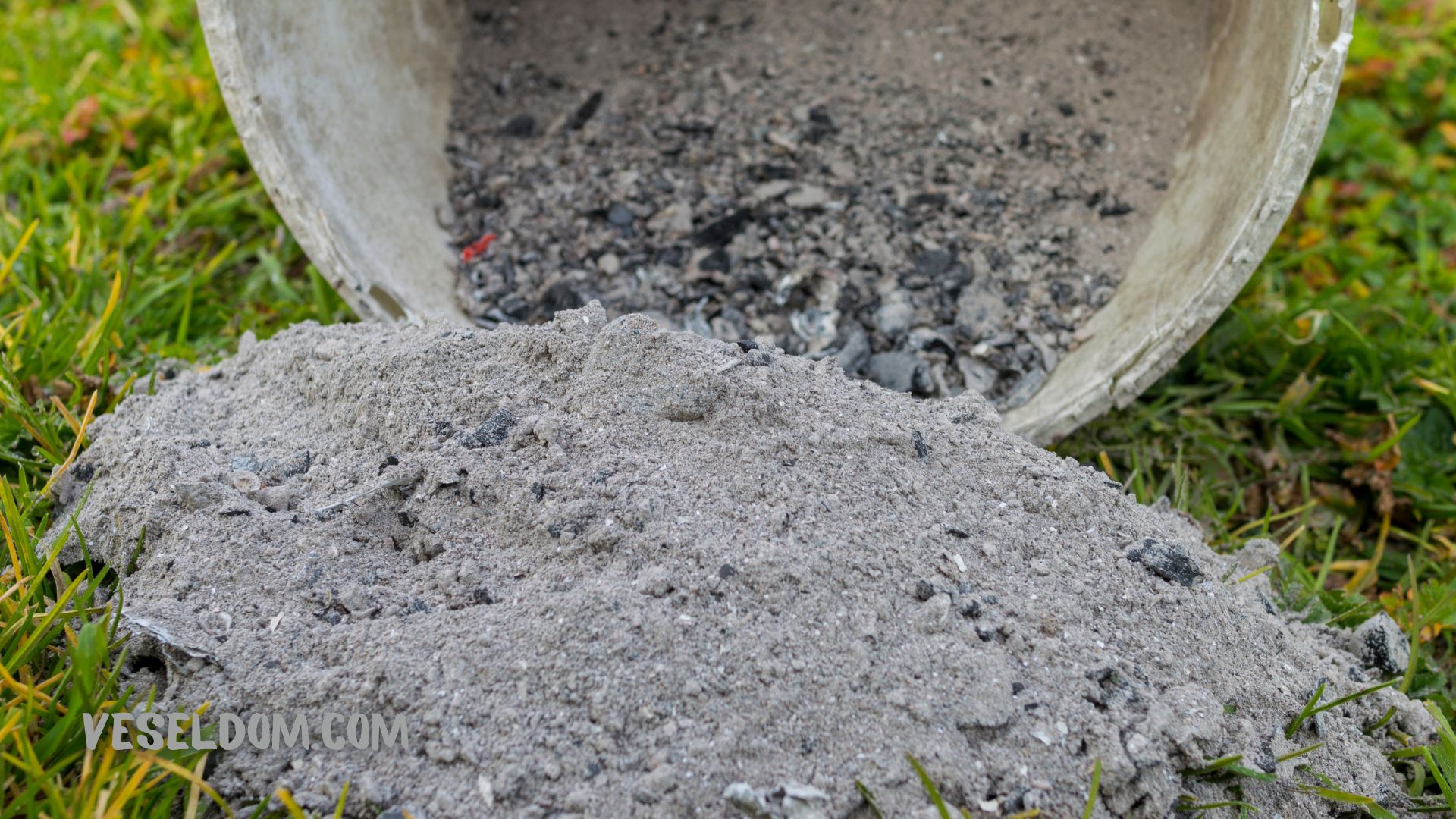
Fresh or last year’s ash stored in a dry place has the necessary qualities. It can convert waste from tree and shrub trimming, straw, and grass clippings.
It is inadmissible to use books and wood used for the production of furniture and construction works to obtain ash, that is, that which has been treated with chemical substances.
In the garden, ash is used by simply spreading it on the ground and mixing it with light loosening before watering or rain. Or as a solution in medium proportions, 1 glass per 1 bucket of water. All crops can be watered with ash, but it is important to take into account that it shifts the pH of the soil to the alkaline side, which not all vegetables like.
Bulbs
Onion skins are collected throughout the winter, and in the spring, as needed, infusions are prepared from them for the following purposes:
- stimulation of root formation in newly planted seedlings;
- nutrition of weakened zucchini, pumpkins and cucumbers, if their leaves have begun to turn yellow;
- increase in the number of ovaries during the flowering period of vegetable crops.
Handfuls of bulbs are also added to the planting holes of potatoes.
Herbal infusion
Theoretically, it can be prepared from almost any weeds, but the most effective remedy is made from young nettles. It is simply chopped coarsely, filled with water and kept in a tank for 2-3 weeks. Then the infusion is diluted with clean water and watered seedlings that have begun to take root, primarily perennial crops.
It is believed that nettle infusion enhances the growth of the aerial part without harming fruiting.
Silt
It is difficult to name the exact composition – everything depends on the characteristics of a specific reservoir, but in principle, among gardeners, it is customary to classify it into the following groups:
- river – due to the saturation of mineral substances, it should not be used in the garden in its pure form, but, for example, added to compost. It increases soil fertility well;
- bog – is a precursor of peat, acts as an antiseptic to disinfect problematic soil;
- lacustrine – also called sapropel and is considered the most valuable, as it is formed over centuries in stagnant water bodies without running water. Strongly stimulates plant growth.
Compost from silt is used to prepare beds, making an average of 1 square meter. m. of planting for 3-5 kg of additives. Sapropel is recommended for sandy and sandy soils. Bolotny is introduced little by little during the first spring digging of the garden, a few weeks before the intended planting.
Any top dressing is good only when applied in moderate doses. Excessive fertilization of the garden not only does not contribute to obtaining a better and larger harvest, but also prevents this idea.