
Raspberries, like other berry crops, need timely fertilization for good fruiting and a prosperous “life” in the garden. And this is especially important for her in the spring period, when the plant has just recovered after wintering, but has not yet become truly summer. Let’s take a look at the basic rules on which spring feeding of raspberries is based.
Rejection of nitrogen
At the beginning of spring, it is necessary for all plants – no other element is able to stimulate them in such a way to form above-ground mass, be it stems or leaves. But after the raspberry bushes have “dressed” in a green spring outfit, nitrogen should be abandoned.
The fact is that the excessive introduction of nitrogen forces the raspberry to continue to use all its strength on the leaves from the shoot, instead of being engaged in the formation of fruits. Therefore, nitrogen is applied only in early spring, when the temperature is barely above zero.
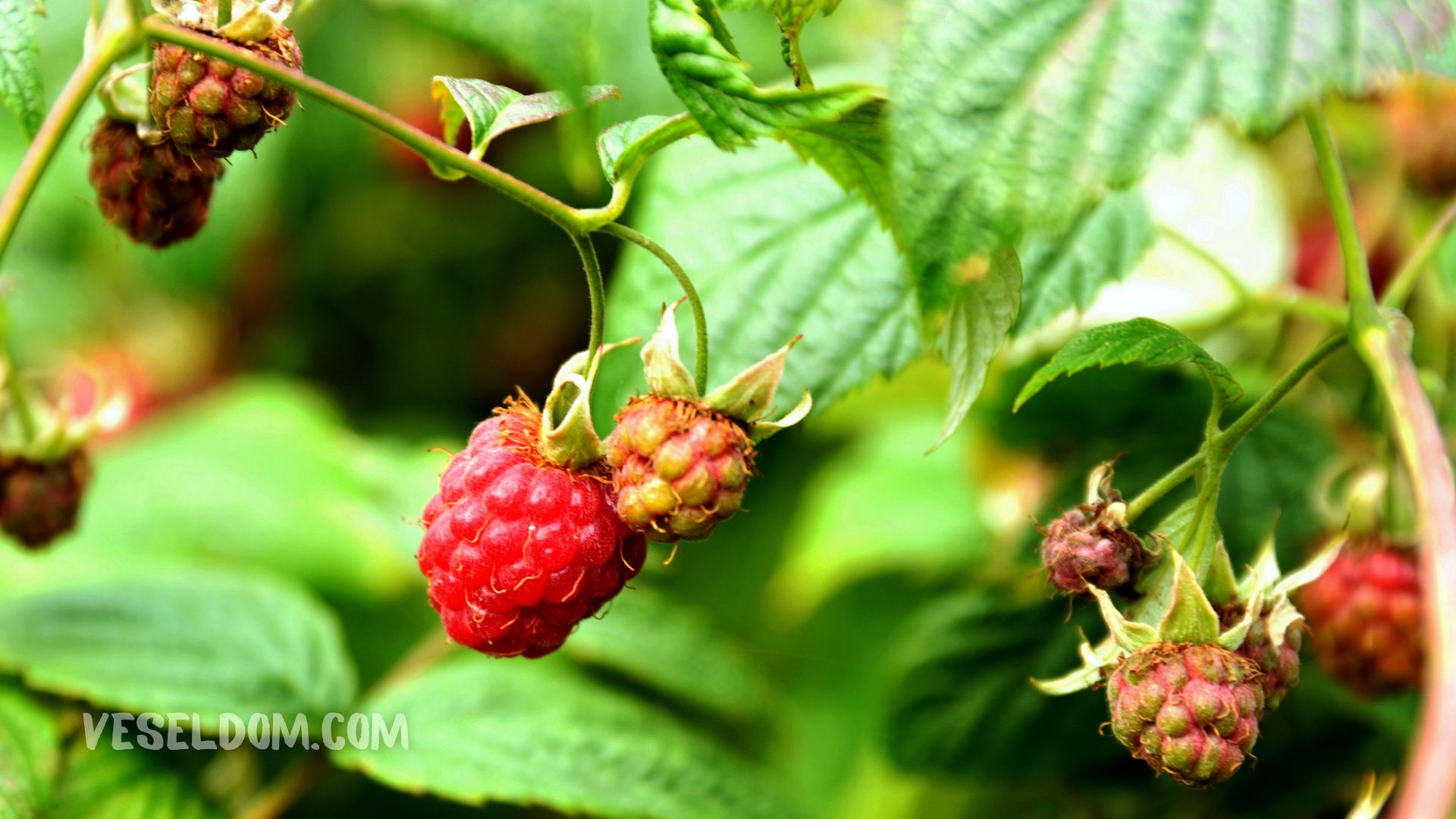
Second feeding
It falls on the phase of budding on the eve of flowering. The main minerals to focus on are:
- Potassium is responsible for the formation of large berries and their taste, and more precisely, the ability to accumulate sugar. Potassium also strengthens the immunity of the bush.
- Phosphorus – increases the number of ovaries, helps prevent raspberries from falling.
Simple folk remedies are not fully able to saturate raspberries with these substances, and experienced gardeners call diammofosca the best choice from store-bought ones.
Universal siderates
Despite the popularity of manure and humus for feeding raspberries among gardeners-lovers, it is important to understand that with an inaccurate calculation of the dosage, there is a chance to overfeed the raspberry at the wrong time, provoking fattening and even burning its roots.
You can safely replace humus with manure with siderates, that is, legumes, for example, peas, clover and lupine. As soon as the snow falls, they are sown between the rows of raspberries, and in late spring, when buds form on them, they are mowed and laid on the ground.
It is important that siderates not only enrich the soil with valuable substances, but also temporarily serve as mulch.
Deficiency control
Nitrogen, potassium and phosphorus – it may seem that raspberries do not need anything else. But a good harvest cannot be obtained if the culture suffers from a deficiency of some other minerals, which can be guessed by specific signs:
- Iron – leaves turn yellow, keeping green veins. Iron is responsible for the adaptability of plants, that is, even in a rainy summer, it can protect raspberries from fruiting with watery, tasteless berries.
- Magnesium – the leaves turn yellow in the center, remaining green at the edges. It is necessary for the friendly ripening of berries of ordinary varieties and restores the strength of raspberries of remontant varieties for new fruiting.
It is not too late to fight the lack of these substances in the raspberry until the formation of the ovary.

There is no such thing as too much ash
Returning to the first rule, it is worth emphasizing that ash contains almost all the elements from Mendeleev’s table, but there is no nitrogen. The main features of ash include:
- changing the acidity of the soil closer to alkaline, which is ideal for raspberries;
- prevention of the development of fungal diseases in the soil;
- deterring pests;
- increasing the looseness of the soil.
For May feeding of raspberries, 1 cup of ash is diluted in 10 liters of water, mixed and poured under the bush.
Of all the rules of agrotechnics regarding top dressing, watering is the most important for raspberries – for the full assimilation of nutrients, it should be regular and sufficient, especially in the dry, hot season.