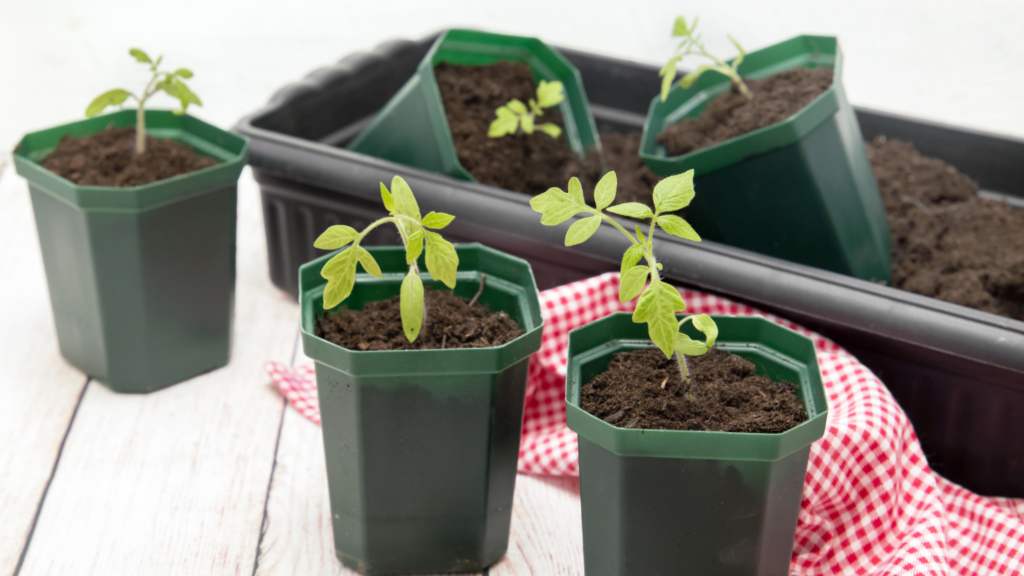
Many summer residents begin to grow seedlings at the end of winter and at the beginning of spring: they prepare the soil, sow seeds. When the seedlings get a little stronger, seedling picking is done. This is the transplanting of seedlings into new conditions: from a small container to a larger one. To make the process painless, it is carried out at the initial stage of growth (when leaves begin to appear). Let’s consider in more detail why plants are picked.
What is the necessity
- Transplantation guarantees the plant sufficient space for growth, creates good conditions for the development of the root system, significantly strengthening it. There is not enough space for them in small pots, the roots begin to get tangled. The method is indispensable when there are more seedlings than intended (it will be possible to select healthy seedlings, eliminate extra ones).
- During the initial sowing of seeds in large pots, summer residents often face the problem of stagnation of excessive moisture that remains in the soil. As a result, the percentage of oxygen required for nutrition decreases. The seeds will be able to germinate in similar conditions, but they will develop very slowly. When planting in glasses with holes, the water will not have time to stagnate (the steps have access to oxygen).
- Sometimes you can’t do without a transplant, as it activates the development of lateral roots. The seedling will take root better in open ground. If you sow in a common pot, then during the development the roots of adjacent seedlings will intertwine with each other. Thanks to transplantation, this can be avoided.
The main advantages
The main advantages include:
- finding the root system in the upper layer (thus the roots are hardened);
- accelerated adaptation in open ground;
- natural culling;
- reduction of the probability of the appearance of diseases;
- a guarantee of increasing the number of fruits.
What to dive: rules of execution
Pinching with a pinch of the central root has a beneficial effect on seedlings of tomatoes, strawberries, cabbage, cloves, lobelia and other crops. Most often, seedlings dive 14-20 days after emergence. You should prepare in advance:
- soil;
- cups/pots;
- spatula;
- clean water;
- scissors.
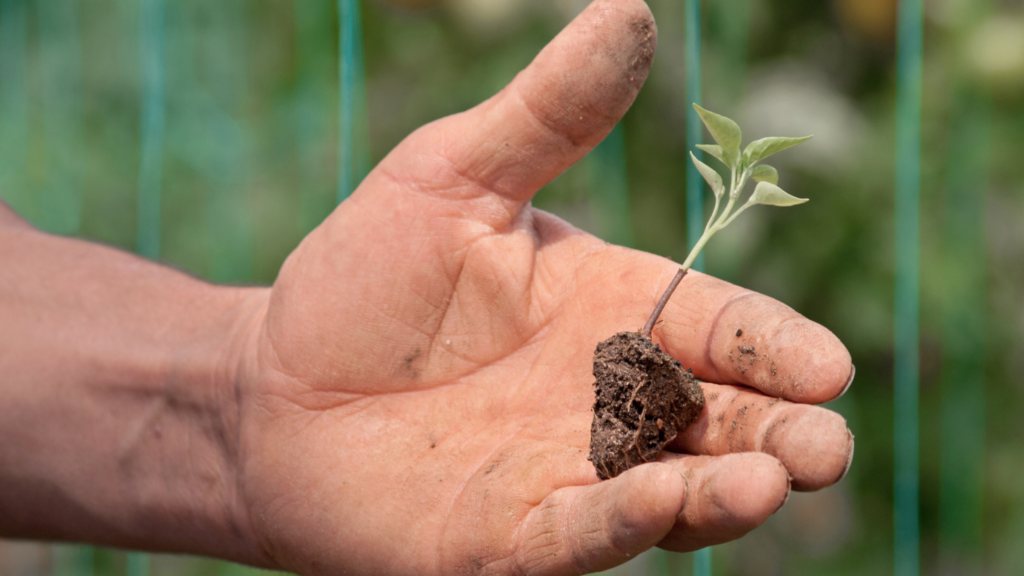
The seedling is separated with a spatula, carefully holding the leaves. The plant is removed from the soil by cutting off the central root with scissors (it is important to leave 2/3 of the root). Next, a small depression is made in the pot, where the plant is planned to be transplanted. The seedling is sprinkled with earth, slightly pressing the soil. They are watered with clean water and put in a dark, not hot place for 2-4 days.

Recommendations for transplantation
It is important to transplant the plant after the emergence of 2 leaves. Some summer residents are in no hurry to do this, fearing damage to fragile stems. However, the younger the seedling, the faster it adapts and strengthens the roots.
Before planting in a cup, it is recommended to disinfect the roots in a weakly concentrated solution of potassium permanganate. This will avoid infection with fungal infections. Transplantation is carried out in soil without impurities and dirt, since infections from the soil can penetrate through damaged roots.
The growth point is at ground level or slightly lower. The first feeding is done a week later, when the plants take root. If the picking date was missed, you should not return to it. The older the seedling is, the worse it tolerates these manipulations.

What are the methods of picking
There are three main methods of picking plants. They are similar, but there are some differences. Let’s consider each method in more detail:
- under the peg With the help of a peg, deepen the soil (individual pots are recommended for transplanting). A peg is dipped into the soil to raise the seedling with the hand next to the ground. Seedlings can be taken by the stem, as it can break. Pinch the root of the seedling with the other hand, it is moved to a new place. The roots are straightened with a peg, sprinkling the hole with earth;
- under the bar Thanks to this method, it is possible to transplant up to 15-20 sprouts at the same time. To do this, a groove is formed at the transplant site and watered. Seedlings are placed along the length of the groove. The lower part of the plants is sprinkled with the help of a bar. The technique speeds up the process, but the quality deteriorates;
- under the finger It differs from the first method in the working tool, the actions are similar. Instead, the pegs work with the index finger (the depth of the dimples corresponds to its length). This is a quick method, but unlike the second method, it does not reduce the quality.
When picking is carried out correctly, the root system is not greatly disturbed. It is allowed to be used for fragile, picky plants and those that are difficult to tolerate a transplant (pepper, aquilegia, eggplant).
The main condition is to carry out the procedure at the initial stage of development, using the “transshipment” method. Melon, pumpkin and cucumber are recommended to be planted in different containers at the stage of development of three leaves. Some varieties are grown without picking (sometimes transshipment from pots of small volume in space is used).