
In order to grow beautiful healthy seedlings, you need to follow not only the classic rules of agricultural technology, but also know small subtleties. This is especially true of eggplants, which are considered a very capricious culture. This vegetable needs a lot of sun and heat, timely care and feeding, gradual hardening. Let’s consider in detail the rules for caring for eggplant seedlings, which will help to get a good harvest.
What does a healthy seedling look like
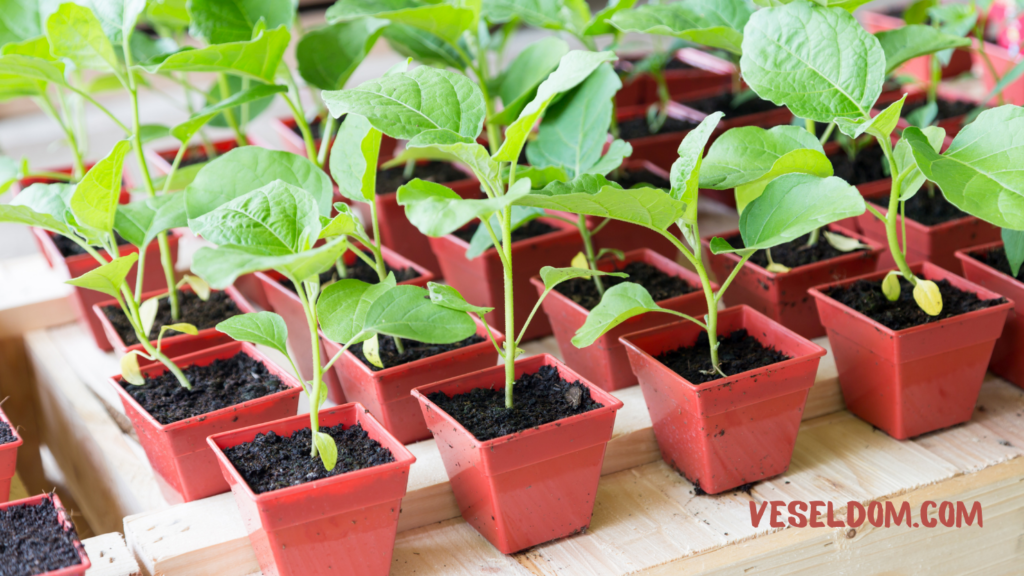
It is easy to determine the quality of planting material. Seedlings look strong, healthy and strong. There are differences in the conditions of readiness for seedlings that should grow in a greenhouse and in open ground.
Eggplants that will be grown in a greenhouse must meet the following criteria:
- thick stem;
- height 20-25 cm;
- the presence of large buds;
- well-developed root system;
- 5-8 dark green formed leaves.
For open ground, seedlings should not be elongated, but stocky (no more than 10-12 cm).
Note ! If the seedlings are grown without picking, then they can have only 4-5 real leaves.
Tricks for getting healthy seedlings
In order to grow good, strong specimens, from which you can expect a harvest in the future, you should follow a few rules for growing eggplant seedlings.
Nutrient soil
The intensity and correctness of development depends on the quality and nutrition of the soil. It is easier to buy a ready-made soil mixture that contains all the necessary micronutrients.
Note ! The soil for eggplants should be nutritious, loose and have low acidity.
When preparing it yourself, mix:
- 2 parts of peat;
- 1 part of river sand;
- 3 parts sawdust;
- 4 parts of humus.
After mixing, the soil is disinfected. Water it with a hot solution of potassium permanganate or roast it in the oven (about 30 minutes). Increase nutrition by adding wood ash, urea, potassium and superphosphate.
Timely and moderate watering
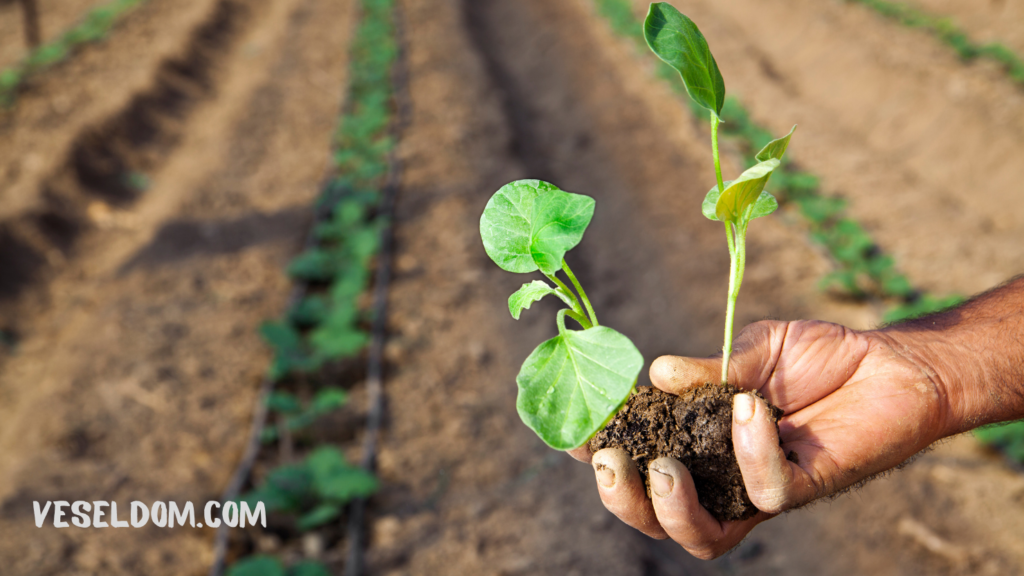
Eggplants are abundantly and regularly watered. Use warm water (approximately +25 °C). The need for watering is determined by the condition of the upper soil layer. Do not allow complete drying. With a lack of moisture, the stems quickly become woody, which reduces yield indicators.
Excess moisture also negatively affects yield. Plants become stunted and take root poorly in a permanent place.
Lots of light and warmth
The worst thing for young eggplant seedlings is the cold. The appropriate temperature for seedlings is +20-30 °C. If the indicator drops below +13 °C, the plants will die.
Not only cold, but also lack of light is dangerous for young sprouts. In order to accelerate the development of the first 4-5 weeks, it is necessary to organize artificial lighting. The light day should be at least 12-15 hours. For illumination, fluorescent lamps are used, which are installed at a distance of 0.5 m from containers with plantings.
After the appearance of 2 real leaves, the duration of daylight is shortened (no more than 12 hours). This regime is followed until 4 leaves are formed.
Note! Seedlings grown under long daylight develop faster and bloom actively. But it often happens that these plants do not set fruits.

Thinning and picking
Eggplants are characterized by delicate roots that quickly break and are damaged. It is recommended to avoid picking. For this, seeds are sown in peat tablets or pots. Their use allows you to transplant plants without damaging the roots.
If sowing is done in a common container, then picking is carried out very carefully, trying not to touch the roots. Eggplants are planted after the first true leaf appears. To speed up the rooting process, the roots are treated with a growth stimulator, for example, Epin.
Regular feeding
Fertilizers are applied regularly. Without feeding, it will not be possible to get good, strong seedlings. Potassium and phosphorus should prevail in the composition of nutrients. A large amount of nitrogen can lead to pulling out of seedlings and too active growth of the green vegetative part.
The sprouts are fed for the first time 10-14 days after germination. With such an interval, regular fertilizers are applied. Potassium salt, superphosphate, ammonium sulfate are used for eggplants. A solution of mullein (1:10) or chicken droppings (1:15) is suitable for organic matter.
Note ! After each feeding, the seedlings are watered with clean water, the soil is loosened. It is better to carry out such procedures in the morning.
Hardening of seedlings
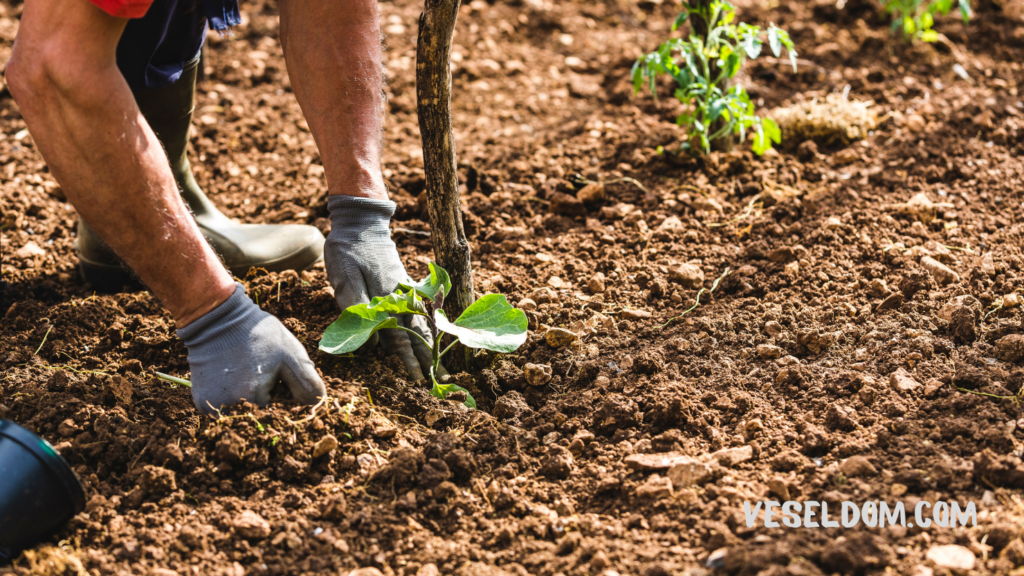
After germination in room conditions, it is difficult for capricious eggplants to adapt in a greenhouse or outdoors. 2 weeks before transfer to a permanent place, the hardening procedure begins.
For the first time, the seedlings are brought out to the balcony or veranda. First, leave for a short period of time, gradually increasing the duration of stay in a cool place. Before transplanting, the seedlings are left in the greenhouse or on the balcony for a whole day.
Following these simple rules will help you get healthy seedlings, which is the key to a good harvest. After transplanting, the plants are also carefully monitored and cared for.